

What Is the Punishment for Financial Elder Abuse? Criminal Charges, Jail Time, and Legal Consequences

Average net worth tends to rise with age. Unfortunately, so does the risk of elder financial abuse.
What’s elder financial abuse? Simply put, it means misusing an older person’s finances and/or assets. It includes:
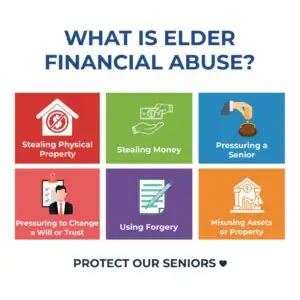
- Stealing physical property
- Stealing money
- Using forgery to steal from a victim’s bank account and/or credit cards
- Pressuring a senior into changing a will or trust
- Misusing a senior’s assets and/or property for personal gain or benefit.
What Is the Punishment for Financial Elder Abuse?
In California, Penal Code section 368 sets the punishment for a person who violates any provision of law proscribing theft, embezzlement, forgery, or fraud, or the law proscribing identity theft, with respect to the property or personal identifying information of an elder. The section defines an elder as a person who is 65 years of age or older. Where the person is not a caretaker, the section applies when the person knows or reasonably should know that the victim is an elder.
The punishment turns on the value of what was taken or obtained:
- A value exceeding $950: a fine not exceeding $2,500, or imprisonment in a county jail not exceeding one year, or both, or a fine not exceeding $10,000, or imprisonment for two, three, or four years, or both.
- A value not exceeding $950: a fine not exceeding $1,000, imprisonment in a county jail not exceeding one year, or both.
The same section punishes the false imprisonment of an elder by the use of violence, menace, fraud, or deceit by imprisonment for two, three, or four years. Other states have their own laws.
Understanding the Severity of Penalties
Under Penal Code section 368 the fines and terms turn on the value of what was taken. They are the same for a caretaker and for a person who is not a caretaker. The section defines a caretaker as a person who has the care, custody, or control of, or who stands in a position of trust with, an elder or a dependent adult. Upon conviction, the sentencing court shall also consider issuing an order restraining the defendant from any contact with the victim, which may be valid for up to 10 years.
Criminal Charges for Financial Elder Abuse
Pestering an elder for money is wrong, but it’s not necessarily a criminal offense. It crosses the line when:
- The offender commits fraud or forgery to get what he or she wants. This can include opening a credit card in the elder’s name, withdrawing money in the elder’s name, using the property for personal gain without the elder’s permission, or changing a power of attorney to get control over the elder’s finances
- Another financial elder abuse crime is embezzlement. Seniors who own a company and/or multiple properties are common victims. The embezzler can charge fake payments, pay relatives rather than professionals, or mismanage the senior’s assets and finances while covering his or her tracks by changing paperwork
In California a conviction under Penal Code section 368 carries the fines and the terms set out above.
Can You Go to Jail for Financial Elder Abuse?
Yes. In California, Penal Code section 368 provides for imprisonment in a county jail not exceeding one year and, where what was taken is of a value exceeding $950, for imprisonment for two, three, or four years.
Stop Financial Abuse. Get Help
Examples of Financial Abuse of the Elderly
There are many ways people try to swindle the elderly. These include:
- Making unauthorized withdrawals
- Opening credit accounts in the senior’s name, without his or her permission
- Taking out loans in the senior’s name, without his or her permission
- Scamming seniors out of money and/or property
- Misusing a power of attorney
- Befriending a senior with the end goal of getting money from him or her
- Stealing valuables from the home
Elder Financial Abuse by Family Members
Family members are more likely to abuse elders than strangers. Why?
- They tend to feel entitled to the money
- They’re worried another family member will get more than them
- They have the most access to the senior’s money, financial information, and financial records
- They can manipulate a senior into changing his or her will in a way that would make it hard for others to prove the changes weren’t made voluntarily
What Is Evidence of Financial Elder Abuse?
Financial elder abuse isn’t always obvious. However, the signs are there if you know where to look:
- Check bank records. Look for new spending patterns and large withdrawals
- Check contracts for suspicious changes
- Ask witnesses what they’ve seen. A bank teller, for instance, may notice mom’s new “friend” always accompanies her to the bank when she pulls money
- Changes in medical and/or cognitive evaluations. An abusive son may be taking dad to a new doctor who is willing to exaggerate symptoms of cognitive decline so dad can be put in a care home
If you suspect financial elder abuse, get all the evidence you can. The other party will likely claim you’re imagining or exaggerating. They may even claim you’re trying to gain more control over the elder’s finances so you can commit financial abuse.
How Do You Prove Financial Elder Abuse?
For civil cases, you have to show it’s more likely than not that the offender committed financial abuse.
For criminal cases, you need proof beyond a reasonable doubt.
In both types of cases, you’ll need plenty of evidence:
- Bank statements
- Property records
- Credit reports
- Expert witnesses such as doctors and accountants can also help you prove your case. A good lawyer will know what type of experts can help you make your case.
It’s also important to clarify intent and the vulnerability of the victim. Did the offender want to steal a large sum on a one-time basis or bleed the victim dry financially? Does the victim have dementia, or can he or she understand what’s happening and speak for him/herself?
When Does Financial Elder Abuse Go to Criminal Court?
A criminal case is brought by a prosecutor and requires proof beyond a reasonable doubt.
When Does Financial Elder Abuse Go to Civil Court?
Family members often don’t feel comfortable reporting relatives to the police. Additionally, the elder may need the money back right away, and criminal cases can take a long time. In other cases, there isn’t enough evidence to charge the person with a crime.
Family members often opt for a civil lawsuit to try to get money back right away. The burden of proof is lower.
Civil Remedies and Financial Recovery
In California, where it is proven by a preponderance of the evidence that a defendant is liable for financial abuse, the court shall award to the plaintiff reasonable attorney’s fees and costs, in addition to compensatory damages and all other remedies otherwise provided by law (Welfare and Institutions Code section 15657.5). If a court finds that a person has in bad faith wrongfully taken property belonging to an elder, or has taken it through the commission of elder financial abuse, the person shall be liable for twice the value of the property recovered (Probate Code section 859).
See our page on elder and nursing home abuse.
Can a Financial Elder Abuser Be Disinherited?
In California, Probate Code section 259 provides that a person shall be deemed to have predeceased a decedent, to the extent the section sets out, where it has been proven by clear and convincing evidence that the person is liable for financial abuse of the decedent, who was an elder or dependent adult, and the other findings the section requires are made, or where the person has been convicted of an offense described in Section 368 of the Penal Code. Talk to a probate lawyer to see how this can be done where you live.
Why Don’t Victims File Criminal Charges?
Sadly, many victims don’t get the justice they deserve. This is because:
- The victim is cognitively impaired. He or she doesn’t understand what’s happening
- The offender is a close family member and the victim doesn’t want to see him/her get in trouble
- Other family members pressure the victim to deal with the issues “in-house” rather than call the police or go to the courts
- The victim feels ashamed or afraid of the consequences. This is especially true of the offender controls other aspects of the victim’s life (i.e., medical care)
The law provides protective reporting options. However, victims or family members must take the difficult step of reporting the abuse.
Preventing and Protecting Against Financial Elder Abuse
- Encourage elders you know to choose trustworthy people to manage their finances. If they have a lot of money, a financial management company may be the best option.
- Make sure elders know about prevalent financial scams
- If you know where the elder banks, ask the manager to be on the lookout for signs of unusual financial activity
- Visit often if you live nearby. If not, call regularly. Be wary of anyone who tries to get in the way of your communications with the elder.
- Report suspicious activity right away.
When to Contact a Financial Elder Abuse Attorney
Abusers can be smart. They may be cunning. They’re often manipulative.
You need a good lawyer to help you build your case. Your lawyer can also help you:
- Collect evidence
- Find expert witnesses
- Negotiate a settlement
- File a civil claim
The Ledger Law Firm is a personal injury law firm with attorneys licensed in California, Texas and Washington. If your matter is one The Ledger Law Firm does not handle itself, we will try to refer you to an attorney who does. Call (800) 300-0001. Free case evaluation.
Conclusion
Financial elder abuse is a serious crime.
Report suspected crimes right away.
FAQs About What Is the Punishment for Financial Elder Abuse
Can you go to jail for financial elder abuse?
Yes. In California, Penal Code section 368 provides for imprisonment in a county jail not exceeding one year and, where what was taken is of a value exceeding $950, for imprisonment for two, three, or four years.
What criminal charges apply to financial elder abuse cases?
In California: theft, embezzlement, forgery, fraud and identity theft, with the punishment set by Penal Code section 368 where the victim is an elder.
Offenders can be charged with more than one crime.
How much jail time can someone face for financial elder abuse?
In California, Penal Code section 368 provides for imprisonment in a county jail not exceeding one year and, where what was taken is of a value exceeding $950, for imprisonment for two, three, or four years.
How do you prove financial elder abuse in court?
In a civil case in California, liability for financial abuse is proven by a preponderance of the evidence (Welfare and Institutions Code section 15657.5). A criminal case requires proof beyond a reasonable doubt.
Can family members be prosecuted for financial elder abuse?
Yes. Penal Code section 368 applies to a caretaker and to a person who is not a caretaker.
When does financial elder abuse go to criminal court instead of civil court?
A criminal case is brought by a prosecutor and requires proof beyond a reasonable doubt.
When should you contact a financial elder abuse attorney?
If you suspect financial abuse, talk to a lawyer.

Emery Brett Ledger brings 28+ years of experience to personal injury law. He founded & led The Ledger Law Firm in securing over $100 million in compensation for clients with life-altering injuries & complex claims. Prior results do not guarantee a similar outcome. Licensed in California, Texas, & Washington, Emery earned his law degree from Pepperdine University School of Law. His practice areas include car & truck accidents, wrongful death, catastrophic injuries, maritime claims, & mass tort litigation. He has been recognized by The National Trial Lawyers’ Top 100, Mass Tort Trial Lawyers Top 25, and America’s Top 100 Personal Injury Attorneys. Emery also received the 2025 Elite Lawyer Award & holds a perfect 10.0 Avvo rating with Platinum Client Champion status. His legal work has been featured on CNN, Forbes, NBC, & ABC.
Free Case Evaluation
Recent Posts
- Punitive Damages in a Car Accident: When Can You Recover Them?
- Tailgating Injury: What Causes Tailgating, Road Rage & How to Stay Safe
- Waiting to Call a Lawyer Can Hurt Your Case: Evidence, Deadlines & Legal Risks
- What Is Property Damage in a Car Accident? Claims, Costs & Who Pays
- Bodily Injury & Property Damage: Coverage, Claims, Liability & Compensation
Emery Brett Ledger brings 28+ years of experience to personal injury law. He founded & led The Ledger Law Firm in securing over $100 million in compensation for clients with life-altering injuries & complex claims. Prior results do not guarantee a similar outcome. Licensed in California, Texas, & Washington, Emery earned his law degree from Pepperdine University School of Law. His practice areas include car & truck accidents, wrongful death, catastrophic injuries, maritime claims, & mass tort litigation. He has been recognized by The National Trial Lawyers’ Top 100, Mass Tort Trial Lawyers Top 25, and America’s Top 100 Personal Injury Attorneys. Emery also received the 2025 Elite Lawyer Award & holds a perfect 10.0 Avvo rating with Platinum Client Champion status. His legal work has been featured on CNN, Forbes, NBC, & ABC.