

Bad Faith Claim Insurance: How to File a Bad Faith Claim Against an Insurance Company After a Personal Injury

You expect insurance companies to treat you fairly. But then they don’t honor their policy terms. They’re acting in bad faith? What is bad faith insurance claims?
A bad faith insurance claim refers to making a claim against an insurance company for acting unfairly to you. Denials, delays, and lowball offers aren’t fair. Our law firm works with victims to seek answers.
What Is Bad Faith?
Bad faith happens when the insurance company fails to honor the terms of their policy. You file a claim. They don’t pay. They endlessly deny your claim. They refuse to pay you fairly.
Sometimes disputes over claims are authentic. You may not understand the policy terms. But bad conduct isn’t okay.
The Implied Covenant of Good Faith and Fair Dealing
All insurance policies have an implied covenant of good faith. Insurers must investigate every claim. They owe policyholders a duty to process claims honestly and promptly. You can file a bad faith claim when they operate like this.
What Are the Legal Elements of an Insurance Bad Faith Claim?
You’ll need to demonstrate how the insurer acted in bad faith. That may include:
- You have valid policy coverage for your claim.
- They acted in an unreasonable manner.
- You suffered harm from their actions.
State law determines the specifics. But don’t underestimate your right to file a claim.
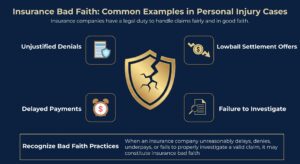
Insurance Bad Faith: Common Examples in Personal Injury Cases
Bad faith in insurance can happen in multiple ways:
- Unjustified denials of coverage
- Delayed payment
- Lowball settlement offers
- Failure to investigate
You file a claim after a car accident. The insurance company won’t get back to you. They then tell you they won’t cover your claim. You know the coverage applies. They may even blame you for the accident. That could be a bad faith claim.
What Evidence Do You Need to Prove Bad Faith?
You’ll need to demonstrate proof of their actions. This may include:
- Claim correspondence
- Adjuster notes
- Denial letters
- Timelines that demonstrate delays
- Comparison of claims to policy terms
Hire an attorney to gather evidence. Your lawyer has experience knowing what type of evidence is necessary.
Do You Need a Lawyer If You Believe the Insurance Company Is Acting in Bad Faith?
Legally you don’t have to have an attorney. But insurance companies have ample resources and legal teams. They have the upper hand. An attorney evaluates conduct against legal standards. They’ll provide protection for you throughout the process. Contact them early for help.
Get Help With Your Bad Faith Insurance Claim
Pursuing Damages in a Bad Faith Insurance Case
Prove bad faith and you’ll be able to seek a claim for your damages. That’s different from the original claim. These are additional losses you’ve suffered due to the denial. That could include economic, extracontractual, and punitive costs.
Your Initial Recoverable Damages
Win your case and you’ll recover the original benefits wrongfully withheld. That’s the baseline. That’s just getting you what you are owed.
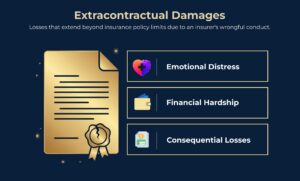
Extracontractual Damages
These damages go beyond policy limits. They cover the harm you suffered because of the insurer’s conduct. This could include
- Emotional distress
- Financial hardship
- Consequential losses
Punitive Damages
In rare cases, punitive damages may apply. They’re only available for egregious or intentional misconduct. That could happen in bad faith cases if the insurer acted fraudulently.
Damages: Two Cases in One
A bad faith lawsuit litigates the original injury claim and the losses you’ve suffered from the insurer’s misconduct. That makes your claim more complex. But it also potentially increases the amount of money you receive. That is if your claim is successful.
A Personal Injury Lawyer Can Help You Prevail
In every case like this, the burden of proof is on your shoulders. Even though you’re the victim. A lawyer investigates insurer conduct, gathers evidence, and then negotiates or litigates your case. They know the law and have experience in cases like yours. That makes them a valuable asset in bad faith disputes. Attorneys provide you with clarity on your rights. They’ll work for you, not the insurance company.
Talk to an Injury Lawyer from Our Team for Free Today
You may be unsure if you have a bad faith claim against insurance company. That’s normal. Set up a free consultation with our team to review what’s happened to you. Ledger Law as the trusted firm for individuals pursuing a bad faith claim against an insurance company. We have the necessary experience to help you take on these challenging cases.
It’s important to act quickly. Evidence can become hard to get. Plus, most states have a statute of limitations you must act within. Avoid this by setting up a free consultation with our legal team now.
Conclusion – Holding Insurance Companies Accountable
A bad faith claim against an insurance company applies when the insurer doesn’t act within the parameters expected. They’ve violated your right to fair compensation. They treated you poorly and you suffered loss.
You’ll need ample documentation to file a claim against an insurance company for bad faith. That means acting quickly. Set up a legal consultation with our law firm to discuss your case openly and without risk.
Ledger Law is a resource for you when seeking answers about bad faith claim insurance actions. Don’t wait to contact us.
FAQs About Bad Faith Insurance Claim
What is a bad faith insurance claim in a personal injury case?
A bad faith insurance claim in a personal injury case happens when the insurance company acts unfairly. This typically includes unreasonable delays, undervalued claims, or wrongfully denies the claim. Bad faith happens when the insurance company puts its bottom line before the policyholder’s rights.
How do I know if an insurance company is acting in bad faith?
It’s hard to know if an insurance company is acting in bad faith. Most often, you’ll need to look for a pattern of mistreatment. That may include unreasonable delays, lowball offers, or refusing to investigate your claim. They may misrepresent policy terms or deny your claim. To know if you have a case, contact an attorney.
Can I file a bad faith claim against an insurance company after a car accident?
You can file a bad faith claim against an insurance company after a car accident if they wrongfully deny your claim, refuse to provide fair compensation, or constantly delay your claim. You may file a claim if they fail to adequately investigate the claim.
What evidence do I need to prove a bad faith insurance claim?
As much information as possible. The evidence you need in a bad faith insurance claim includes documentation of what you’ve experienced. This includes timelines of communication. Provide a clear policy review that shows the claim is unfair. Gather evidence from third parties also involved.
What damages can I recover in a bad faith claim against an insurance company?
You can recover the damages originally owed to you and denied as well as additional losses. Demonstrate the financial hardship or emotional distress the delays caused to you.
Can an insurance company be sued for delaying a personal injury claim?
You can sue an insurance company for delaying a personal injury claim. Insurance companies must act reasonably in responding to your claims. Some states have laws on how long they have to respond. Don’t delay in communicating with your attorney.
What is the difference between a personal injury claim and a bad faith insurance claim?
A personal injury claim is for losses someone caused to you. That may include medical bills and lost wages. A bad faith insurance claim goes after the insurance company for the damage they caused to you.
How long do I have to file a bad faith insurance lawsuit?
This depends on the state you live in or where the incident took place. The state’s statute of limitations will govern your right to file a claim. Typically this ranges from 1 to 3 years.
Do I need a lawyer to file a bad faith claim against an insurance company?
Hiring an attorney to make a bad faith claim against an insurance company is often very important. Your lawyer works directly with you to build a strong claim and recover damages fairly.
Can I recover punitive damages in a bad faith insurance case?
In some cases, you may be able to recover punitive damages. That’s possible if you can prove the insurance company acted egregiously, such as through fraud or malice. This is dependent on state laws.

Emery Brett Ledger brings more than 27 years of experience to personal injury law. He founded & led The Ledger Law Firm in securing over $100 million in compensation for clients with life-altering injuries & complex claims. Licensed in California, Texas, & Washington, Emery earned his law degree from Pepperdine University School of Law. His practice areas include car & truck accidents, wrongful death, catastrophic injuries, maritime claims, & mass tort litigation. He has been recognized by The National Trial Lawyers’ Top 100, Mass Tort Trial Lawyers Top 25, and America’s Top 100 Personal Injury Attorneys. Emery also received the 2025 Elite Lawyer Award & holds a perfect 10.0 Avvo rating with Platinum Client Champion status. His legal work has been featured on CNN, Forbes, NBC, & ABC.
Free Case Evaluation
Recent Posts
- How Much Money Can You Get from Suing a Restaurant? Settlement Values, Damages & Reasons to Sue
- How Are Personal Injury Settlements Calculated? Damages, Methods & Key Factors Explained
- Bad Faith Claim Insurance: How to File a Bad Faith Claim Against an Insurance Company After a Personal Injury
- Slip and Fall in Restaurant: Your Legal Rights After a Slip and Fall at a Restaurant
- Cervical Spine Injury Settlement Amounts: Average Settlement for Cervical Spine Injury Explained
Emery Brett Ledger brings more than 27 years of experience to personal injury law. He founded & led The Ledger Law Firm in securing over $100 million in compensation for clients with life-altering injuries & complex claims. Licensed in California, Texas, & Washington, Emery earned his law degree from Pepperdine University School of Law. His practice areas include car & truck accidents, wrongful death, catastrophic injuries, maritime claims, & mass tort litigation. He has been recognized by The National Trial Lawyers’ Top 100, Mass Tort Trial Lawyers Top 25, and America’s Top 100 Personal Injury Attorneys. Emery also received the 2025 Elite Lawyer Award & holds a perfect 10.0 Avvo rating with Platinum Client Champion status. His legal work has been featured on CNN, Forbes, NBC, & ABC.
