

Bodily Injury & Property Damage: Coverage, Claims, Liability & Compensation

Accidents cause loss in multiple ways. Bodily injury and property damage are the most common. Bodily injury is the focus on injuries to one or more people. Property damage refers to damage to vehicles or other assets.
Liability insurance policies cover both, up to a specific value. Victims of accidents may seek a claim against the at-fault party for the losses they have. The insurance company typically pays for your costs. But that process won’t be easy. Working with an attorney is often necessary.
What Is Bodily Injury? Understanding Bodily Injury Coverage
Bodily injury refers to any type of injury caused to a person. This type of insurance covers medical treatment and other losses related to your injuries. Policy terms and conditions differ from one plan to the next. The local laws about how much coverage drivers must have also vary.
What Does Bodily Injury Insurance Cover?
Bodily injury insurance focuses on losses you suffered because of your injuries. This includes:
- Medical expenses
- Lost income
- Other recoverable damages
Bodily injury liability coverage protects the policyholder from claims made by someone else. It doesn’t cover the policyholder’s losses.
Common Bodily Injury Scenarios
Bodily injury claims typically focus on accidents. Some of the most common include:
- Car accidents
- Pedestrian accidents
- Motorcycle crashes
- Bike accidents
Prove the other person is at fault and they are liable for your injuries. If they have insurance, you may be able to file a claim against them. Not every accident creates a claim.
What Is Property Damage? Understanding Property Damage Coverage
Property damage relates specifically to damage to property. That includes any assets covered by the policy. It may include:
- Damage to vehicles
- Structural damage to buildings
- Fence damages
- Personal belongings loss
- Other property damaged due to the negligence of others.
Insurance policy definitions and responsible parties determine if the policy covers the losses.
What Does Property Damage Insurance Cover?
Prove someone is responsible for your losses. You can then seek compensation for the losses you have. Some examples include:
- Vehicle repairs
- Replacement costs
- Damaged structures
- Physical property losses
Liability insurance covers damage from a third person. It does not cover the policyholder’s belongings. If you have collision insurance, that may cover damage you cause to your own vehicle. Liability insurance covers the damage the policyholder causes to others.
How Is Property Damage Evaluated?
Victims must present a claim for the losses they have to the responsible insurance provider. Typically, that means providing evidence such as:
- Photographs of the damage
- Repair estimates
- Vehicle inspection reports
- Valuation evidence
- Documentation of fault
The insurer evaluates the damage. They then decide if it’s more affordable to pay for repairs or pay to total the vehicle. If they total it, the victim receives a check for the value of the property.
Get Legal Guidance After an Accident
Bodily Injury & Property Damage Liability: How Liability Works
Liability insurance applies when a covered policyholder causes damage to another person’s property or person. The victim must demonstrate negligence. That means showing the policyholder caused the accident that resulted in your injuries. Other factors, such as policy limits and coverage options, limit the claim. It is always essential to demonstrate liability.
How Liability Differs for Bodily Injury and Property Damage
Bodily injury and property damage are both liability policies. They cover different things. Bodily injury claims are those paid for the victim’s injuries. Property damage focuses on physical property losses. Most accidents create both.
How to File a Bodily Injury and Property Damage Claim
You’re hurt in an accident. Here’s what to do to protect your rights:
- Report the incident to the police. Document your injuries and losses with photos.
- Get medical care. Document all injuries and costs.
- Contact the insurance company to inform them about the accident.
- Document all of your medical needs and all property damage.
- Insurance companies typically negotiate a fair claim.
Work with an attorney to make sure you don’t lose out on critical compensation.
Documentation Needed for Bodily Injury Claims
To file a claim, you have to prove the policyholder is at fault. Then, you need to show the value of your losses. Evidence like the following is often necessary:
- Medical records
- Medical bills
- Treatment document
- Employment records
- Accident reports
- Photos of the accident and injuries
- Witness statements
Documentation like this shows what happened and who is at fault. It also puts a value on the losses you have.
Documentation Needed for Property Damage Claims
Property damage also needs documentation. The most common forms include:
- Photos
- Repair estimates from licensed mechanics
- Vehicle valuation records
- Receipts from any costs like towing
- Ownership documents
Document property damage carefully. You can’t assume the value of your car or the losses.
Bodily Injury and Property Damage Policy Limits
Most liability insurance has a policy limit. Each state sets a specific minimum requirement. However, many people purchase more than the minimum. The coverage only applies up to this limit.
How Much Bodily Injury and Property Damage Coverage Is Needed?
Each state sets liability insurance requirements that all drivers must obtain. These minimums protect others from the damage you cause to them. But having enough coverage helps protect you from lawsuits.
Key Differences Between Property Damage and Bodily Injury
Here’s a look at the differences:
- Type of harm: Bodily injury covers injuries while property damage covers asset damage.
- Evidence: Both types of coverage need documentation showing the value of the losses.
- Valuation: The value of the claim must be documented fully.
- Insurance coverage: Both are types of liability coverage, but bodily injury typically covers the actual costs lost. Property damage may be either the cost to repair or replace the damaged vehicle.
When Bodily Injury & Property Damage Occur Together
Many accidents cause harm and damage to property. The occupants of the vehicle can file a claim for their injuries. The owner of the vehicle can seek a claim for the damages to the vehicle. Both require documentation.
Don’t try to settle these until you know the full value of your losses. Insurance companies want to pay you less. Settling too fast puts your claim at risk.
Multi-Vehicle Accident Involving Injuries and Property Damage
Multi-vehicle accidents complicate things. Each party must identify who is responsible for their losses. Then claims are filed for those losses against the appropriate policies.
Always get all evidence possible to substantiate your claim. Photos, witness statements, and vehicle damage play a role.
Other Accidents Involving Body Injury and Property Damage
Bodily injury and property damage cover the policyholder from claims of damage made by a range of people. This might include a business or property owner with damage. Liability has to be established in every case.
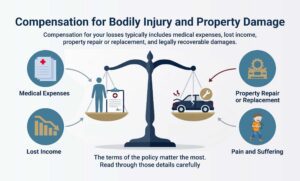
Compensation for Bodily Injury and Property Damage
Compensation for your losses typically includes:
- Medical expenses
- Lost income
- Property repair or replacement
- Legally recoverable damages including pain and suffering
The terms of the policy matter the most. Read through those details.
Legal Considerations for Bodily Injury & Property Damage Claims
There’s much to think about here. Every state has a statute of limitations that limits how long you have to file a claim. Some states allow partially at fault parties to file a claim for their losses. Policy evidence is also complex.
These all matter. Hire an attorney to help you navigate these limitations.
What Happens If the Insurance Coverage Is Not Enough?
Policy limits can be tough. Serious accidents often cause costs that are much higher. That’s why the at-fault party may face a lawsuit from the victim. Victims may be able to seek a claim against other assets.
When Should You Speak With a Personal Injury Lawyer?
It’s often best to speak to an attorney if:
- You have serious injuries.
- There are disputes over liability.
- Multiple people are involved.
- There’s significant property damage.
- Your claim was already denied.
- The other party doesn’t have insurance.
Your lawyer will evaluate damages, liability, and insurance claims. They handle the deadlines and give you peace of mind.
Conclusion – Understanding Bodily Injury & Property Damage Claims
Bodily injury and property damage are common types of claims in car accidents. Bodily injury helps pay for injury-related costs. Property damage covers damage to your assets. But there are a lot of factors that play a role in what you’ll receive.
Ledger Law is an advocate for victims. We seek full and fair compensation for all losses you have. Our commitment to helping clients pursue fair compensation is second to none. Request a free consultation at Ledger Law.
Injured or Facing Property Damage After an Accident?
Call us 24/7 for immediate assistance.
FAQs About Bodily Injury & Property Damage
What is the difference between bodily injury and property damage?
Bodily injury covers physical injuries to people. Property damage covers damage to property and assets.
What does bodily injury and property damage liability cover?
All losses related to your injuries or property damage. Policies differ. Most have limits.
How do bodily injury and property damage claims work together?
Many accidents involve both claims. That means the policy needs to cover both types of losses.
Who pays for bodily injury and property damage after an accident?
Policyholders are required to obtain these as a part of liability insurance. In at-fault states, the driver responsible for the accident pays the losses of those hurt.
How are bodily injury claims different from property damage claims?
Bodily injury claims are focused on recovery and damages from physical injury. They can be more subjective.
What evidence is needed for bodily injury and property damage claims?
Demonstrate fault and insurance coverage. You will need to demonstrate the value of the losses you have.
What happens if bodily injury and property damage exceed the insurance policy limits?
Victims may seek a lawsuit against the at-fault party for additional losses. Your attorney will explore opportunities.
When should you contact a lawyer for bodily injury and property damage claims?
Your attorney is your advocate. We work with you to prove value and fault.

Emery Brett Ledger brings more than 27 years of experience to personal injury law. He founded & led The Ledger Law Firm in securing over $100 million in compensation for clients with life-altering injuries & complex claims. Licensed in California, Texas, & Washington, Emery earned his law degree from Pepperdine University School of Law. His practice areas include car & truck accidents, wrongful death, catastrophic injuries, maritime claims, & mass tort litigation. He has been recognized by The National Trial Lawyers’ Top 100, Mass Tort Trial Lawyers Top 25, and America’s Top 100 Personal Injury Attorneys. Emery also received the 2025 Elite Lawyer Award & holds a perfect 10.0 Avvo rating with Platinum Client Champion status. His legal work has been featured on CNN, Forbes, NBC, & ABC.
Free Case Evaluation
Recent Posts
- Bodily Injury & Property Damage: Coverage, Claims, Liability & Compensation
- Amusement Park Ride Injuries: Common Causes, Safety Hazards & Legal Options
- Child Injured at School: Who Is Responsible, Who Pays & What Parents Should Do?
- What Does Litigation Mean in a Personal Injury Case? Process, Costs & Legal Options
- What Type of Accident Kills the Most Construction Workers? The Fatal Four Explained
Emery Brett Ledger brings more than 27 years of experience to personal injury law. He founded & led The Ledger Law Firm in securing over $100 million in compensation for clients with life-altering injuries & complex claims. Licensed in California, Texas, & Washington, Emery earned his law degree from Pepperdine University School of Law. His practice areas include car & truck accidents, wrongful death, catastrophic injuries, maritime claims, & mass tort litigation. He has been recognized by The National Trial Lawyers’ Top 100, Mass Tort Trial Lawyers Top 25, and America’s Top 100 Personal Injury Attorneys. Emery also received the 2025 Elite Lawyer Award & holds a perfect 10.0 Avvo rating with Platinum Client Champion status. His legal work has been featured on CNN, Forbes, NBC, & ABC.
