

Are Class Action Settlements Taxable? IRS Rules on Class Action Lawsuit Settlement Money Explained

Asking whether class action settlements are taxable is a good question. It’s always worth speaking to an accountant about your individual case. Most often, settlement money is tax-free. However, tax treatment depends on the payment itself and what it’s for. Your settlement notice may provide some insight into what’s applicable in your case. But remember, an accountant is always a professional to entrust.
Are Class Action Lawsuit Settlements Taxable? The Short Answer
Most class action lawsuits provide compensation for losses you suffered. That means they are not taxed under federal law. Some settlements are taxable or partially taxable. Tax settlements that pay you for lost income may be taxed as income, for example.
Avoid just thinking of it as a settlement. Instead, consider what the money is actually for. That’s going to tell you whether it’s taxable.
What Determines Whether Settlement Money Is Taxable?
Tax treatment is dependent on the underlying claim. The claim is the legal action you took to recover damages for some type of loss someone else caused to you. This could include wages for missed time at work. It may include business losses or emotional distress. Sometimes it’s punitive damages. And there’s also interest that can be applicable.
Why the Settlement Allocation Matters
Some settlement agreements divide payments into categories. These categories help determine why you are receiving the compensation. That directly impacts whether it’s reportable and taxable or not.
Is Money From a Class Action Lawsuit Taxable if It Replaces Lost Wages?
Some compensation from a claim may be to repay you for time you missed at work. For example, if you were out of work for a week, you’ve suffered monetary loss. The at-fault party is likely responsible for repaying you for that lost time. But you still have to pay taxes on it like you would any other earnings.
You would pay the same taxes that you would have paid if you received the compensation from your employer on a paycheck. That means factors like payroll withholding are applicable. Employee tax forms are a factor, too. Wage reporting may be dependent on case type.
Employment Class Actions and Wage Claims
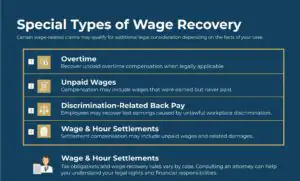
Some types of wage recovery receive special consideration. That may include:
- Overtime
- Unpaid wages
- Discrimination-related back pay
- Wage and hour settlements
Tax law can be complex in these areas. That’s why talking to an attorney about your case and being accountable for your responsibilities is a must.
Is Money Received From a Class Action Lawsuit Taxable for Refunds or Reimbursements?
Reimbursements or refunds are different than income. That’s money you spent that you shouldn’t have had to. If you received the following, your taxation requirements may differ:
- Product reimbursements
- Overcharge refunds
- Purchase price returns
These typically don’t create taxable income. That means you’re not likely to have to pay taxes on those funds.
Consumer Class Action Examples
Some people receive a class action settlement based on a consumer class. The following are typically not taxable recoveries of damages:
- Hidden fee recovery
- Defective products recovery
- Subscription overcharges
- False advertising recoveries
- Billing dispute recoveries
Physical Injury Settlements and Tax Rules
Payments tied to physical injuries may receive different treatment under the law. Gather documentation of all losses like this. Maintain those documents. Facts matter. That’s especially true in cases where medical expenses are previously deducted on your taxes.
Medical Costs and Prior Deductions
If you already claimed the losses you have for medical costs on your taxes, that may mean you took a deduction at tax time. If the insurance company refunds you for those losses, that means you no longer qualify for that deduction. Your tax professional can help you determine if this applies in your situation.
Emotional Distress, Punitive Damages, and Interest
Most of the time, emotional distress-related losses are not taxed. You’ve suffered the loss because of the actions of others.
However, if you earned post-judgment interest, meaning the funds put on hold for you gained interest, you may have to pay taxes on those interest-specific funds.
Punitive damages also differ. These are not a type of recovery of losses you’ve suffered. That’s why the IRS may consider it income. As a result, you may pay taxes on punitive damages as if you were paying your normal income tax rate.
Tax Forms You May Receive After a Class Action Settlement
Don’t forget to take a closer look at the tax forms you receive. You’ll likely receive a 1099 at the end of the year. You could receive other wage-related forms depending on the case. If you receive them, that doesn’t automatically mean you owe taxes. It means you should speak to your accountant about whether those funds are taxable.
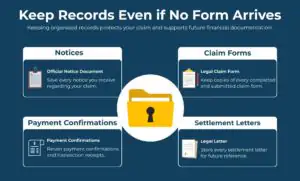
Keep Records Even if No Form Arrives
All of the documentation you have can work in your favor. Keep all evidence you have in your case, including:
- Notices
- Claim forms
- Payment confirmations and receipts
- Settlement letters
This can help you prove what your losses are and what you received the funds for. That can help come tax time.
How to Report Class Action Settlement Income
Reporting depends on payment type and jurisdiction. There’s plenty of rules to abide by here. It’s always beneficial to speak to your tax professional about your obligations. Review all of your settlement documentation, paperwork, and details. Then, seek tax guidance for any situation where you’re unsure.
Unsure If Your Settlement Is Taxable?
State Taxes on Class Action Settlements
State tax treatment may be different than what you can expect from federal taxes. It’s always important to consider your residency when determining taxation. Your local and state tax laws may impact your claim recovery.
Common Mistakes to Avoid
Consider some of the most common mistakes plaintiffs make related to taxes and class action settlements.
- Assuming all settlements are tax-free. They’re definitely not.
- Ignoring all forms sent to you.
- Not keeping records.
- Misunderstanding multi-part payments related to taxes on class action lawsuits.
Instead, talk to your accountant. Plan early so you’re not caught later.
Should You Talk to a Tax Professional?
Professional advice is always a valuable investment. But there are some times when you shouldn’t go without it:
- You are likely to receive payments for multiple types of settlements
- You’re getting a large payment.
- You’re just unsure what applies in your case.
Accountants and tax attorneys reduce errors and risks. That saves you money in the long term.
Conclusion – Understanding Whether Class Action Settlements Are Taxable
When you are questioning whether class action settlements are taxable, that means you’re anticipating receiving compensation. Take the time to speak to an attorney before you take any action in filing a claim. Remember, wages, interest, refunds, and injury-related claims could have some tax implications. Before you file, reach out to a professional.
At Ledger Law Firm, our personal injury attorney and class action lawyer work with you to support you through this process. Let us fight for you to receive fair treatment.
FAQs About Are Class Action Settlements Taxable?
Are class action settlements taxable by the IRS?
Most settlements are not taxable by the IRS. You may have to pay taxes if your settlement compensates you for missed time at work.
Are class action lawsuit settlements taxable income?
Sometimes class action lawsuit settlements may be taxable. If you’re receiving wage compensation, interest-related payments, or other types of income, you could pay taxes.
Is money from a class action lawsuit taxable if I receive a check?
It’s not the check that matters. If you receive a check, find out what it’s for. Most of the time, it’s not taxable.
Is money received from a class action lawsuit taxable for refunds or reimbursements?
Most of the time, money received in a class action lawsuit isn’t taxable. That applies to most refunds and reimbursements.
Do I have to report class action settlement money on my taxes?
You may have to report these settlements if they are considered income. Always consult with a tax professional before making those decisions.
Are class action settlements for physical injury taxable?
It could be. If you are receiving damages to compensate you for lost wages or punitive damages, you may pay taxes on them.
Are employment class action lawsuit settlements taxable as wages?
If you are seeking recovery of lost wages, you may have to pay taxes on those funds. That’s not always the case.

Emery Brett Ledger brings 28+ years of experience to personal injury law. He founded & led The Ledger Law Firm in securing over $100 million in compensation for clients with life-altering injuries & complex claims. Prior results do not guarantee a similar outcome. Licensed in California, Texas, & Washington, Emery earned his law degree from Pepperdine University School of Law. His practice areas include car & truck accidents, wrongful death, catastrophic injuries, maritime claims, & mass tort litigation. He has been recognized by The National Trial Lawyers’ Top 100, Mass Tort Trial Lawyers Top 25, and America’s Top 100 Personal Injury Attorneys. Emery also received the 2025 Elite Lawyer Award & holds a perfect 10.0 Avvo rating with Platinum Client Champion status. His legal work has been featured on CNN, Forbes, NBC, & ABC.
Free Case Evaluation
Recent Posts
- Punitive Damages in a Car Accident: When Can You Recover Them?
- Tailgating Injury: What Causes Tailgating, Road Rage & How to Stay Safe
- Waiting to Call a Lawyer Can Hurt Your Case: Evidence, Deadlines & Legal Risks
- What Is Property Damage in a Car Accident? Claims, Costs & Who Pays
- Bodily Injury & Property Damage: Coverage, Claims, Liability & Compensation
Emery Brett Ledger brings 28+ years of experience to personal injury law. He founded & led The Ledger Law Firm in securing over $100 million in compensation for clients with life-altering injuries & complex claims. Prior results do not guarantee a similar outcome. Licensed in California, Texas, & Washington, Emery earned his law degree from Pepperdine University School of Law. His practice areas include car & truck accidents, wrongful death, catastrophic injuries, maritime claims, & mass tort litigation. He has been recognized by The National Trial Lawyers’ Top 100, Mass Tort Trial Lawyers Top 25, and America’s Top 100 Personal Injury Attorneys. Emery also received the 2025 Elite Lawyer Award & holds a perfect 10.0 Avvo rating with Platinum Client Champion status. His legal work has been featured on CNN, Forbes, NBC, & ABC.