


New California Traffic Laws 2024 With Driver’s Handbook Updates

- Lowrider Cruising Ban Lifted: AB 436 repealed local bans. So, lowrider cruising will be legal statewide again.
- Speed Camera Pilot Program: AB 645 launched automated speed cameras in six cities; tickets won’t affect a driver’s record.
- Catalytic Converter Laws: New laws make it illegal to possess stolen converters and require VIN etching on new vehicles.
- Pedestrian Crosswalk Safety: The “Daylighting” law (AB 413) bans parking within 20 feet of crosswalks for better visibility.
- Traffic Stop Reforms: AB 2773 requires police to state the reason for a traffic stop before asking any questions.
- E-Bike Regulations: New rules are clarifying safety standards and age requirements for riders of electric bicycles.
- Distracted Driving: Strict enforcement continues on California’s hands-free law, with violations adding points to a driver’s record.
California updates and enforces its traffic laws strictly to safeguard its citizens. Following it, the state updated its 2024 traffic rules. The new California traffic laws 2024 aim to improve road safety and convenience.
The new Californian traffic laws were updated for AB436, AB645, SB68, and a few other sections. New changes are being implemented regarding the lifting of the lowrider cruising ban, parking rules on standing, crosswalks, and different situations.
These updates promote greater road safety, equity, and accountability for all drivers, cyclists, and pedestrians. It is crucial to stay informed about these changes to ensure compliance and avoid legal issues.
Key Updates in California Traffic Laws
The most impactful changes in new traffic laws in California 2024 were made in the speed camera program, omnibike bill, etc. So, check out these updates on the new traffic laws for California for a better road experience.

AB 436 – Lowrider Cruising Ban Lifted
Effective January 1, 2024, Assembly Bill 436 formally repealed municipal ordinances. Previously, it prohibited lowrider cruising. The new driving regulations end the decades-long practice of cities and counties banning the cultural gatherings of lowrider cruising. The new law will be applicable statewide.
But note that local jurisdictions may still regulate illegal activities, including noise violations or other public disturbances during the event.

AB 645 – Speed Camera Pilot Program
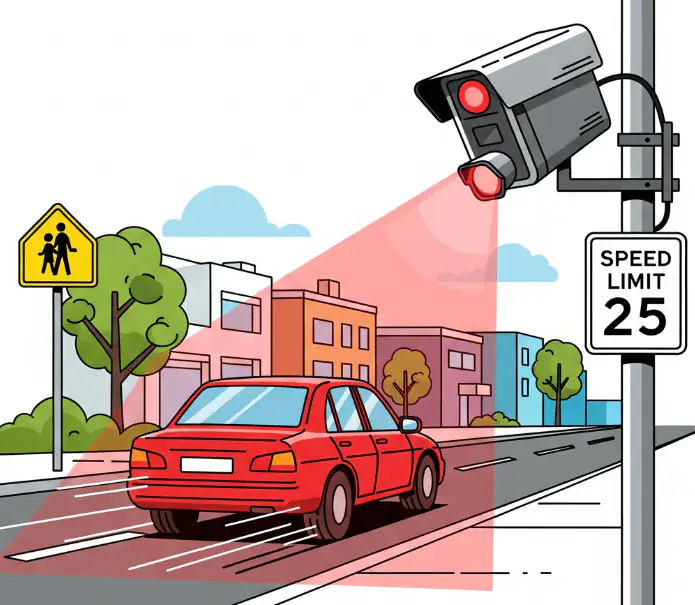
AB 645 introduces a pilot program for speed safety cameras in six major California cities. This law aims to address the problem of speed-related crashes by deploying automated cameras in strategic locations such as school zones and high-injury corridors.
For drivers, this means an increased likelihood of being monitored and fined for speeding, especially in these critical areas. Understanding where these cameras are and adhering to speed limits is more important than ever.
These cameras are expected to reduce traffic incidents significantly, based on evidence from other cities where similar measures have been implemented. Drivers should be aware of the fines associated with speeding violations captured by these cameras.
The Ledger Law Firm reminds drivers that while these violations are civil and not criminal, they still carry financial penalties and contribute to a driver’s record. Staying within speed limits is not only a matter of law but also of safety.
SB 68 – Vehicle Safety Regulations
So, what are the new driving laws for 2024 in California regarding vehicle safety? Senate Bill 68 focuses on vehicle safety regulations. The updates provide a framework for the California Highway Patrol (CHP) to oversee and update safety standards. It ensures that vehicles used for pupil transportation, among other services, meet specific inspection requirements. The aim is to ensure the safety of the passengers.
For further understanding of this law, you can contact (949) 377-1111.
SB 55 / AB 641 / AB 1519 – Catalytic Converter Theft Laws
Catalytic converter thefts have increased significantly in California since the onset of the COVID-19 pandemic. On average, there were 40 to 50 incidents of catalytic converter theft in California during 2022 to 2023. So, in a concerted effort to combat the rise in catalytic converter theft, California has enacted several new laws.
- AB 1519: Now, it’s a misdemeanor to remove or alter any identifying markers from a catalytic converter. It includes the Vehicle Identification Number (VIN). It is a crime to possess a catalytic converter with altered or removed markings.
- AB 641: Individuals can’t possess six or more used catalytic converters that have been cut from a vehicle. AB641 applies, unless they are a licensed automobile dismantler.
- SB 55: Retailers are now required to sell new or used vehicles to etch the catalytic converter with the VIN at the point of sale. It is applicable unless the buyer declines.
SB 88 – Driver Qualifications for Pupil Transportation
Senate Bill 88 establishes new requirements for compensated drivers for pupil transportation services. The aim is to improve the safety of student transportation. Key provisions include:
- Drivers must be at least 18 years old with a valid California driver’s license.
- They must pass criminal background checks and tuberculosis risk assessments.
- Drivers must have a satisfactory driving record. He must have no more than one point count in the past three years.
- They must pass a medical examination and complete mandatory training.
AB 413 – Stopping, Standing, or Parking Near Crosswalks
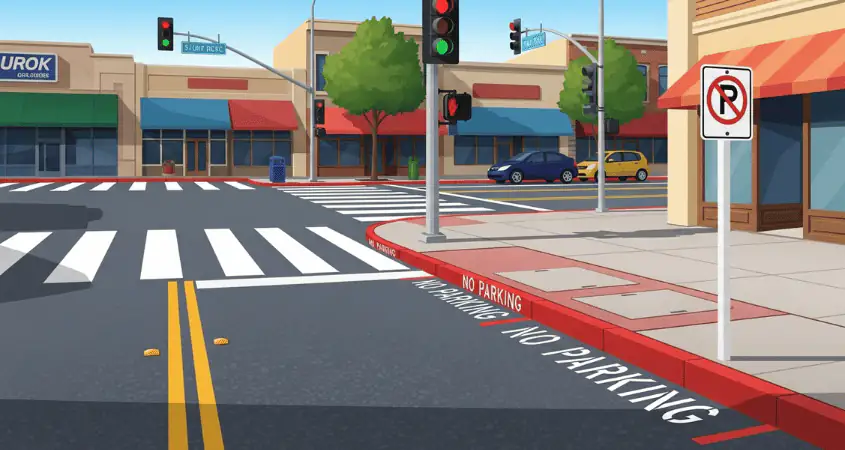
Assembly Bill 413 is commonly referred to as the “Daylighting” law. It prohibits drivers from stopping, standing, or parking a vehicle within 20 feet of the approach side of a marked or unmarked crosswalk. For curb extensions, the distance is 15 feet. It will improve visibility for pedestrians, cyclists, and drivers, making intersections safer. Note that the law applies even if the curb is not painted red.
AB 2773 – Peace Officer Traffic Stops
AB 2773 introduces significant changes to police procedures during traffic and pedestrian stops in California. Starting January 1, 2024, officers are required to state the reason for a stop before proceeding with questioning related to a traffic violation or criminal investigation.
This measure aims to enhance transparency and accountability in law enforcement interactions. Drivers need to be aware of this change, as it affects the dynamics of traffic stops and their rights during such encounters.
The law also mandates that the reason for the stop be documented in any resulting citation or police report. In addition, law enforcement agencies are required to report these reasons annually to the Attorney General, promoting greater oversight.
This means a layer of protection and clarity for drivers during traffic stops. The Ledger Law Firm advises drivers to be aware of these changes and to understand their rights during traffic stops.
AB 1125 – Impounding Driver’s Licenses for Not Paying Fines
The AB1125 California vehicle code 2024 law is about the court’s capacity to impound a driver’s license. Previously, the jury could suspend or impound a driver’s license for failing to make an agreed-upon installment payment for a traffic fine or bail. Now, this authority of the jury has been suspended.
The legislation will prevent low-income individuals from losing their driving privileges for reasons unrelated to dangerous driving behavior.
AB 925 – Verifying Registration Before a Vehicle Is Towed
Assembly Bill 925 requires that a peace officer or parking enforcement employee verify with the DMV before towing it. The verification will check that the registration has truly expired for more than six months. The new road rules California USA will protect individuals who may have paid for their registration but had the sticker stolen.
SB 673 – Ebony Alert
The Ebony Alert is modeled after the Amber Alert system. The new tool will help law enforcement personnel to find missing Black children and young adults (ages 12-25). It is handy to find disappeared kids under suspicious circumstances.
The alert can be broadcast to the public to aid in a swift recovery. Also, if the person’s safety is at risk, the Ebony Alert could be activated. It applies if they are subject to human trafficking or other factors indicate peril.

AB 946 – Endangered Missing Advisory
AB 946 law complies with other alert programs. It enhances the ability of law enforcement to disseminate information to the public about at-risk missing persons. The Endangered Missing Advisory (EMA) is activated for developmentally disabled, cognitively impaired, and abducted individuals. It also applies to people unable to care for themselves.
AB 1909-Omnibike Bill
The Omnibike Bill, AB 1909, marks a significant step forward in cyclist safety in California. This comprehensive legislation requires drivers to change lanes when safely passing a bicyclist, mirroring the rules for overtaking other vehicles.
It also prohibits the enforcement of bicycle licensing laws statewide, reducing potential harassment of cyclists. For drivers, this means adjusting their driving habits to accommodate these new rules and ensure the safety of cyclists.
Furthermore, AB 1909 expands access for e-bikes on bikeways, while still allowing specific trails to prohibit them. This law reflects California’s commitment to promoting cycling as a sustainable and safe mode of transportation.
As drivers, it’s crucial to be cognizant of the increased presence of e-bikes and adapt driving practices accordingly. The Ledger Law Firm encourages drivers to familiarize themselves with these new rules to avoid accidents and legal issues.
AB 1329 – ID Card Pilot Program
Assembly Bill 1329 has been updated specifically for the San Diego County Sheriff’s Department and the DMV. It will implement a five-year pilot program. The aim is to provide eligible incarcerated individuals with an identification card. Otherwise, there will be a renewed driver’s license upon their release from a San Diego County detention facility. It will strengthen the existing California registration law 2024, complying with previous sections.
Navigating a Modern Roundabout
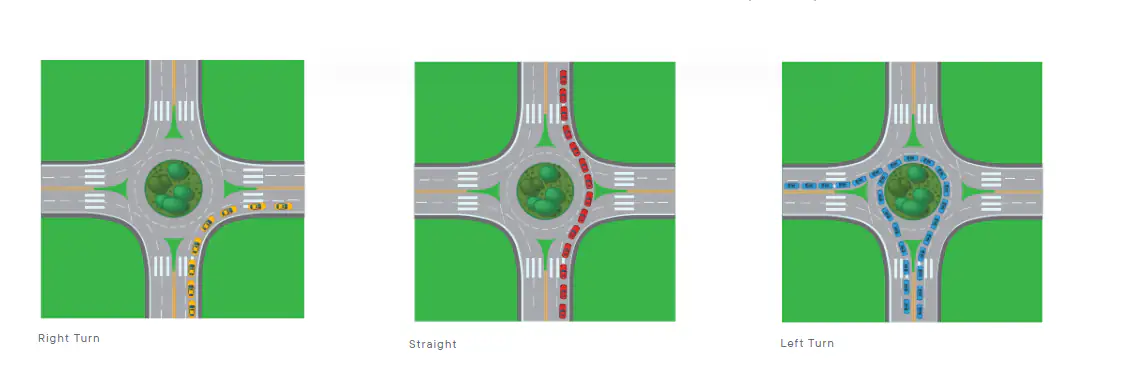
Modern roundabouts improve traffic flow and safety. The circular intersections allow vehicles to move continuously without a traffic signal. As the provided image illustrates, navigating them is straightforward, depending on the turn you wish to make.
- Right Turn: As shown in the “Right Turn” panel, you should enter the roundabout from the right-most lane, stay in that lane, and exit at your first opportunity.
- Going Straight: For a straight-through movement, you should enter the roundabout from either the right or a central lane. You’ll drive through the roundabout, maintain your position, and exit to continue straight.
Left Turn: To make a left turn, enter the roundabout from the left-most lane. You’ll proceed around the central island until you reach your desired exit. It will be the third exit in this example.
Special Focus Areas in 2024 Traffic Laws
The California DMV handbook has a few focus areas. It brings stricter penalties for distracted driving, brings new E-bike rules, and increases road safety.
Stricter Penalties for Distracted Driving
California has had hands-free laws for years. However, the new laws in California July 1, 2024, are increasing the strictness for hands-free driving. According to the California driver’s handbook, authorities can now penalize drivers for using cell phones or other electronic devices while driving. The penalties can include fines and a point on your driving record for repeat offenses.
New E-Bike Regulations
E-bikes are a growing presence on California roads. So, Senate Bill No. 1271 has introduced new regulations to clarify rules for e-bike users. It now has age restrictions for certain classes of e-bikes and requirements for helmets.
E-bike riders are often subject to the same traffic laws as traditional cyclists and, in some cases, motorists. Also, the new rule change means E-bikes with over 750W or 20mph capacity alone are restricted in California.

Increased Protections for Pedestrians and Cyclists
Several new laws, including the “Daylighting” law (AB 413), will improve the safety of vulnerable road users. Also, drivers are now required to give cyclists at least three feet of space when passing. Plus, new rules for bicyclists proceeding through intersections require them to stop at a “Walk” signal.
Revised Speed Limit Laws
Local jurisdictions have been given more flexibility to set appropriate speed limits on certain streets. It is especially applicable in commercial and residential areas. It will prioritize safety over traffic flow, acknowledging that the lower speeds are safer for road users.
Automated Traffic Enforcement
The speed camera pilot program (AB 645) is a significant step toward automation in California. Law enforcement can use it for illegal parking in bus or bike lanes. Now, camera-equipped vehicles of enforcement will issue citations automatically.
Vehicle Registration & Towing Changes
The 2024 DMV traffic rulebook has also brought changes in vehicle registration and towing rules.
Vehicle Registration Changes
Law enforcement officers cannot stop a vehicle because of an expired registration tag. They now must wait until two whole months have passed since the expiration Date. This change, part of AB 256, will prevent unwarranted stops and potential hardships for drivers.
Laws on Towing Cars with Expired Registration
According to Assembly Bill 925, authorities must check the DMV before towing a vehicle for expired registration. It ensures that a car isn’t towed due to a stolen or missing sticker when the registration is current.
Speed Safety Pilot Program
The Speed Safety Pilot Program (AB 645) is a significant change in speeding enforcement in certain cities. Now, automated cameras can issue fines, which are not reported to the DMV. The focus is on automated ticketing to deter speeding in high-risk areas.
Traffic Safety and Public Well-being
The new California DMV handbook also focuses on improving visibility and road safety. It includes:
Improved Visibility at Intersections and Crosswalks
The “Daylighting” law (AB 413) is part of a larger trend. It ensures that pedestrians and other road users are easily visible to drivers. Also, it reduces the risk of collisions. The state now aims to create “complete streets” with all users in mind.
Increased Liability for Accidents under New Laws
The new driver rulebook in California has increased liability for drivers’ failure to comply with the laws. For example, if an accident occurs due to parking too close to a crosswalk (a violation of AB 413), it could increase a driver’s liability in a personal injury lawsuit.
Impact on Insurance Rates and Legal Consequences
While some new violations, like those from speed cameras, won’t affect your insurance, others may. A conviction for distracted driving, for instance, could lead to a point on your record. It will increase your insurance premiums significantly. The new laws have specific legal consequences, such as fines and misdemeanor charges for certain catalytic converter-related crimes.
California’s Commitment to First Responders and Equity
The new California traffic rules in 2024 showcase the state’s commitment to first responders. It also highlights their importance in equity on roads, including pedestrian and cyclist-friendly roads.
Honoring First Responders
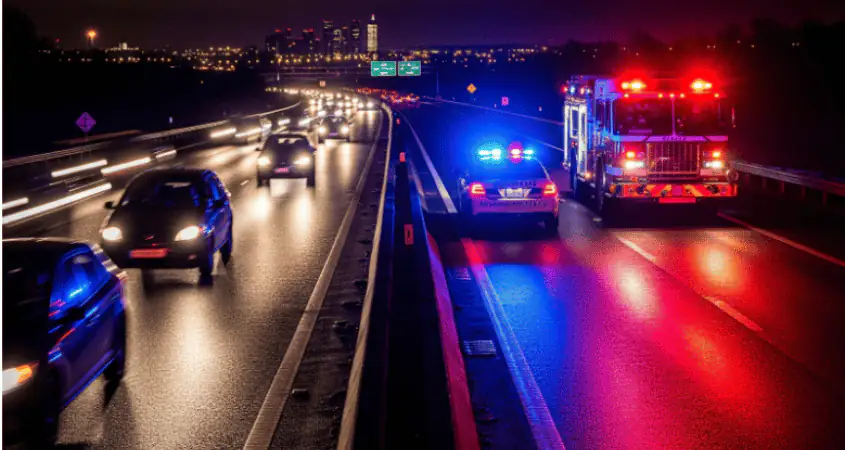
Although the 2024 new rules didn’t directly address honoring first responders, it has a few signals. It includes long-standing laws, such as the “Move Over, Slow Down” law (California Vehicle Code Section 21809). So, drivers must move to another lane or slow down when approaching a stationary emergency vehicle with flashing lights.
Promoting Equity
Several of the new laws, including AB 2773 (on pretextual stops) and AB 1125 (on license impoundment for unpaid fines), focus on road equity.
The Ebony Alert is another example. It provides a targeted resource for a disproportionately affected community. Also, the speed camera pilot program will implement equity analysis. It ensures cameras are not clustered in low-income communities.
Staying Updated and Compliant
Since the new 2024 California traffic rulebook has brought changes, drivers must stay updated. Or else, they can fail to comply with the latest traffic rules and get fined.
Staying Abreast of Changes to California Traffic Laws
Drivers need to stay informed. They can keep the official California DMV Driver’s Handbook for the updated information. For more specific legal guidance, consider consulting a legal expert. You can contact a Ledger Law Firm attorney at (949) 377-1111 for personalized advice.
Impact of New Traffic Laws on Drivers and Car Owners
The new laws have a direct impact on daily driving. Drivers must be more aware of their surroundings, especially near crosswalks. Also, stricter rules regarding electronic device use mean they must be more careful. Car owners with popular catalytic converters must be aware of the new theft laws.
What to Do if You Are Involved in an Accident?
As the new traffic rules in California have changed, liability has increased too. So, it’s crucial to know what to do after an accident:
Get a FREE Case Evaluation Form
Legal Implications of the New Laws
Now, for traffic accidents, the new laws will determine fault and liability. For instance, if an accident occurs near a crosswalk. Here, one of the vehicles was violating the new “Daylighting” law (AB 413). The lawsuit will consider it for determining the liability.
Involved in a Car Accident In California?
Ledger Law Firm will fight for your rights according to the updated California traffic rules. Call us anytime and let us help you with the accident liability determination and insurance claim.
We are available 24/7!
Contacting a Lawyer for Help
Consult a lawyer soon if you are involved in a car accident. The lawyer will explain the legal implications of the new laws. So, you will understand your rights and responsibilities. Also, they can deal with insurance companies and, if necessary, court proceedings.
Traffic Signals, Pedestrian Signals, and Signs
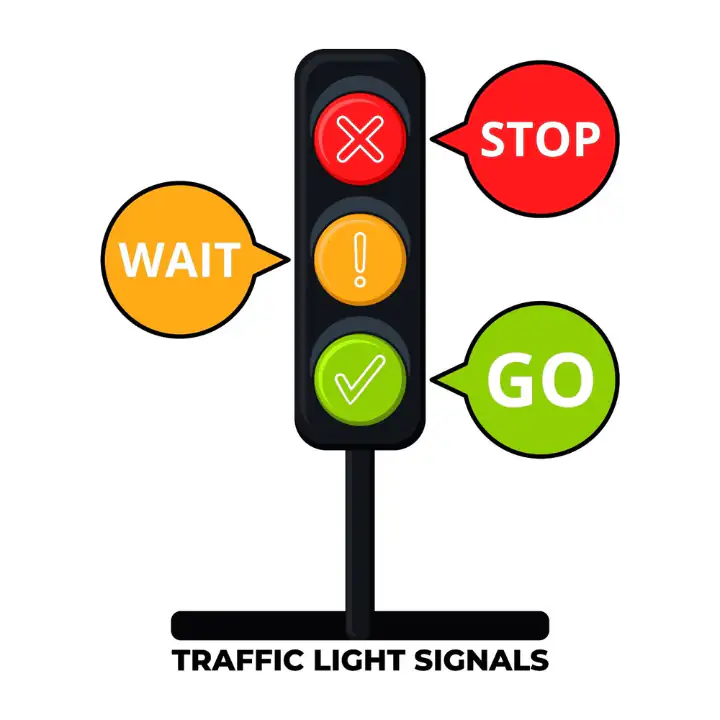
The following table provides a concise overview of standard traffic signals and signs from the California Driver’s Handbook:
| Signal Type | Description | What to Do |
|---|---|---|
| Solid Red Light
|
Stop before the white limit line or crosswalk. |
You may turn right on a solid red light after stopping, unless a “No Turn on Red” sign is posted. You must yield to pedestrians and other traffic. |
| Red Arrow
|
Stop and do not turn in the direction of the arrow. | Wait for the red arrow to change to a green light or green arrow. |
| Flashing Red Light
|
Treat the intersection like a stop sign. | Stop, then proceed when it is safe, yielding to all other traffic and pedestrians. |
| Solid Yellow Light
|
The signal is about to turn red. | Stop if you can do so safely. If you are already in the intersection, continue through. |
| Flashing Yellow Light
|
Proceed with caution. | Slow down and be alert, but you do not need to stop. |
| Solid Green Light
|
Proceed through the intersection. | Yield to any vehicles, bicyclists, or pedestrians still in the intersection. |
| Green Arrow
|
Go in the direction of the arrow. | You have the right-of-way for the turn; yield to any vehicles or pedestrians in the intersection. |


Pedestrian Signals
- WALK or Walking Person:
 You may cross the street.
 - Don’t Walk or Raise Hand:
 You may not start crossing the street.
 - Flashing Don’t Walk or Flashing Raised Hand: Do not start crossing. If you are already in the crosswalk, finish crossing quickly and safely.
- Numbers: A countdown timer indicates the seconds remaining to cross the street.

 You may not start crossing the street.
 Traffic Signs
Traffic signs are categorized by color and shape to convey specific meanings.
🔴 Red: Stop, Yield, or Do Not Enter.
⚪ White: Regulation signs, such as speed limits, one-way streets, or no parking.
🟡 Yellow: General warning of what to expect, such as a sharp curve or intersection ahead.
🟢 Green: Guide signs for directions, distances, and destinations.
🟠 Orange: Construction and maintenance warnings.
🔵 Blue: Motorist services, such as gas, food, or lodging.
🟤 Brown: Recreation and cultural interest areas.
New California Traffic Laws 2025:
The legislative process for new California traffic laws in 2025 is ongoing. Some potential new laws include stricter “no-touch” phone laws and the possible expansion of the red-light camera program.
Also, there will be regulations to improve street safety for bicyclists and pedestrians. For instance, the speed camera pilot program (AB 645), though enacted in 2024, is expected to become operational in 2025 in participating cities. We will provide updates on new legislation as it is signed into law.
Conclusion:
The new California traffic laws for 2024 represent enhanced safety, equity, and modernized enforcement methods.
From the formal lifting of the lowrider cruising ban to the implementation of automated speed cameras, these changes affect every driver and road user in the state. You must stay informed about these regulations and practice safe driving habits. This way, you can maintain compliance and contribute to safer roads for everyone.
Frequently Asked Questions
1. Will a ticket from a speed camera in the pilot program affect my driving record?
No. Under AB 645, tickets issued by speed safety cameras will not be reported to the DMV. So, it will not result in points on your driving record.
2. Can I still get a ticket for a missing registration sticker if my registration is current?
A peace officer cannot stop you for an expired tag until two months after the expiry date. They must verify with the DMV for the registration expiration at least six months before towing your vehicle.
3. What is the new “Daylighting” law, and how does it affect parking?
The “Daylighting” law (AB 413) makes it illegal to park within 20 feet of the approach side of a crosswalk. It applies even if there is no red curb painted on the street.
4. How does the new “Ebony Alert” work?
The Ebony Alert is a system for law enforcement to find missing Black children and young adults (ages 12-25). It applies if they have disappeared under suspicious circumstances and will help in a fast recovery.
5. Is it illegal to use my cell phone at a red light?
Yes. California’s hands-free law prohibits holding a cell phone for any reason while driving. It applies even if you are at a red light or in traffic. Future laws for 2025 are expected to make this even stricter.

Emery Brett Ledger brings 28+ years of experience to personal injury law. He founded & led The Ledger Law Firm in securing over $100 million in compensation for clients with life-altering injuries & complex claims. Prior results do not guarantee a similar outcome. Licensed in California, Texas, & Washington, Emery earned his law degree from Pepperdine University School of Law. His practice areas include car & truck accidents, wrongful death, catastrophic injuries, maritime claims, & mass tort litigation. He has been recognized by The National Trial Lawyers’ Top 100, Mass Tort Trial Lawyers Top 25, and America’s Top 100 Personal Injury Attorneys. Emery also received the 2025 Elite Lawyer Award & holds a perfect 10.0 Avvo rating with Platinum Client Champion status. His legal work has been featured on CNN, Forbes, NBC, & ABC.
Free Case Evaluation
Recent Posts
- Punitive Damages in a Car Accident: When Can You Recover Them?
- Tailgating Injury: What Causes Tailgating, Road Rage & How to Stay Safe
- Waiting to Call a Lawyer Can Hurt Your Case: Evidence, Deadlines & Legal Risks
- What Is Property Damage in a Car Accident? Claims, Costs & Who Pays
- Bodily Injury & Property Damage: Coverage, Claims, Liability & Compensation
Emery Brett Ledger brings 28+ years of experience to personal injury law. He founded & led The Ledger Law Firm in securing over $100 million in compensation for clients with life-altering injuries & complex claims. Prior results do not guarantee a similar outcome. Licensed in California, Texas, & Washington, Emery earned his law degree from Pepperdine University School of Law. His practice areas include car & truck accidents, wrongful death, catastrophic injuries, maritime claims, & mass tort litigation. He has been recognized by The National Trial Lawyers’ Top 100, Mass Tort Trial Lawyers Top 25, and America’s Top 100 Personal Injury Attorneys. Emery also received the 2025 Elite Lawyer Award & holds a perfect 10.0 Avvo rating with Platinum Client Champion status. His legal work has been featured on CNN, Forbes, NBC, & ABC.