

How Do Car Accident Settlements Work? A Step-by-Step Guide to the Car Accident Settlement Process

Owning a car means protecting your investment. Insurance is a part of that. Filing an insurance claim allows you to use that insurance when an accident occurs. However, it isn’t a simple process. How do car accident settlements work?
The process involves knowing when to file a claim. To receive compensation you need to negotiate with the insurance adjuster. Settling a car accident means you and the insurance company reach an agreement. They pay you for the repairs. But there is a great deal that goes into that process along the way.
What Is a Car Accident Settlement?
A car crash settlement is a payment you receive after filing a claim with the insurance company. Insurance companies provide you with guaranteed protection when a covered peril occurs. You file a detailed document explaining your losses. You provide supporting evidence. The insurance company negotiates and lowers your claim request.
A settlement happens after an agreement occurs. You receive compensation for your losses. That may include injuries, property damage, and other losses. Settling a car accident means you agree to the terms. They pay you. The debt is settled.
How the Car Accident Settlement Process Begins
A peril is a type of event your insurance policy covers. Perils are written into your policy documentation. A car accident may be a covered peril.
Victims in a car accident must take every step to be safe. That means calling 911 for help and documenting your injuries. Get medical care next.
Contact your insurance company as soon as you can. Notify them about the accident. Tell the other insurers if other vehicles were involved.
You may not know what your losses are right after the accident. You don’t have to during this initial notification step. You just need to let them know what happened.
Wondering How Do Car Accident Settlements Work?
Filing a Car Accident Insurance Claim
You can submit an outline of all of your losses from the accident to the insurance company. This is called a claim. It’s necessary to accurately document your injuries and losses. You will likely need:
- Crash report
- Police reports
- Any available evidence, like photos
- Documentation of your injuries and costs related to them
- Missed time at work due to injuries
- Estimated costs to repair the vehicle or replace it
Your estimate may need to come from a licensed mechanic and be approved by the insurance company.
Your state laws can play a role in who pays for your losses. In at-fault states, the driver who caused the accident covers the other driver’s losses. In a no-fault state, you file a claim with your own insurance company.
Note that you must be eligible for a settlement. That means the insurance company must owe you money for the losses you demonstrated.
Case Investigation and Evidence Review
The insurance company has the right to investigate your claims. They look at all of the evidence you submit. They consider:
- Police reports
- Medical reports
- Photos of the scene and damage
- Statements from all people involved
- Accident reconstructionist data
The next step in the car accident settlement process is for the insurer to analyze all of this data. They then must determine who is at fault. Insurance companies base these decisions on evidence, not just statements. Having evidence to back up your claim can be critical in winning a favorable settlement.
Insurance Policy Review and Coverage Limits
Your insurance policy has a limit. You set this limit when purchasing the plan. You cannot claim more than your limit.
Most insurance plans have several components. That includes bodily damage that covers all medical costs associated with the accident. Property damage helps you recover damages from losses like damage to your car.
Underinsured and uninsured motorist coverage may apply. It applies when the at-fault party does not have insurance or enough to meet your needs.
Calculating Damages in a Car Accident Settlement
There are two types of damages available in most claims.
- Economic damages cover costs related to the accident. Medical bills, car repairs, and lost wages are examples. They have a very clear dollar value.
- Non-economic damages cover less tangible losses. This might include pain and suffering and mental anguish. The value is less specific.
You cannot recover damages you do not present. The insurance company is not going to tell you what your losses are. You must back up those claims with documentation.
Calculating Economic Damages
Economic damages include tangible, clearly defined losses. They include:
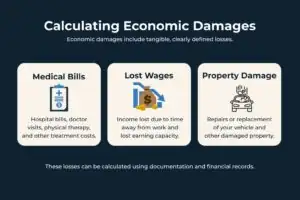
- Medical bills
- Lost wages
- Property damage
Evidence includes bills for the repairs, receipts for costs, and employment payroll records. You also need to consider future expenses. This might include expected future medical costs, for example.
Calculating Non-Economic Damages
Non-economic damages include:
- Emotional distress
- Pain and suffering
- Loss of enjoyment in life
These values are subjective. That makes valuing them challenging. You may need to estimate losses as well as possible. Use previous cases like yours to help. Think about the severity of your injuries. Also consider the long-term recovery.
Using the Multiplier Method
Some insurance companies apply a multiplier method to determine how much non-economic damages are. Factors like the amount of long-term injury and pain a person is in help determine what number is used to multiply against the economic damages.
There’s no way to provide an accurate range for what this will be. Every case is vastly different.
Making a Settlement Demand
A demand letter is submitted to the insurance company for your losses. This demand letter includes all the evidence presented and the demand for specific compensation.
There is a damage summary outlining what happened and who is at fault. Supporting evidence is presented. This is what starts negotiations. Be accurate and don’t delay.
Settlement Negotiations with the Insurance Company
Expect a back-and-forth process. Insurance companies often ask for clarification or evidence to back up claims. Some insurance companies will send a low-ball offer and demand that you settle right away. That often means there is a lot more to use.
This process takes time and patience. You’ll need to up the evidence and documentation to make the insurance company more willing to pay.
Settlement Agreement or Filing a Lawsuit
Most of the time, the parties agree to a settlement. Disputes over fault or value may leave the settlement incomplete. That’s when you have the right to go to trial.
Trial costs are higher. But trial outcomes may also be high. You must file the claim within the state’s statute of limitations (between 1 and 3 years).
Settlement or Trial – Final Resolution
A settlement ends the case and claim. You receive money, or costs are paid directly. It may be possible for a judge or a trial of your peers to decide on the outcome of a lawsuit. There are times when a jury trial is necessary.
Getting a Settlement Check After a Car Accident
After an oral agreement, you will send a release form. This protects the insurance company from additional claims later. Settlements can take time, from weeks to months. You may have to pay your attorney fees and other covered costs before you receive the check for the remaining amount.
How Car Accident Settlements Are Distributed
Your attorney will be alerted to the settlement. They will then allocate the funds based on the legal claim to them. That includes covering all attorney fees and case expenses. Medical bill liens and reimbursement are first, before you receive compensation. You receive the remaining value, called client net recovery.
Can You Speed Up the Car Accident Settlement Process?
Be proactive. Gather evidence along the way to demonstrate your losses. Do not just take the first claim the insurance company offers to you. Instead, balance speed and value.
How a Car Accident Attorney Can Help
Your attorney negotiates the losses you have. They value your benefits. They also provide you with legal insight and guidance that often leads to higher settlement outcomes. Your attorney finds all parties at fault. They will also provide legal guidance on when to go to trial for more compensation and when to settle. Your attorney ensures you know what your case is worth. The
For a car accident settlement, Ledger Law is the ideal choice. With years of experience and millions recovered, we can provide personalized legal support to you.
FAQs About How Do Car Accident Settlements Work?
How do car accident settlements work from start to finish?
Settlements start with a claim the victim files. Negotiations on the value of that claim led to an agreement on the value.
How long does it take to settle a car accident claim?
Claims take several months to a year or longer. Expect them to be longer for more complicated cases.
What factors affect the value of a car accident settlement?
The value of a car depends on the condition of the car before the accident. It also comes down to the evidence available to you.
How are damages calculated in a car accident settlement?
Evidence. You present evidence of your losses. The insurance company believes them or does not.
What happens if you reject a car accident settlement offer?
If you reject a car accident settlement offer, you go back to the negotiation process. In other cases, you can file a lawsuit against those involved.
How are car accident settlement checks distributed?
Your attorney receives the compensation from the settlement. They pay off all of the liens you have. They then submit a check to you for the remaining value.
Do you need a lawyer when settling a car accident claim?
You do not legally need an attorney. Having one can yield higher payouts and improved stress control.

Emery Brett Ledger brings 28+ years of experience to personal injury law. He founded & led The Ledger Law Firm in securing over $100 million in compensation for clients with life-altering injuries & complex claims. Prior results do not guarantee a similar outcome. Licensed in California, Texas, & Washington, Emery earned his law degree from Pepperdine University School of Law. His practice areas include car & truck accidents, wrongful death, catastrophic injuries, maritime claims, & mass tort litigation. He has been recognized by The National Trial Lawyers’ Top 100, Mass Tort Trial Lawyers Top 25, and America’s Top 100 Personal Injury Attorneys. Emery also received the 2025 Elite Lawyer Award & holds a perfect 10.0 Avvo rating with Platinum Client Champion status. His legal work has been featured on CNN, Forbes, NBC, & ABC.
Free Case Evaluation
Recent Posts
- Punitive Damages in a Car Accident: When Can You Recover Them?
- Tailgating Injury: What Causes Tailgating, Road Rage & How to Stay Safe
- Waiting to Call a Lawyer Can Hurt Your Case: Evidence, Deadlines & Legal Risks
- What Is Property Damage in a Car Accident? Claims, Costs & Who Pays
- Bodily Injury & Property Damage: Coverage, Claims, Liability & Compensation
Emery Brett Ledger brings 28+ years of experience to personal injury law. He founded & led The Ledger Law Firm in securing over $100 million in compensation for clients with life-altering injuries & complex claims. Prior results do not guarantee a similar outcome. Licensed in California, Texas, & Washington, Emery earned his law degree from Pepperdine University School of Law. His practice areas include car & truck accidents, wrongful death, catastrophic injuries, maritime claims, & mass tort litigation. He has been recognized by The National Trial Lawyers’ Top 100, Mass Tort Trial Lawyers Top 25, and America’s Top 100 Personal Injury Attorneys. Emery also received the 2025 Elite Lawyer Award & holds a perfect 10.0 Avvo rating with Platinum Client Champion status. His legal work has been featured on CNN, Forbes, NBC, & ABC.