

Is Elder Abuse a Crime? Criminal Charges, Federal Laws, Penalties & Legal Options Explained

Is elderly abuse a crime? Elder abuse is a serious legal crime. It’s devastating to those who are vulnerable. Elder abuse can be a federal crime.
Elder abuse violates a person’s rights. Those convicted are charged based on state and federal laws. Charges range from misdemeanor to felony. The details of every case matter. A conviction can lead to jail time. It may also include fines.
Understanding Elder Abuse
Elder abuse is the infliction of injury or confinement of a person who is older. It can also include intimidation or cruel treatment. There are various ways for elder abuse to happen. It could be physical or sexual assault. There may be psychological pressure and intimidation. Financial abuses may include stealing or manipulating a senior into changing a will. Neglect is one of the most socially devastating of abuses. It involves not receiving routine care, food, and medication as expected.
Seniors are vulnerable. Many don’t communicate what’s happening to them. Others may be unable to understand what’s occurring. These reasons make it clear. Abusing the elderly is a criminal act.
Is Elder Abuse a Criminal Offense?
It absolutely is. Elder abuse is a crime that could be a misdemeanor or a felony, depending on the severity of what’s happened. All states criminalize elder abuse.
Additionally, it can lead to a civil claim. Civil claims hold parties responsible for the damages. These lawsuits make defendants pay for the damage and losses they cause.
Both criminal and civil consequences are applicable. That means the victim can seek financial compensation against those who hurt them. The prosecutor could press criminal charges.
Criminal Charges for Elder Abuse
Criminal charges for elder abuse vary from state to state. Prosecutors look at all of the evidence available. That includes witness statements and physical evidence. Their job is to determine the severity of the injuries. They consider the immediate pain and suffering. Then they look at the long-term implications.
Prosecutors also take into consideration intent. They want to understand why the victims suffered these abuses. Proving intent could amplify a case to a felony charge.
Elderly abuse is often a felony when there is physical injury or death. It may also be applied when finances are exploited. Cases of serious neglect also fall into this category.
Misdemeanors are a lesser charge. They tend to be applied when the injuries are not intentional or there is no lasting implication.
Is Elder Abuse Punishable by Law?
Misdemeanor Elder Abuse
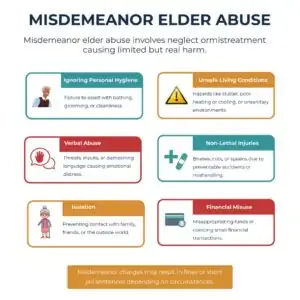
A misdemeanor will carry lower penalties. It’s typically applied when a person suffers limited consequences from the abuse. Convictions tend to lead to shorter jail time sentences and fines. Examples of a misdemeanor elderly abuse charge might apply to:
- Ignoring personal hygiene needs
- Leaving an elderly person in an unsafe position
- Verbal abuse
- Injuries causing non-lethal harm
- Isolation
- Using a credit card
Felony Elder Abuse
Felony elder abuse is a serious crime. It is punishable with longer jail sentences and long-term implications. Serious harm or abuse usually results in felonies. Examples of felony elderly abuse include:
- Sexual assault
- Physical strikes and punishment
- Abandonment
- Failure to provide food
- Failure to provide shelter
- Failure to provide medication
- Financial exploitation
- False imprisonment
- Abduction
- Injuries resulting in death
Is Elder Abuse a Federal Crime?
Elder abuse is a federal crime. This is because of the Elder Abuse Prevention and Prosecution Act of 2017. The Elder Justice Act also does. Federal laws typically involve actions of abuse, neglect, and scams against those who are older.
The Department of Justice and the FBI typically handle these cases. That includes situations of financial fraud, wire fraud, and exploitation. Additionally, if a nursing home is facing abuse claims, federal law applies. That includes any claims related to Medicare or Medicaid payments.
Federal law is also applicable when there is any type of interstate activity. For example, if a victim is abused across state lines, then the federal government gets involved.
Penalties for Criminal Elder Abuse
Punishments for criminal elder abuse are set by the organization with jurisdiction. In all cases, penalties are severe. In felony cases of physical abuse, large financial implications, or neglect, a person could face numerous years in prison.
Misdemeanor penalties may involve one or two years in jail. Some mayFactors-That-Determineonly require payment of fines or restitution. Repeat offenders may face more serious penalties as well.
In all cases, these are convictions that remain on their record. The result is long-term legal consequences.
Factors That Determine Elder Abuse Charges
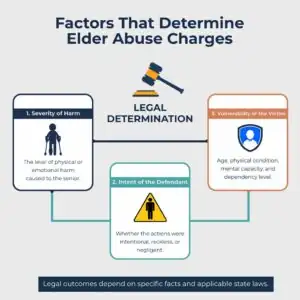
Investigators gather as much information as possible to formulate a decision on what to charge. They’ll look at factors like:
- The severity of harm caused to the senior
- The intent of the defendant
- The vulnerability of the victim
Other factors include prior criminal history and the amount of evidence to prove what happened. This whole picture informs prosecutors of what type of charge to apply.
Cases then head into a courtroom. A judge will determine if the punishment fits the crime. Sometimes a jury may help decide the punishment. The judge analyzes all the evidence. A judge then makes decisions about sentencing. The more serious the case is, the harsher the consequences. This is dependent on what the prosecution presents.
What Is Considered Elder Abuse Under the Law?
There are many types of elder abuse. Examples include:
- Physical abuse: The victim suffers physical injuries. These include pain or impairment. That could include slapping or restraining them.
- Neglect: Not providing necessary food, health care, protection, or shelter.
- Financial abuse: Any type of unauthorized or improper use of someone’s money, durance, or assets.
- Emotional abuse: That includes manipulation, fear, and distress. It can come from threats. It may also be insults.
- Sexual abuse: Any type of unwanted, non-consensual sexual contact.
- Institutional abuse: This is abuse that happens within nursing homes. It implies the facility itself is at least partially to blame.
What to Do If You Suspect Elder Abuse
This is the challenge. Taking action is really important. It’s often hard to do. Start by reporting what is happening. This should be to the Director of Nursing at a nursing home. Or, if a person is in immediate danger, call 911.
Report any suspected abuse in or outside of a nursing home to the police. You can also turn to the local health department.
The more information you have, the better. That includes photos of injuries, recorded statements, and witness statements. Be sure to seek immediate help for your loved one as your first priority.
Reporting Elder Abuse and Legal Options
You can report elder abuse in numerous ways.
- The Department of Aging or the Attorney General is one option.
- Local police departments will gather evidence.
- Seek legal guidance from an attorney.
Many states have hotlines that you can call for immediate help. Always check with your local Adult Protective Services. These are countywide services you can call.
Get your loved one immediate help first. Then, hire an attorney to help you move the case forward. Your lawyer will help you demonstrate fault and loss. A civil lawsuit can then be filed.
The prosecutor will handle all criminal charges. That’s a separate process.
The Role of an Elder Abuse Lawyer
Your attorney is your advocate. You’ll get help exploring your rights to civil action. An attorney can also represent the victim in a criminal case, though the prosecutor will handle this process for you in most cases.
Your attorney will gather evidence, preserve any documentation, and analyze your losses. Your lawyer’s job is to represent you, fighting for full compensation.
Understanding Elder Abuse as a Crime
Elder abuse is a crime. It’s a devastating, heartless act. Report any beliefs to the local police department. Then, seek out an elder abuse attorney to help you.
At LedgerLaw.com, our highly skilled attorneys fight for your best outcome. Let our years of experience and compassion fight for you.
FAQs About Is Elder Abuse a Crime?
Is elder abuse a crime under state and federal law?
Yes, elder abuse is a crime against both state and federal laws.
Is elder abuse a federal crime or handled only by states?
Most actions are handled at the state level. Federal crimes may involve Medicare, Medicaid, or interstate actions.
What types of elder abuse are considered criminal offenses?
Sexual, physical, emotional, neglect, and financial are the most common.
When does elder abuse qualify as a felony charge?
Felonies often apply when the victim suffers significant harm and loss.
What are the penalties for criminal elder abuse convictions?
Penalties typically include jail time and fines.
How do prosecutors prove elder abuse in criminal cases?
Using evidence from the event as well as statements from all involved, prosecutors will prove elder abuse.
What should you do if you suspect criminal elder abuse?
Call 911 for immediate medical care. Report the incident to the local police department. If you don’t get results, turn to the local Adult Protective Services. Then, call an attorney.

Emery Brett Ledger brings more than 27 years of experience to personal injury law. He founded & led The Ledger Law Firm in securing over $100 million in compensation for clients with life-altering injuries & complex claims. Licensed in California, Texas, & Washington, Emery earned his law degree from Pepperdine University School of Law. His practice areas include car & truck accidents, wrongful death, catastrophic injuries, maritime claims, & mass tort litigation. He has been recognized by The National Trial Lawyers’ Top 100, Mass Tort Trial Lawyers Top 25, and America’s Top 100 Personal Injury Attorneys. Emery also received the 2025 Elite Lawyer Award & holds a perfect 10.0 Avvo rating with Platinum Client Champion status. His legal work has been featured on CNN, Forbes, NBC, & ABC.
Free Case Evaluation
Recent Posts
- Do Cars Have Black Boxes? What a Car Black Box Records and How It Can Help After an Accident
- Can AI Chatbot Conversations Be Used Against You in a Personal Injury Case? What to Know About AI Chat Privacy and Privilege
- How to Win a Left Turn Accident Case: Fault, Right of Way, Evidence & Compensation
- What to Do After a Pedestrian Accident: 10 Essential Steps to Protect Your Health and Claim
- Who Is at Fault in a Self-Driving Car Accident? Liability, Insurance, and Self-Driving Car Crash Injury Claims
Emery Brett Ledger brings more than 27 years of experience to personal injury law. He founded & led The Ledger Law Firm in securing over $100 million in compensation for clients with life-altering injuries & complex claims. Licensed in California, Texas, & Washington, Emery earned his law degree from Pepperdine University School of Law. His practice areas include car & truck accidents, wrongful death, catastrophic injuries, maritime claims, & mass tort litigation. He has been recognized by The National Trial Lawyers’ Top 100, Mass Tort Trial Lawyers Top 25, and America’s Top 100 Personal Injury Attorneys. Emery also received the 2025 Elite Lawyer Award & holds a perfect 10.0 Avvo rating with Platinum Client Champion status. His legal work has been featured on CNN, Forbes, NBC, & ABC.
