

Suing for Emotional Distress After a Car Accident: How to Prove Your Claim and Maximize Emotional Distress Compensation

Suing for emotional distress after a car accident is very much your right to do. Emotional injuries are significant. They can be just as bad as physical injuries after a crash. Filing a personal injury claim may allow you to recover those losses.
What Is Emotional Distress After a Car Accident?
Emotional distress is a type of non-economic loss, much like pain and suffering. It’s meant to provide compensation to you for the psychological effects of a serious crash.
Can I Sue for Emotional Distress After a Car Accident?
Many victims seek compensation for emotional distress. But you’ll need to demonstrate you’re right to it under applicable state laws. You’ll also have to have evidence to support your claim.
Types of Emotional Distress Recognized in Car Accident Claims
Emotional distress happens in a variety of ways. Every type of claim matters. Take a look at some of the most common types of emotional distress included in car accident settlements.
Negligent Infliction of Emotional Distress
Another person causes you to suffer emotional distress. Their negligence leads to your injuries and losses. State-specific legal standards may exist. Insurance companies won’t pay you for just stating someone was negligent. You’ll need evidence.
Intentional Infliction of Emotional Distress
Intentional actions are those that carry a heavier weight under the law. Someone’s intentional act or outrageous conduct caused your injuries. It’s less common in a car accident, but still possible.
How Do You Prove Emotional Distress After a Car Accident?
It’s up to you to prove emotional distress. That’s not simplistic. You’ll need credible documentation and supporting evidence.
Medical Records
Your medical records show just what you went through. That can serve as documentation for the seriousness of your injuries and losses. Your doctor’s records, diagnosis, and treatment can paint a clear picture of what you’ve been through.
Mental Health Records
Go to a mental health doctor. Get the counseling you need. Your counseling and therapy, psychiatric evaluations, and post-traumatic stress disorder diagnosis can help you to build your
Personal Journal or Daily Notes
Documentation in a journal can be one of the best types of evidence. Write down your thoughts, symptoms, and daily struggles. That supports your claim.
Statements From Family, Friends, and Witnesses
Gather statements from friends and family. Talk to your coworkers about the notices they’ve seen in you. Witnesses to the car accident are also helpful.
Get Help With Suing for Emotional Distress After a Car Accident
What Factors Affect an Emotional Distress Car Accident Settlement?
Compensation varies based on the severity of the emotional harm you have and the quality of the evidence to document it. There’s no specific dollar amount attributed. Rather, it’s more about what you can prove to be your losses.
Severity and Duration of Emotional Trauma
The intensity of your emotional trauma matters. Factors like the following will play a role in this:
-
- Development of PTSD
- Anxiety
- Depression severity
- Panic attacks
- Long-term psychological effects you have
Physical Injuries Associated With Emotional Distress
The type of physical injuries you have that caused your emotional distress matters. In situations where you have debilitating injuries and losses, that’s going to make your claim more substantial.
Impact on Daily Life and Employment
The severity of your emotional distress is measured, in part, by it’s impact on your daily life. The impact on your quality of life, ability to work, and changes to relationships is a good starting point. Document your daily limitations.
How Is Emotional Distress Compensation Calculated?
Compensation for emotional distress differs in every case. Insurers and courts will evaluate the evidence, injury severity, and the overall losses you have.
What Compensation Can You Recover?
Emotional distress isn’t the only type of loss you’ll seek. Most victims also seek compensation for other losses as a part of their broader personal injury claim.
Non-Economic Damages
You can seek compensation for all of your non-economic damages. These are damages that do not have a specific dollar figure associated with them, but are still impactful. Examples include:
- Emotional distress
- Pain and suffering
- Anxiety
- PTSD
- Depression
- Loss of enjoyment of life
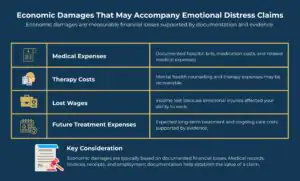
Economic Damages That May Accompany Emotional Distress Claims
Your economic damages are easier to pinpoint in terms of value. They’re measured by documented financial losses. Examples include:
- Medical expenses
- Therapy costs
- Lost wages
- Future treatment expenses
Can Family Members Recover Emotional Distress Damages?
In some situations, family members may seek emotional distress losses. That’s dependent on state law first. Then, family members can only seek action if they can show that another person was negligent for their losses. If your loved one died in an accident, and you file a wrongful death claim, you’re likely to be able to seek emotional distress losses.
Common Challenges When Proving Emotional Distress
These are not easy claims to file. It’s common for insurance companies to question all of the losses you have. They may push back on your claims of PTSD, anxiety, and depression, including calling them pre-existing conditions. If you’ve not received treatment or there’s a dispute over the cause, it’s harder to get the insurance company to pay for your losses.
What Should You Do to Strengthen an Emotional Distress Claim?
You can strengthen your case in numerous ways. The most important step is to involve a personal injury attorney who can guide you through the process. Consider the following steps.
Seek Prompt Medical and Mental Health Treatment
Get to the doctor for diagnosis and treatment. That includes your mental health needs. Ongoing treatment demonstrates your losses and gives credence to your claims.
Preserve Documentation and Follow Treatment Recommendations
Keep any type of documentation that you have that showcases what happened. This might include:
- Medical records
- Therapy notes
- Journals
- Prescriptions
- Expense documentation
When Should You Hire a Personal Injury Lawyer?
All cases involving emotional distress can be challenging to prove. That’s why hiring a personal injury attorney can prove vital. That’s especially true if there are disputes over liability or the insurance company denied your claim. Disputed liability is also a reason to hire a law firm.
How a Personal Injury Lawyer Can Help
Your lawyer can help you to navigate your rights in these cases. They’ll help you prove pain and suffering by investigating your case and then collecting evidence. Your attorney will negotiate with insurers and fight for fair compensation for you. If necessary, they’ll go to court to back up your claims.
Conclusion – Understanding Your Rights to Emotional Distress Compensation After a Car Accident
Suing for emotional distress after a car accident is a very common move. It’s your right to seek support for your mental health complications. Document everything. Don’t hesitate to contact an attorney right away.
Ledger Law is the reliable legal team you want on your side. We provide you with clarity on your rights. We’ll fight for you as we have with many of our clients. Contact us to learn more about your rights.
FAQs About Suing for Emotional Distress After a Car Accident
How do I prove emotional distress in a car accident claim?
Prove emotional distress by documenting your symptoms daily in a journal. Make sure you’re getting the mental health support you need as well.
What is emotional distress worth in a car accident settlement?
There’s no specific number that emotional distress is worth. It’s based on the types of losses you have and the implications to your life.
What evidence is needed to support an emotional distress car accident claim?
Evidence is important. Medical and mental health records are a good starting point. Your journal can also be helpful.
Does emotional distress count as pain and suffering in a car accident lawsuit?
Pain and suffering is a type of non-economic damage. Emotional distress is as well. They don’t count as the same thing.
Can family members recover emotional distress damages after a serious car accident?
Family members may recover emotional distress damages in the event they’ve lost their loved one to the accident.
How long do I have to file an emotional distress claim after a car accident?
The statute of limitations for filing a car accident claim differs based on where you’re located. State laws typically offer 1 to 3 years for you to take legal action.
What factors affect an emotional distress car accident settlement?
Emotional distress is impacted by the severity of your injuries and losses, how aggressive your recovery is, as well as the overall ability to heal.
Should I hire a personal injury lawyer for an emotional distress claim after a car accident?
Hire a personal injury lawyer if you believe you’ve suffered emotional distress. They’ll work to value your claim fairly.

Emery Brett Ledger brings 28+ years of experience to personal injury law. He founded & led The Ledger Law Firm in securing over $100 million in compensation for clients with life-altering injuries & complex claims. Prior results do not guarantee a similar outcome. Licensed in California, Texas, & Washington, Emery earned his law degree from Pepperdine University School of Law. His practice areas include car & truck accidents, wrongful death, catastrophic injuries, maritime claims, & mass tort litigation. He has been recognized by The National Trial Lawyers’ Top 100, Mass Tort Trial Lawyers Top 25, and America’s Top 100 Personal Injury Attorneys. Emery also received the 2025 Elite Lawyer Award & holds a perfect 10.0 Avvo rating with Platinum Client Champion status. His legal work has been featured on CNN, Forbes, NBC, & ABC.
Free Case Evaluation
Recent Posts
- Punitive Damages in a Car Accident: When Can You Recover Them?
- Tailgating Injury: What Causes Tailgating, Road Rage & How to Stay Safe
- Waiting to Call a Lawyer Can Hurt Your Case: Evidence, Deadlines & Legal Risks
- What Is Property Damage in a Car Accident? Claims, Costs & Who Pays
- Bodily Injury & Property Damage: Coverage, Claims, Liability & Compensation
Emery Brett Ledger brings 28+ years of experience to personal injury law. He founded & led The Ledger Law Firm in securing over $100 million in compensation for clients with life-altering injuries & complex claims. Prior results do not guarantee a similar outcome. Licensed in California, Texas, & Washington, Emery earned his law degree from Pepperdine University School of Law. His practice areas include car & truck accidents, wrongful death, catastrophic injuries, maritime claims, & mass tort litigation. He has been recognized by The National Trial Lawyers’ Top 100, Mass Tort Trial Lawyers Top 25, and America’s Top 100 Personal Injury Attorneys. Emery also received the 2025 Elite Lawyer Award & holds a perfect 10.0 Avvo rating with Platinum Client Champion status. His legal work has been featured on CNN, Forbes, NBC, & ABC.