

What Causes Some Caretakers to Abuse Their Elderly Charges? Risk Factors, Warning Signs, and Prevention

What causes some caretakers to abuse their elderly charges?
- Some people are evil.
- Some are greedy.
- Others are simply untrained. Burned out. Frustrated.
Suspect abuse? There are warning signs.
What Is Elder Abuse?
“Elder abuse” is a legal term. It essentially means “Crimes against elderly people over the age of 60”.
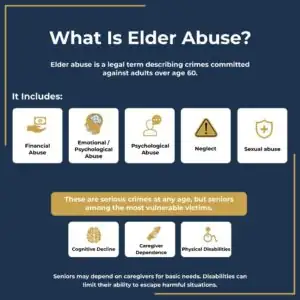
It includes:
- Financial abuse
- Emotional/psychological abuse
- Physical abuse
- Neglect
- Sexual abuse
These are serious crimes to commit against anyone. Of any age.
But seniors are some of the most vulnerable victims.
Cognitive problems make them dependent on caregivers for basic necessities. Disabilities leave them unable to walk out of a bad situation.
What Is Involved in a Caretaking Job?
A caretaker’s responsibilities depend on the senior’s:
- Physical health
- Mental/cognitive health
- Location
- Specific needs
- Wealth (After all, rich people can hire multiple caregivers to do the job one person might have to do for a senior with financial constraints)
H2: What Do Caretakers Do in Elder Care Settings? (50–60 words)
Common responsibilities include:
- Keeping the senior clean
- Keeping the home/room clean
- Taking the senior to/from doctor appointments
- Buying/administering medications
- Shopping, cooking, and in some cases feeding a senior
- Taking the senior to activities he or she likes going to
Any caregiver situation puts demands on a caregiver’s time and finances.
Caregivers need support. Often, they don’t get it.
They get frazzled. Finances may be tight. Time may be even tighter.
In nursing homes, the problem is even worse. Caregivers are often untrained. Have a lot of people to care for. Don’t have what they need to do their job right.
What Causes Some Caretakers to Abuse Their Elderly Charges?
Caregivers may abuse their victims if they:
- Have mental health problems
- Have substance abuse problems
- Want the victim’s money and/or assets
- Want revenge
- Are cruel and enjoy bullying people
- Are over-stressed
- Don’t have enough money to care for the victim
- Don’t have enough time to care for the victim
- Aren’t properly trained
Abuse is never justified. But the guilty party isn’t always a monster.
Worried About Elder Care Abuse?
The Impact of Stress on Caretaker Abuse
Stress makes you feel uptight. Angry. Frustrated.
It inhibits the brain’s ability to make smart decisions. It creates the “fight or flight” response.
Chronic stress leads to burnout and frustration. Every single person needs a coping mechanism for hard situations. Those who don’t have a healthy one often take out their anger on other people.
Unmanaged stress can easily lead to physical or emotional elder abuse. It can also lead to elder neglect.
Overworked Staff and Understaffed Nursing Care
Do nursing homes have enough caregivers for their patients?
It depends. The ratio ranges from 1:6 to 1:20.
Taking care of even six seniors isn’t an easy task. And many caregivers aren’t given proper training and support.
Also, many facilities don’t have good safeguards in place. Caregivers might not be properly vetted. There might not be mechanisms for noticing and reporting abuse.
In such situations, caregivers aren’t the only ones responsible for elder abuse. The institution is too.
Depression’s Influence on Caretaker Abuse
Imagine your mom suddenly thinks you’re a stranger. Doesn’t like you telling her what to do. Won’t take her meds. Gets mad when you try to help her get around.
Perhaps your dad, who was always your closest friend, is suddenly distant. Won’t talk. But still needs constant supervision.
You have kids. A job.
It’s easy to see why and how caregivers get depressed.
The caregiver gets irritable. “Checks out.” Gets detached. Loses empathy.
Mental health screening and care play an important role in helping prevent elder abuse by otherwise caring caregivers who are being crushed under the pressure.
Difficult or Aggressive Patients’ Impact on Caretakers
Anger isn’t uncommon. Even for seniors who didn’t have anger issues when they were younger.
Sometimes it’s due to sickness. Or a disability. Or feelings of losing control.
Sometimes it’s cognitive decline. The senior doesn’t remember people, understand what’s happening, or struggles to make decisions.
The end result? Some seniors actually abuse their caregivers. They kick. Bite. Swear. Slap.
Others refuse to cooperate. They won’t get in the bathtub. Take their meds. Eat.
Handling situations like these is never easy. Caregivers need de-escalation skills. And lots and lots of patients.
They also need backup. A good doctor who can identify medical conditions causing or contributing to aggressive behavior. Professional caregivers who can care for seniors who can’t be cared for safely at home.
Even having a relative or two who’s willing to switch off with you is a big help. The care of a senior with serious health issues should never fall on the shoulders of just one person.
Elder Abuse Risk Factors
- Isolation and dependency. One person shouldn’t have full control of a senior’s schedule, activities, and money.
- Cognitive decline. Evil people will take advantage of the fact that a senior has no idea what’s happening and why.
- Substance abuse. A caregiver who can’t care for him/herself definitely can’t take good care of a vulnerable senior. This same point applies to caregivers with mental health problems.
- Financial stress. Caregiving puts a lot of financial stress on a caregiver. “Rewarding” yourself “off the books” looks tempting.
- Placement in a nursing home or assisted living facility. Nearly two-thirds of caregivers say they’ve been guilty of senior abuse at least once.
It’s even worse when situations overlap.
Common Warning Signs of Elder Abuse

- Injuries
- Withdrawal
- Fear
- Anger
- Sudden financial changes
- Sudden behavioral changes
If you suspect abuse, get help.
What Should I Do If I’ve Witnessed Elder Abuse?
- Call 911 or Adult Protective Services
- Collect any evidence you can. Photos. Videos. Documents.
- If the elder is in cognitive decline and the abuser has a POA, get a lawyer who specializes in elder law.
How to Prevent Caretaker Abuse
Caretaker abuse is preventable. Institutions can and should:
- Vet caregivers carefully
- Provide proper training
- Supervise caregivers
- Offer caregiver support
- Have mechanisms in place to catch abuse right when it happens
Families can prevent abuse by:
- Regularly visiting and calling
- Sharing caregiving responsibilities
- Being sensitive to the main caregiver’s needs
How Can a Personal Injury or Elder Abuse Attorney Help You?
An elder abuse lawyer can help you if:
- You want to recoup stolen money
- You want to hold a caregiver accountable for abuse
- You want to remove an abusive POA holder
- You think someone pressured the elder into changing his/her will
A good lawyer will:
- Listen to your concerns
- Help you collect evidence
- Tell you how much your claim is worth
- File your claim in court
- Represent you in court and during settlement negotiations
Get Help With Your Caretaker Abuse Case
Get help. Call 911. Call Adult Protective Services.
Call a good lawyer. Don’t worry about costs.
Elder law lawyers offer a free initial consultation. They also work on a “no win = no fee” basis. If you don’t win your case, you don’t have to pay.
Conclusion
There are many forms of elder abuse.
There are also many reasons why it happens.
Watch out for your loved one:
- Call.
- Visit.
- Investigate sudden changes.
- If you suspect abuse, call 911 or Adult Protective Services.
Our elder abuse lawyers at Ledger Law offer the expert help you need and deserve. We’ve handled many different types of cases. We have a winning track record. Let us help your loved one get their life back and secure rightful compensation.
FAQs About What Causes Some Caretakers to Abuse Their Elderly Charges
What are the most common causes of elder abuse by caregivers?
- Stress
- Family dynamics
- Institutional incompetence
Can overworked or understaffed nursing homes lead to elder abuse?
Absolutely.
How do depression/mental illness influence caretaker abuse?
You need patience and a clear head to care for your loved one. You don’t have the mental capability to provide care if you’re depressed or have some other mental health problem.
What warning signs indicate caretaker abuse of an elderly person?
- Physical injuries
- Signs of emotional distress
- Financial changes
What should you do if you witness a caretaker abusing someone?
Call 911. Immediately.
Call Adult Protective Services to prevent future problems
Call a lawyer if you need legal help to secure your loved one’s safety and get compensation
How can families prevent caretaker abuse of elderly loved ones?
- Sharing caregiving responsibilities
- Calling and visiting
- Immediately reporting suspicions of abuse

Emery Brett Ledger brings 28+ years of experience to personal injury law. He founded & led The Ledger Law Firm in securing over $100 million in compensation for clients with life-altering injuries & complex claims. Prior results do not guarantee a similar outcome. Licensed in California, Texas, & Washington, Emery earned his law degree from Pepperdine University School of Law. His practice areas include car & truck accidents, wrongful death, catastrophic injuries, maritime claims, & mass tort litigation. He has been recognized by The National Trial Lawyers’ Top 100, Mass Tort Trial Lawyers Top 25, and America’s Top 100 Personal Injury Attorneys. Emery also received the 2025 Elite Lawyer Award & holds a perfect 10.0 Avvo rating with Platinum Client Champion status. His legal work has been featured on CNN, Forbes, NBC, & ABC.
Free Case Evaluation
Recent Posts
- Punitive Damages in a Car Accident: When Can You Recover Them?
- Tailgating Injury: What Causes Tailgating, Road Rage & How to Stay Safe
- Waiting to Call a Lawyer Can Hurt Your Case: Evidence, Deadlines & Legal Risks
- What Is Property Damage in a Car Accident? Claims, Costs & Who Pays
- Bodily Injury & Property Damage: Coverage, Claims, Liability & Compensation
Emery Brett Ledger brings 28+ years of experience to personal injury law. He founded & led The Ledger Law Firm in securing over $100 million in compensation for clients with life-altering injuries & complex claims. Prior results do not guarantee a similar outcome. Licensed in California, Texas, & Washington, Emery earned his law degree from Pepperdine University School of Law. His practice areas include car & truck accidents, wrongful death, catastrophic injuries, maritime claims, & mass tort litigation. He has been recognized by The National Trial Lawyers’ Top 100, Mass Tort Trial Lawyers Top 25, and America’s Top 100 Personal Injury Attorneys. Emery also received the 2025 Elite Lawyer Award & holds a perfect 10.0 Avvo rating with Platinum Client Champion status. His legal work has been featured on CNN, Forbes, NBC, & ABC.