

Single Car Accident Due to Weather: Fault, Insurance Claims, and Your Legal Rights After a Bad Weather Car Accident
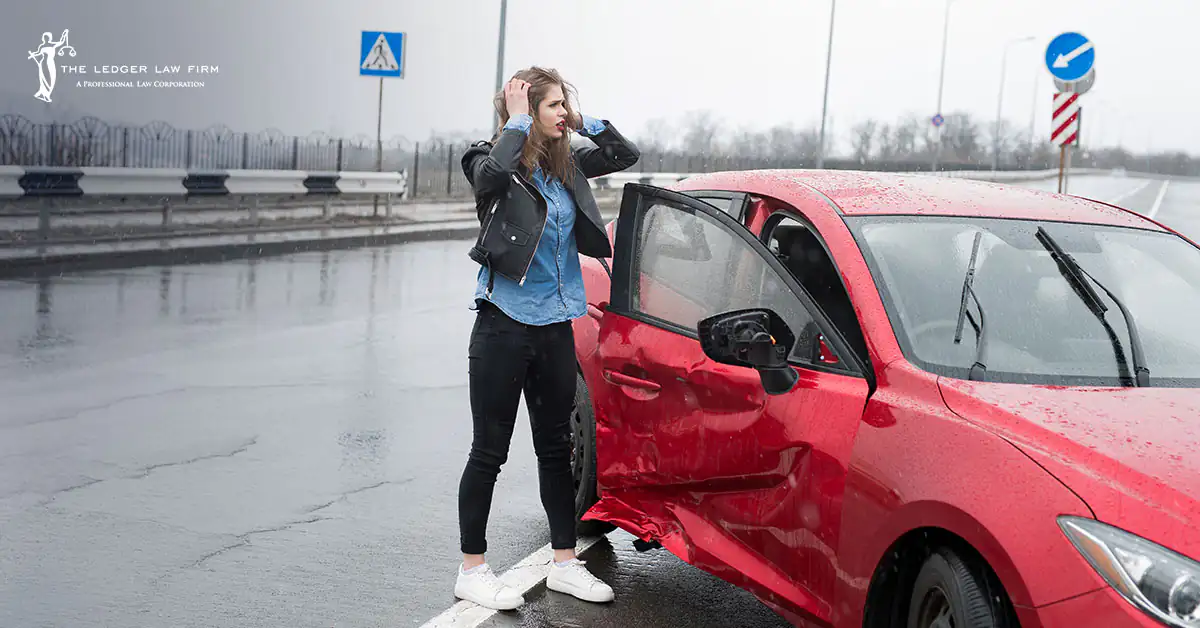
A single car accident due to weather isn’t uncommon. But it’s complex. Proving someone else is at fault isn’t simple to do. Liability isn’t straightforward. Insurance claims may be possible. But proving negligence depends on the situation. If you’re in a bad weather car accident, you’ll need to know what to do to seek compensation.
What Is a Single Car Accident Due to Weather?
A single vehicle weather accident is a crash that happens due to road conditions or other weather-related factors. There’s only one vehicle involved. Environmental conditions contribute to the crash.
Weather on its own doesn’t automatically eliminate legal responsibility. Drivers have a responsibility to adjust their driving to match unsafe conditions.
What Weather Conditions Cause the Most Car Accidents?
Any road conditions in which a driver cannot safely control their vehicle are high-risk incidents. The worst conditions reduce visibility and create slippery roads. The following are some examples.
Heavy Rain and Hydroplaning
Hydroplaning occurs when water gets between the tires and the ground. It’s common in heavy rain or when there’s standing water a person drives through. Loss of tire traction makes it hard to stop. Reducing speed is necessary in these conditions to lower risks.
Snow and Ice
Snow, ice, slush, and all other types of semi-solid moisture create big risks for drivers. Braking becomes challenging or fails to work due to the slick conditions. Drivers need more stopping distance between their vehicle and others to prevent accidents.
Fog, High Winds, and Flooding
Fog creates visibility concerns while high winds, especially crosswinds, make it hard to steer straight. Flooding roadways creates dangerous traction issues for tires. Each of these hazards contributes to weather accidents. Drivers must adjust their driving methods to maintain safety.
Who Is at Fault in a Car Accident Due to Weather Conditions?
Fault isn’t always the same. You can’t sue the weather itself. But what you can do is determine if a driver’s behavior was reckless for the situation. Negligence is possible even in poor conditions.
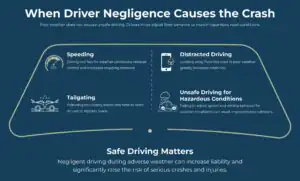
When Driver Negligence Causes the Crash
Drivers can be negligent in poor weather conditions when a driver engages in reckless behavior such as:
-
- Speeding
- Distracted driving
- Tailgating other drivers
- Other unsafe driving for the hazardous conditions
Can Another Party Share Responsibility?
It’s possible that other parties can also have a share of the responsibility. You may wish to consider factors such as the following:
- Poorly maintained roads may mean the city or state are at fault
- Defective vehicle parts that cause an accident may mean the manufacturer is at fault
- Other drivers could also play a role in the accident and share some of the fault
What Is an Act of God in a Weather Accident?
Act of God is a legal concept in which a natural, unpreventable event driven by natural forces causes the accident. Severe weather such as a hurricane, tornado, or a lightning strike may be examples of this type of event. Negligent driving even in these situations still establishes liability.
Need Legal Help After a Weather-Related Accident?
Understanding Comparative Fault in Bad Weather Car Accident Cases
Comparative fault is a legal premise in which more than one party or entity is at fault for an accident. In these situations, the victim can still seek compensation, but the amount they receive is reduced by the percentage of fault attributed to them. State laws differ in this area. Be sure to consider your state’s laws.
How Insurance Companies Handle Weather-Related Accident Claims
Insurers investigate weather accidents carefully. They will consider:
- Whether your insurance covers damage caused by weather events
- A fault investigation to determine if you played a role in the accident may be considered
- Claim evaluations often relate specifically to the level of fault applied in your case.
Does a Single-Car Weather Accident Increase Insurance Rates?
Insurance companies may increase your premium if they have to pay a claim out to you. However, a single weather event isn’t likely to be an automatic increase. Policy terms, claim history, and the insurance company’s practices all play a role in this.
Reporting a Single-Car Accident to the Police
If you’re in a car accident, file a police report. It’s beneficial to do so because it creates documentation for your case. It makes it clear what you suffered. It shows that weather conditions mattered. It also helps with protecting evidence.
What Should You Do After a Single Car Accident Due to Weather?
Always focus on staying safe. But what you do after an accident may help you protect your health and legal rights. Follow these steps.
Seek Medical Attention Immediately
Call 911 to request medical care. Get to the hospital for an evaluation even if you feel okay. That’s going to document your injuries and protect your health.
Document the Accident Scene
When safe, take photos of the area. That should include the weather conditions, road hazards present, vehicle damage, and the surroundings overall. The more information you have, the better it helps your case.
Gather Witness Information
Witness statements help document what happened before and during the accident. They help establish the real-world conditions on the road. They can also support statements about driver conduct.
Notify Your Insurance Company
Let your insurance company know about the accident right away. Don’t tell them why the accident happened yet.
The Role of Evidence in Proving Negligence During Bad Weather
Evidence is important even when severe weather played a role in your case. It helps to document the role a person took when conditions were poor. That could help prove negligence.
Important Evidence in Weather Accident Claims
Any type of evidence in your case can help document what happened and show proof of your losses. Some of the most important evidence to maintain includes:
- Police reports
- Weather reports
- Dashcam footage
- Surveillance video
- Vehicle damage
- Tire condition
- Medical records
- Witness statements
- Accident reconstruction
How to Strengthen a Weather-Related Car Accident Claim
You can strengthen your case in several ways. This includes:
- Preserving all evidence from the accident. Take pictures and keep records.
- Document all of your injuries. Make sure to document all medical costs.
- Follow all of your doctor’s medical advice.
- Comply with insurance requirements.
- Contact an attorney as soon as possible.
Can You Recover Compensation After a Bad Weather Car Accident?
You can seek compensation after an accident if you can prove someone else is responsible for your losses. That may include recovering damages such as the following.
Economic Damages
Economic damages are those that you can track based on what you’ve spent or lost. This includes:
- Medical expenses
- Lost income
- Vehicle repairs
- Rehabilitation
- Future medical care
Non-Economic Damages
Non-economic damages are those that are harder to put a value on. They include:
- Pain and suffering
- Emotional distress
- Permanent impairment
- Reduced quality of life
When Should You Contact a Car Accident Lawyer?
It’s always wise to ask an attorney to look at your case during a free consultation. If any of the following apply, it’s best to speak to an attorney:
- There’s a dispute over liability
- Serious injuries are involved
- The insurance company denies your claim
- Complex weather-related conditions exist
How a Personal Injury Lawyer Can Help
A personal injury lawyer can provide you with help in a number of ways including:
- Evidence preservation
- Accident investigations and insight into who is at fault
- Negotiations with the insurance company
- Expert consultations so you can develop a claim value and strategy
- In the worst of situations, legal representation to go to court
Conclusion – Protecting Your Rights After a Single Car Accident Due to Weather
Single car accidents due to weather aren’t uncommon. Weather isn’t the only factor in determining negligence. Drivers who fail to adjust and drive recklessly could also be a factor.
If you’re in an accident, get medical care, document the accident, and contact a personal injury lawyer. Let our team help you. Ledger Law is a proven law firm with extensive experience handling these cases. We can help you navigate your rights. Contact us now for a free consultation.
FAQs About Single Car Accident Due to Weather
Who is at fault in a single car accident due to weather?
It depends. Sometimes no one is at fault. Other times a driver that’s not safe and acts recklessly is at fault.
Does bad weather affect liability in a car accident?
Bad weather can play a role in the determination of liability in a car accident. But it’s not the only factor. The role of all other parties is also considered.
Will my insurance rates increase after a single-car weather accident?
They could go up, but most insurance companies won’t raise your costs for a single fender bender.
What should I do immediately after a car accident due to weather conditions?
Always call 911 after an accident to get the medical care you need. Then, document the accident and injury thoroughly.
Can I recover compensation if weather causes an accident but another driver was also negligent?
Sometimes you can seek compensation if another driver causes an accident due to their reckless and negligent behavior.
What evidence helps prove negligence in a bad weather car accident case?
Evidence that shows the other driver was reckless can help your case.
Is a weather-related car accident considered an Act of God?
Incredible events, like a hurricane or tornado, are acts of God.
How long do I have to file a claim after a weather-related car accident?
The length of time you have depends on state laws. Most states provide for 1 to 3 years.
Should I hire a personal injury lawyer after a single car accident caused by bad weather?
Hiring an attorney whenever you believe another person is responsible is worthwhile.

Emery Brett Ledger brings 28+ years of experience to personal injury law. He founded & led The Ledger Law Firm in securing over $100 million in compensation for clients with life-altering injuries & complex claims. Prior results do not guarantee a similar outcome. Licensed in California, Texas, & Washington, Emery earned his law degree from Pepperdine University School of Law. His practice areas include car & truck accidents, wrongful death, catastrophic injuries, maritime claims, & mass tort litigation. He has been recognized by The National Trial Lawyers’ Top 100, Mass Tort Trial Lawyers Top 25, and America’s Top 100 Personal Injury Attorneys. Emery also received the 2025 Elite Lawyer Award & holds a perfect 10.0 Avvo rating with Platinum Client Champion status. His legal work has been featured on CNN, Forbes, NBC, & ABC.
Free Case Evaluation
Recent Posts
- Punitive Damages in a Car Accident: When Can You Recover Them?
- Tailgating Injury: What Causes Tailgating, Road Rage & How to Stay Safe
- Waiting to Call a Lawyer Can Hurt Your Case: Evidence, Deadlines & Legal Risks
- What Is Property Damage in a Car Accident? Claims, Costs & Who Pays
- Bodily Injury & Property Damage: Coverage, Claims, Liability & Compensation
Emery Brett Ledger brings 28+ years of experience to personal injury law. He founded & led The Ledger Law Firm in securing over $100 million in compensation for clients with life-altering injuries & complex claims. Prior results do not guarantee a similar outcome. Licensed in California, Texas, & Washington, Emery earned his law degree from Pepperdine University School of Law. His practice areas include car & truck accidents, wrongful death, catastrophic injuries, maritime claims, & mass tort litigation. He has been recognized by The National Trial Lawyers’ Top 100, Mass Tort Trial Lawyers Top 25, and America’s Top 100 Personal Injury Attorneys. Emery also received the 2025 Elite Lawyer Award & holds a perfect 10.0 Avvo rating with Platinum Client Champion status. His legal work has been featured on CNN, Forbes, NBC, & ABC.