

Can You Sue a Restaurant for Food Poisoning? Your Legal Rights, Evidence, and Compensation Explained

You ate a meal. Now you’re sick.
Restaurants follow rules to avoid making people sick. You may pursue a lawsuit when they fail. Food poisoning isn’t always severe.
Restaurants may be legally responsible if they sell contaminated food. It’s up to you to prove it caused you to suffer an illness. Prove liability and make sure you have evidence.
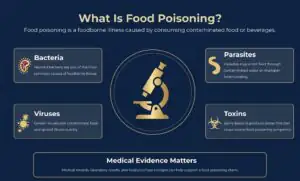
What Is Food Poisoning?
Foodborne illness is a sudden illness. It’s caused by eating or drinking food or water that’s contaminated by:
- Bacteria
- Viruses
- Parasites
- Toxins
Common Symptoms of Food Poisoning
Symptoms appear within hours or several days. They include:
- Nausea
- Vomiting
- Diarrhea
- Stomach cramps
- Fever
- Dehydration
Can You Sue for Food Poisoning at a Restaurant?
You can sue a restaurant for food poisoning. You’ll have to prove you suffered this illness because of the restaurant. Show that you suffered damages from it. Just getting sick isn’t enough. Becoming sick doesn’t automatically establish liability.
Can You Sue a Fast Food Restaurant for Food Poisoning?
You can sue a restaurant for food poisoning if they caused your illness. They follow the same food safety standards as any restaurant. Liability depends on evidence.
What Causes Food Poisoning at Restaurants?
Food poisoning often happens when hazards or unsafe practices occur within the establishment. It happens at any stage of the food prep process, and you won’t often know about it until you’re sick.
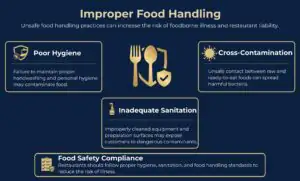
Improper Food Handling
This is often the result of ineffective or unfollowed employee food safety practices. Examples include:
- Poor hygiene
- Cross-contamination between foods that are not all safe
- Inadequate sanitation of surfaces or equipment
Undercooked or Improperly Stored Food
Restaurants must prepare food to a specific degree to kill pathogens within it. Temperature control failures are very common. Bacterial growth happens when product isn’t stored cool enough as well.
Contaminated Ingredients
Pathogens in Ingredients cause illness. This may be the result of supplier contamination and recalls. A restaurant that’s not removing recalled product could be at fault. Suppliers may be at fault. They can’t sell foods containing high-risk pathogens.
Do You Have Grounds for a Food Poisoning Lawsuit?
You must have proof of your claim to file a food poisoning lawsuit. That’s never easy to do. In all cases, you have to show that the restaurant knew or should have known they put you at risk and failed to keep you safe. Grounds may include:
You Suffered a Confirmed Illness
Food poisoning warrants going to the emergency room or urgent care. Having a medical diagnosis and treatment documentation solidifies your case. Lab results are the gold standard. They aren’t always available, but very valuable when they are.
The Restaurant’s Food Caused Your Illness
You must tie the illness to the restaurant. To do that, and meet the causation requirement of proving negligence, you’ll need to provide proof such as:
- Clear timing of when you ate at the location and when the illness developed
- Medical evidence showing the unsafe conditions
- A full investigation that demonstrates a lack of safety practices
You Experienced Financial or Personal Losses
You must suffer loss. This may include medical expenses from going to the doctor. Loss of income from being unable to work. Document all damages you have clearly.
How to Prove Food Poisoning From a Restaurant
Evidence is at the heart of your claim. It’s the most important part of demonstrating a connection between your illness and the restaurant’s actions. Documentation isn’t easy to obtain but it’s essential.
Seek Medical Treatment Immediately
Get to the urgent care or hospital as soon as possible. A diagnosis creates medical records to demonstrate what happened. Lab testing may be applicable in some cases.
Keep Receipts and Proof of Purchase
Keep the proof that you ate at the restaurant. That’s typically a time-stamped receipt from the location. It should show that you bought food at the location.
Preserve Leftover Food When PossibleImproper-Food
Maintain leftover food in a closed container in the refrigerator. Keep it cool. Don’t hand it back over to the restaurant.
Report the Illness to Local Health Authorities
Contact the local health department. They will gather your information and investigate. The health department’s investigation can help prevent others from getting sick. It also protects your case.
Track Your Symptoms and Recovery
Track all of your symptoms in a journal or on your phone. Create a timeline of when symptoms began. Document the treatment you had as well as any missed work or other events.
Who Can Be Held Liable for Food Poisoning?
Restaurants aren’t always the only party responsible. Others in the food production process could also be responsible. That may include:
- Food manufacturers
- Food distributors
- Suppliers
- Others handling the product
What Compensation Can You Recover?
Prove you suffered foodborne illness because of the negligence of the restaurant or other party. Then, claim all of the losses you have from that experience. The compensation you receive depends on the severity of the illness and losses.
Economic Damages
Economic damages are documented losses. Receipts are a good type of evidence here. This includes:
- Medical bills
- Lost wages
- Medication costs
- Future treatment costs
Non-Economic Damages
Non-economic damages are more subjective. They’re harder to prove but just as important. They include:
-
- Pain and suffering
- Emotional distress
- Reduced quality of life when you recover
Punitive Damages
Punitive damages are very rare in cases like this. They are only available when the party at fault acts in an egregious manner. Not all states allow this damage.
Food Poisoning Lawsuit Settlement Amounts
Settlements vary greatly. It’s not possible to provide a specific figure since it’s based on your losses. Injury severity, medical costs, lost income, and available evidence all play a role.
Class Action Food Poisoning Lawsuits
A class action lawsuit may be applicable when numerous people have a confirmed illness from the same food source. Your health department may indicate this concern. Class actions differ from lawsuits, but your attorney can help you pursue both depending on the situation.
How Long Do You Have to Sue for Food Poisoning?
The statutes of limitations differ from one state to the next. Most states give you 1 to 3 years from the date of the illness to take action. Take fast legal action to preserve evidence.
Alternatives to Suing a Restaurant for Food Poisoning
Suing isn’t the first option nor the best in many cases. Instead, you’ll file an insurance claim. You’ll then negotiate a fair settlement. Dispute resolution options may also apply. Lawsuits are a last resort. They are necessary when the insurance company won’t cooperate.
Food Poisoning Prevention and Risk Reduction
Food safety is always important. Some of the easiest ways to keep food safe include:
- Hand washing routinely, especially before touching food
- Maintain proper food temperatures during storage and preparation
- Avoid cross-contamination
When Should You Contact a Food Poisoning Lawyer?
Hire an attorney to discuss food poisoning when you have a serious claim. That may include:
- Hospitalization
- Severe illness
- Disputed liability about whose at fault
- Significant financial losses
Your attorney can offer clarity on your rights.
How a Personal Injury Lawyer Can Help
Your attorney will investigate the claim. They’ll then work to gather all available evidence. They negotiate your losses with the insurance company. They also file a lawsuit when they won’t provide a fair settlement.
Understanding Your Rights After Restaurant Food Poisoning
Your illness came from a restaurant’s poor handling of food. You suffered medical costs and may even miss work. With evidence and timely legal action you can hold the insurance company accountable.
Ledger Law is a trusted choice when you need a food poisoning lawyer. Our firm helps people who have suffered foodborne illnesses after eating at restaurants, fast-food establishments, or other food service businesses. Ledger Law helps clients understand their legal rights, evaluate their case, and pursue compensation for medical expenses, lost wages, pain and suffering, and other damages resulting from food poisoning.
FAQs About Can You Sue a Restaurant for Food Poisoning
Can I sue a restaurant for food poisoning without a positive lab test?
You may be able to. Demonstrate through other evidence how the restaurant violated safety practices.
Can you sue a fast food restaurant for food poisoning?
You can sue a fast food restaurant if you can prove their food caused your illness.
What evidence do I need to prove food poisoning from a restaurant?
Evidence includes documentation that shows the type of illness you have. It also should include costs related to the medical care you sought.
How much compensation can you get for a food poisoning lawsuit?
The compensation owed to you depends on the severity of your losses. That includes medical costs and loss of wages.
How long do I have to file a food poisoning claim against a restaurant?
The state’s statute of limitations determines how long you have. This can range from 1 year to 3 years, but sometimes less.
Who is liable if contaminated food at a restaurant makes me sick?
It could be the restaurant, suppliers, or third parties.
Can multiple people file a class action lawsuit for restaurant food poisoning?
Yes, multiple people suffering the same illness from the same exposure may seek legal action together.
What should I do immediately after getting food poisoning from a restaurant?
Preserve the rest of the food and get medical care. Don’t delay in getting urgent care to document your illness.
Do I need a lawyer to sue a restaurant for food poisoning?
Having an attorney can minimize risks you face throughout this process.

Emery Brett Ledger brings 28+ years of experience to personal injury law. He founded & led The Ledger Law Firm in securing over $100 million in compensation for clients with life-altering injuries & complex claims. Prior results do not guarantee a similar outcome. Licensed in California, Texas, & Washington, Emery earned his law degree from Pepperdine University School of Law. His practice areas include car & truck accidents, wrongful death, catastrophic injuries, maritime claims, & mass tort litigation. He has been recognized by The National Trial Lawyers’ Top 100, Mass Tort Trial Lawyers Top 25, and America’s Top 100 Personal Injury Attorneys. Emery also received the 2025 Elite Lawyer Award & holds a perfect 10.0 Avvo rating with Platinum Client Champion status. His legal work has been featured on CNN, Forbes, NBC, & ABC.
Free Case Evaluation
Recent Posts
- Punitive Damages in a Car Accident: When Can You Recover Them?
- Tailgating Injury: What Causes Tailgating, Road Rage & How to Stay Safe
- Waiting to Call a Lawyer Can Hurt Your Case: Evidence, Deadlines & Legal Risks
- What Is Property Damage in a Car Accident? Claims, Costs & Who Pays
- Bodily Injury & Property Damage: Coverage, Claims, Liability & Compensation
Emery Brett Ledger brings 28+ years of experience to personal injury law. He founded & led The Ledger Law Firm in securing over $100 million in compensation for clients with life-altering injuries & complex claims. Prior results do not guarantee a similar outcome. Licensed in California, Texas, & Washington, Emery earned his law degree from Pepperdine University School of Law. His practice areas include car & truck accidents, wrongful death, catastrophic injuries, maritime claims, & mass tort litigation. He has been recognized by The National Trial Lawyers’ Top 100, Mass Tort Trial Lawyers Top 25, and America’s Top 100 Personal Injury Attorneys. Emery also received the 2025 Elite Lawyer Award & holds a perfect 10.0 Avvo rating with Platinum Client Champion status. His legal work has been featured on CNN, Forbes, NBC, & ABC.