

Can a Lawsuit Be Reopened After Settlement? When You May Be Able to Reopen a Settled Case

It’s a common question. Can a lawsuit be reopened after settlement? The simple answer. No, that’s not how the process works. Settlements are an agreement to resolve a dispute permanently. You agree not to seek further action if they pay the settlement.
But there are some legal exceptions. It’s possible to challenge or reopen a case in very limited cases. Don’t assume that’s going to happen. Work with an attorney to avoid having to go this route.
What Does a Personal Injury Settlement Mean?
A personal injury settlement is a resolution to a legal dispute. Two or more parties agree to specific terms to end the conflict. That means it doesn’t go to trial. Settlement agreements outline the specifics of the arrangement. Most settlements specifically require the victim to receive some type of compensation or benefit in exchange for releasing the plaintiff from the claim. Signing that means you’re agreeing to settle, or end, the matter.
Why Most Settlements Are Final
The court will nearly always honor the legally binding settlement as a contract. That’s the case if both parties signed it fully understanding the conditions. The settlement’s legal purpose is to end the claim, creating some finality and certainty moving forward for all parties.
Can a Lawsuit Be Reopened After a Settlement?
In very rare situations can a lawsuit be reopened after a settlement. This is uncommon, but may be possible in legal circumstances. Frankly, it’s not likely that your case will be reopened. It’s only possible in some situations.
See If You Qualify to Reopen Your Lawsuit
When Can a Case Be Reopened After Settlement?
Several rare opportunities exist for a settlement to be put aside, and the case reopened. Expect that most of the time this isn’t going to happen. The following are significant legal exceptions.
Mutual Mistake During Settlement
Both parties agree there are errors in the settlement. This may mean there are incorrect facts both recognize as being inaccurate. This may justify a review of the settlement to determine the validity of reopening the case to make changes.
Fraud or Misrepresentation
One party demonstrates misrepresentation or fraud occurred. Some type of deceptive conduct occurred, and there’s evidence to prove it. The court reviews cases when there are claims of fraud. It’ll open the case again if the court deems there’s evidence of fraud.
Duress or Coercion
Settlements signed unlawfully may be null and void. That includes situations where there’s proof the person signing the agreement was under unlawful pressure. This isn’t just a statement you can make. You must demonstrate with substantial supporting proof of coercion.
Still in Pain After Settlement – Can You Reopen Your Case?
You’re still in pain. Your condition hasn’t improved as expected. Can you reopen a case after settlement then?
Continued pain isn’t typically enough to reopen a settled claim. Most of the time, your future pain and medical costs were considered when coming to the agreement for the settlement. You shouldn’t agree to settle the case until you are confident in the likely outcome of your recovery. The court isn’t likely to open the settled case because you claim you didn’t heal as expected.
What If Your Injuries Become Worse Later?
This is an area of uncertainty in many cases. Unexpected complications can certainly affect your quality of life and financial losses. There’s a limited number of situations where the court will take action, such as reopening your case. The decision to do so comes down to the language within the settlement. You cannot proceed if the language there bars you from taking additional action if complications arise.
Can You Sue Again After Settlement?
Most settlement agreements prevent you from filing another lawsuit over the same claim. The settlement is an agreement to release the at-fault party from any additional claims. The court isn’t likely to allow you to violate this by reopening your case.
As noted, there are some exemptions. They are rare, but factors like invalid agreements and fraud can play a role in the court’s decision.
New Injuries Discovered After Settlement
In some situations, new injuries and losses may become evident after you’ve settled the claim. You may not have had any idea the complication would occur. The court considers events like this on a case-by-case basis. They focus on whether it was reasonable or possible to expect the outcome.
These situations are legally complex. They require careful medical expertise or other substantial proof. That’s not easy to do. Not every newly discovered injury will result in the reopening of the case.
Future Damages That Were Not Accounted For
Reopening a case for additional costs isn’t likely to be possible. It’s up to you to estimate these expected future costs in advance of agreeing to the settlement. That includes future medical costs, lost wages, and disability. Long-term disability for catastrophic injuries should be considered long before the settlement agreement.
Why You Should Be Cautious Before Accepting a Settlement
Settlements are final. Insurance companies want to pay you as little as possible. When you agree to a lower value, that’s good for the insurance company. They’re under no obligation to tell you that you haven’t included all of your losses.
Instead, work with an attorney. Understand the extent of your injuries and all damages. Make sure to factor in future needs. Then when you are confident it is fair, accept the settlement. Don’t do so before that.
Common Mistakes People Make Before Settling
The most common mistakes include:
- Not understanding the extent of injuries
- Not considering all damages
- Underestimating future losses
- Settling too early before they know the extent of injuries
- Assuming the insurance company will treat you fairly
Understanding the Personal Injury Claims Process
A personal injury claim goes through the following steps:
- An investigation to determine the validity of the claim
- Negotiations between the parties over the value of the claim
- Settlement discussions to resolve the liability out of court if possible
- Litigation if a settlement cannot occur
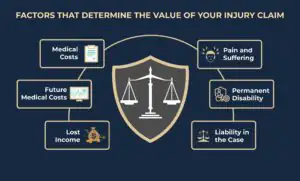
Factors That Determine the Value of Your Injury Claim
The value of your settlement depends on multiple factors including:
-
- The medical costs you have
- Future medical costs
- Lost income
- Pain and suffering
- The presence of permanent disability
- Liability in the case
Accurately value your damages before you submit a claim. Back that up with evidence. Don’t agree to a settlement before accurately valuing these damages.
Documenting Recoverable Damages Before Settlement
It’s up to you to document all of your damages. Your attorney can help calculate the value. They also help you prove the claims as valid in several ways:
- Medical records justify costs and care needs
- Employment records document income and lost wages
- Expert opinions help with fault and pain and suffering demands
- Receipts from other expenses clarify critical information
Strong documentation supports fair compensation. Document all of your losses. That’s going to help you get a fair claim.
The Challenges of Reopening a Settled Lawsuit
All of that is important because it’s hard to reopen a settled case. You’ll have to overcome the burden of proof. That means the other party doesn’t have to prove their claim as valid. You have to have evidence to prove your side. Then a court review must occur. Strict legal standards apply.
It’s rare for courts to reopen a case. It’s like undoing the work of another court. Reopening a case is an exception, not the rule.
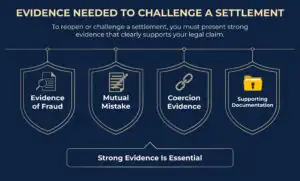
Evidence Needed to Challenge a Settlement
You’ll need evidence that demonstrates every detail of your claim and why you have a valid reason for reopening it. This may include:
- Evidence that supports fraud
- Evidence that documents mistakes both agree on
- Coercion claim documentation and evidence
Evidence isn’t an optional investment here. It’s critical to the court even considering reopening your claim.
Can You Still Seek Legal Advice After Settling?
Consult an attorney immediately. That’s even the case if you’ve already agreed to a settlement. They’ll review your evidence and right to reopen the case. That gives you the best possible opportunity to know what your legal options are.
When to Contact a Personal Injury Lawyer
Contact a personal injury lawyer at any time you feel there is any reason to doubt the validity of your settlement. That includes instances of suspected fraud, new evidence, or term concerns.
Understanding Whether a Lawsuit Can Be Reopened After Settlement
Reopening a case after settlement is rare. It’s an option in very limited cases. If you think you have a case, reach out to an attorney. Can a lawsuit be reopened after settlement? Typically, the answer is no. But your attorney can clarify.
Ledger Law is a trusted choice. Our firm helps personal injury claimants, accident victims, and individuals wondering whether they can reopen a case after accepting a settlement.
FAQs About Can a Lawsuit Be Reopened After Settlement
Can you reopen a case after accepting a settlement?
Most of the time, no. In rare exceptions, it may be possible.
Can a case be reopened after settlement if new injuries are discovered?
The only opportunity for this occurs when you demonstrate there was no way to know the injuries existed before the settlement. That’s hard to do.
Can you sue again after settling a personal injury claim?
No. Most of the time, settlements are an agreement to relieve the other party from risk.
What happens if I am still in pain after my settlement?
You cannot typically open a case after settlement unless you demonstrate fraud or other exceptions.
Can a settlement be overturned because of fraud or misrepresentation?
Yes, a court can determine a case was fraudulent and overturn the settlement. That’s rare, but possible.
What evidence is needed to reopen a settled lawsuit?
You need evidence that proves there’s a legal exception to the settlement.
Should I talk to a lawyer before trying to reopen a settled case?
Always speak to an attorney. Your lawyer will give you a clear understanding of your rights.

Emery Brett Ledger brings more than 27 years of experience to personal injury law. He founded & led The Ledger Law Firm in securing over $100 million in compensation for clients with life-altering injuries & complex claims. Licensed in California, Texas, & Washington, Emery earned his law degree from Pepperdine University School of Law. His practice areas include car & truck accidents, wrongful death, catastrophic injuries, maritime claims, & mass tort litigation. He has been recognized by The National Trial Lawyers’ Top 100, Mass Tort Trial Lawyers Top 25, and America’s Top 100 Personal Injury Attorneys. Emery also received the 2025 Elite Lawyer Award & holds a perfect 10.0 Avvo rating with Platinum Client Champion status. His legal work has been featured on CNN, Forbes, NBC, & ABC.
Free Case Evaluation
Recent Posts
- What Type of Accident Kills the Most Construction Workers? The Fatal Four Explained
- Average Payout for Pedestrian Hit by Car: Settlements, Compensation & Factors
- Lower Back Pain Car Accident Settlement: Compensation, Injury Types & Claim Factors
- Who Pays for High School Sports Injuries? School Liability, Medical Bills & Legal Options
- Social Media and Personal Injury Claims: How Social Media Can Destroy Your Personal Injury Claim
Emery Brett Ledger brings more than 27 years of experience to personal injury law. He founded & led The Ledger Law Firm in securing over $100 million in compensation for clients with life-altering injuries & complex claims. Licensed in California, Texas, & Washington, Emery earned his law degree from Pepperdine University School of Law. His practice areas include car & truck accidents, wrongful death, catastrophic injuries, maritime claims, & mass tort litigation. He has been recognized by The National Trial Lawyers’ Top 100, Mass Tort Trial Lawyers Top 25, and America’s Top 100 Personal Injury Attorneys. Emery also received the 2025 Elite Lawyer Award & holds a perfect 10.0 Avvo rating with Platinum Client Champion status. His legal work has been featured on CNN, Forbes, NBC, & ABC.
