

How Long After a Deposition Is Settlement? Timeline, Negotiations, and What to Expect

It’s a valid question and concern. How long after deposition is settlement? Reaching the end of a case like this is important. Most personal injury cases are closer to settlement after the deposition. But they’re not yet there.
The length of time it takes depends on numerous factors. That includes any liability disputes that still exist, the strength of evidence, the type of damages, and the negotiations. There’s a great deal on the line.
What Is a Deposition?
A deposition is a sworn statement that injured parties submit out of court. It’s part of the discovery process. Attorneys ask the injured party questions to gather more information and establish the credibility of the victim. The information you provide is preserved. It’s often used later in your case.
Understanding the Purpose and Process of a Deposition
Depositions are information-gathering conversations. Both sides request them. They gather information such as:
- Evidence to support their claims
- Witness reliability evaluation
- Potential trial outcomes expected
Testimony submitted influences the settlement strategy your attorney creates. They directly influence the outcome of the case.
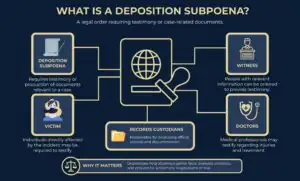
What Is a Deposition Subpoena?
A deposition subpoena is an order that requires someone to testify. It means the attorneys in the case require you to provide testimony or produce documents related to the case. Subpoenas can involve:
- Victims
- Witnesses
- Doctors
- Records custodians
What Is a Video Conference Deposition?
This is one of the most common forms. It allows you to give testimony using a secure video platform instead of being with the attorney in person. This option is far more convenient and flexible. That’s why it’s become so common today.
Do Personal Injury Cases Settle After a Deposition?
Maybe. Cases settle after depositions when both sides recognize the strengths, weaknesses, and potential risks of going to trial. Attorneys may determine they need more evidence to make critical claims. Or, insurance companies may see that there’s ample reason to believe your claims. That leads to a faster settlement.
Why Depositions Often Trigger Settlement Negotiations
These fact-finding missions provide critical clarity. They help those involved to better understand liability, injuries, and witness credibility in your case. They also help clarify the impact of your injuries and other losses. Insurance companies nearly always reassess the case value after a testimony.
How Long After a Deposition Does a Case Settle?
Timing isn’t always that clear. It’s common for depositions to speed up the process. However, some settle within weeks, and others take months. It all depends on how well the deposition goes and the negotiation skills. Court schedules can also play a role in this process.
Average Timeline for Settlement After Deposition
In a straightforward case, you’ll resolve your case quickly after a disposition. That’s often days. However, complex injury claims or cases where there are multiple defendants take time. Disputes over evidence won’t go away. This can lead to longer processes.

Factors That Affect Settlement After Deposition
There’s plenty of ways depositions influence outcomes. That includes how long and what value your settlement comes in at. The most common factors playing a role here include:
-
- Injury severity
- Liability disputes
- Insurance policy limits
- Witness testimony
That differs for every single case. Your lawyer provides clarity during consultations. You’ll know what to expect along the way.
Find Out What Happens After a Deposition
A Clear Liability Picture
Depositions answer big questions about liability. They clarify faults or mistakes. This often leads to a faster path towards settlement. It’s only possible to expect that if you have strong evidence. That evidence works to pressure insurers to settle with you, even at a higher value than you thought.
Strategic Negotiations Between Attorneys
Depositions really clarify details. They allow attorneys to negotiate more aggressively once the transcripts arrive. They can use this information to create a strong tactic for settling the case. Settlement talks intensify after this part of discovery.
Going to Trial If Settlement Fails
Settlements let everyone gather information. Insurance companies may learn that there’s plenty of reason to doubt your claim. The case may proceed to trial then. The parties still aren’t able to agree on compensation. This leads to trial prep work and extended settlement timeframes.
The Impact of a Deposition on Settlement Negotiations
Deposition testimony could strengthen your case. It can also weaken it, giving you less negotiation power. Credibility issues and conflicting testimony are some of the most common reasons for failures. You may also find that admissions may affect settlement value outright.
Court Approval and Lien Resolution
It’s possible that your settlement agreement will require court approval. This is typical when minors are involved or in cases involving wrongful death.
Medical liens are a type of action taken by medical providers to protect their interest in the case. Insurance company reimbursements are common in these cases.
What to Expect When Receiving Your Settlement Check
There’s no surprise here. Your attorney should be upfront with you about what to expect. Once you sign a release agreement to resolve the matter, the funds are paid to you. This can take several days. A payment timeline may also apply. State laws on insurers often govern the amount of time they have to take action.
Why Settlement Payments Sometimes Take Time
There’s plenty of steps involved in receiving your money. For example, there’s the entire administrative process to wait through and the lien negotiations need to happen. You’ll need to sign legal paperwork. All of this can contribute to delays in the process.
Can a Case Still Go to Trial After a Deposition?
Yes. Depositions don’t resolve cases. They clarify details. Your attorney may still believe they have a stronger case by going to court. There’s no prep time for this. When there are unresolved disputes, you can expect your case to go to court.
Why Hiring a Personal Injury Lawyer Helps During Depositions
Your attorney is your advocate. They do all of the heavy lifting for you, including:
- Preparing you for the questions you’ll receive
- Protecting your legal rights
- Handling objectives during deposition
Having experienced representation is game-changing. It nearly always plays a role in the outcome of your case.
How Lawyers Use Depositions to Strengthen Cases
Your attorney uses depositions to look for critical details. For example, they look for inconsistencies, admissions of fault, or evidence that supports their claim. Lawyers use this information to demonstrate the value of your case.
Common Mistakes to Avoid After a Deposition
There’s plenty that goes wrong in depositions. Every case is different. You can expect the following concerns.
- Don’t discuss your testimony to anyone else. That’s very important, especially publicly.
- Avoid posting anything, good or bad, on social media.
- Get back to your doctor as the medical provider recommends. Work towards the protection of your rights.
- Maintain consistent documentation of all aspects of your claim, including injuries.
Conclusion – Settlement After Deposition Explained
So how long after deposition does a case settle? There’s plenty of factors at play. That includes the type and validity of evidence, negotiation strategies, and case complexity. There’s no simple answer available. Most cases go to settlement after a deposition, but not always.
Work with an experienced attorney throughout this process. There’s so much on the line that you need these professionals to help you. Ledger Law is the reliable resource you need. We work with people facing deposition requirements for a range of situations. We help you secure the compensation you deserve.
FAQs About How Long After a Deposition Is Settlement
How long after a deposition does a case usually settle?
Some settlements happen in a few days. Others can take several weeks or longer. Disputes are a common reason for delays.
Do most personal injury cases settle after a deposition?
Most cases never go to court. Insurance companies realize the value of the claim. They settle instead of going to court.
What happens after a deposition in a lawsuit?
Your case could settle. Or, your case may go to court. Sometimes mediation occurs as well. This is just the next step in the process.
Can settlement negotiations begin immediately after a deposition?
Settlement negotiations happen throughout depositions. They can result in immediate agreement to settle.
How long does it take to receive a settlement check after deposition?
Once the deposition is over and your case reaches settlement, it won’t take long to receive the compensation owed to you. Typically, this is within a matter of days.
Can a case still go to trial after a deposition?
Yes. Depositions don’t always resolve all questions. Sometimes they support the concerns the insurance company has with your claim. That typically leads to going to trial.
Does a strong deposition increase settlement value?
Absolutely. The stronger and clearer your deposition is, the less likely the insurance company is to continue with the negotiations.
What factors delay settlement after deposition?
Delays happen when disputes continue. Inconsistencies in testimony are some of the most common causes of this.
Should I hire a lawyer before giving a deposition?
It’s always wise to hire an attorney. Doing so protects your right to fair compensation. It also ensures you’re not on your own throughout this process.

Emery Brett Ledger brings 28+ years of experience to personal injury law. He founded & led The Ledger Law Firm in securing over $100 million in compensation for clients with life-altering injuries & complex claims. Prior results do not guarantee a similar outcome. Licensed in California, Texas, & Washington, Emery earned his law degree from Pepperdine University School of Law. His practice areas include car & truck accidents, wrongful death, catastrophic injuries, maritime claims, & mass tort litigation. He has been recognized by The National Trial Lawyers’ Top 100, Mass Tort Trial Lawyers Top 25, and America’s Top 100 Personal Injury Attorneys. Emery also received the 2025 Elite Lawyer Award & holds a perfect 10.0 Avvo rating with Platinum Client Champion status. His legal work has been featured on CNN, Forbes, NBC, & ABC.
Free Case Evaluation
Recent Posts
- Punitive Damages in a Car Accident: When Can You Recover Them?
- Tailgating Injury: What Causes Tailgating, Road Rage & How to Stay Safe
- Waiting to Call a Lawyer Can Hurt Your Case: Evidence, Deadlines & Legal Risks
- What Is Property Damage in a Car Accident? Claims, Costs & Who Pays
- Bodily Injury & Property Damage: Coverage, Claims, Liability & Compensation
Emery Brett Ledger brings 28+ years of experience to personal injury law. He founded & led The Ledger Law Firm in securing over $100 million in compensation for clients with life-altering injuries & complex claims. Prior results do not guarantee a similar outcome. Licensed in California, Texas, & Washington, Emery earned his law degree from Pepperdine University School of Law. His practice areas include car & truck accidents, wrongful death, catastrophic injuries, maritime claims, & mass tort litigation. He has been recognized by The National Trial Lawyers’ Top 100, Mass Tort Trial Lawyers Top 25, and America’s Top 100 Personal Injury Attorneys. Emery also received the 2025 Elite Lawyer Award & holds a perfect 10.0 Avvo rating with Platinum Client Champion status. His legal work has been featured on CNN, Forbes, NBC, & ABC.