

How To Protect Your Assets After A Car Accident?: Tips, Legal Framework, and Guidelines
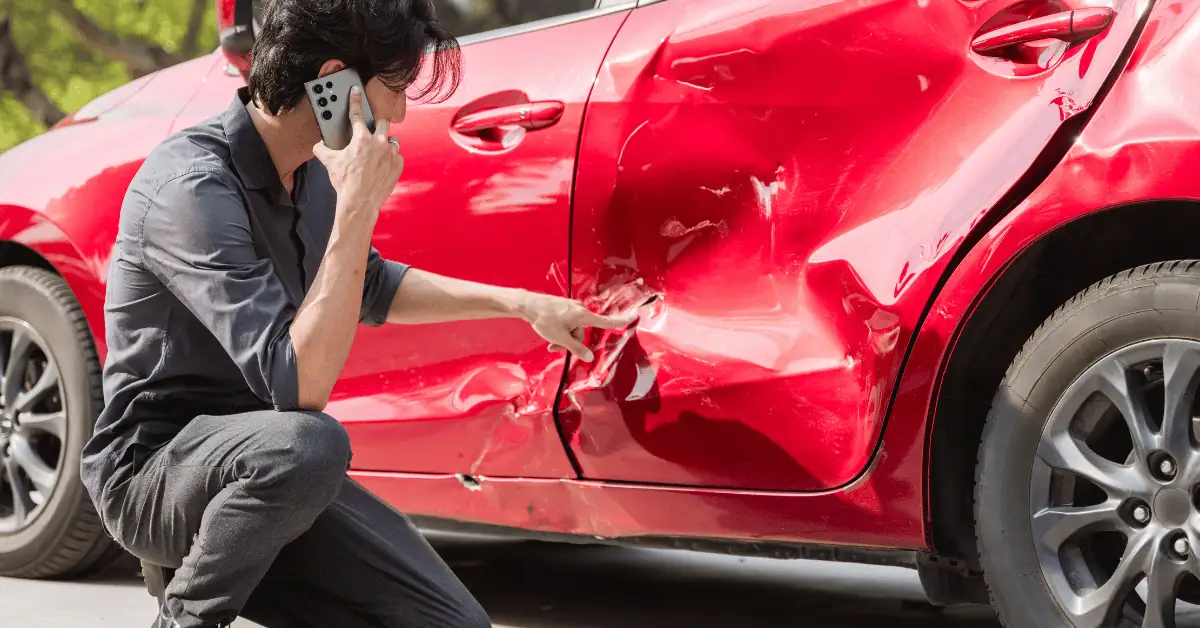
When you are involved in a car accident, the first thing that pops up in your mind is, “How to protect your assets after a car accident?” To protect your assets after a car accident:
- Establish a robust financial firewall before any incident, primarily through high-limit liability and umbrella insurance policies
- Always follow the legal defensive steps immediately after a collision, documenting the scene, properly reporting, and consulting car accident attorneys
When you take proactive measures and have proper insurance polices, your assets will be safe. It’s true even if you are being sued for car accident liability.
What Are Asset Risks Post-Accident?
A serious car accident, especially one where you are at fault, can be both emotionally and financially traumatic. It further involves the risk of losing assets. So, you must understand the risk of assets after a car accident during the settlements.
Financial Implication
Many times, a court judgment could exceed your auto insurance liability limits. If it happens, the injured party can pursue your personal assets to cover the difference. It includes:
- Wage Garnishment: The Court may order for cutting of a portion of your future paychecks.
- Seizure of Savings: They can target money in checking, savings, and other bank accounts.
- Liens on Property: A lien could be placed on your home or other real estate. So, when you try to sell or refinance, you must pay off the remaining portion first.
Risk Assessment
A risk assessment can identify the most vulnerable assets in a lawsuit. Generally, assets with less legal protection are at higher risk. Conversely, state or federal law protects the following assets:
- Retirement accounts like 401(k)s and IRAs
- Equity in a primary residence due to homestead exemptions, varying in states.
Liability
Liability is the legal responsibility for the accident. If you are determined to be the at-fault driver, you are financially responsible for the damages. So, you must pay for the other party’s medical bills, lost wages, and property damage. Even in states with “comparative negligence” laws, your compensation might be reduced by the percentage of your fault in the collision.
How To Protect Your Assets After A Car Accident?
If you are involved in a car accident, don’t panic. You may have adequate protection of your assets already through proper insurance and legal help.
Secure Your Assets Before It’s Too Late .
Build an Insurance Firewall
Adequate insurance coverage is the best asset protection strategy. Ensure that the policy limits are high. So, the plaintiff’s attorney won’t find it profitable to pursue a costly lawsuit against your personal assets. You can take three layers of insurance protection.
Layer 1: High-Limit Auto Liability Insurance
Liability coverage shields against claims for bodily injury and property damage. You must carry limits significantly higher than the state minimum.
- Bodily Injury Liability (BI): It pays for the other party’s medical bills, lost wages, and pain and suffering.
- Property Damage Liability (PD): It covers the cost for repairs or replacement of the other party’s vehicle or property.
- The Critical Case of California Minimums: California has increased its required minimums for better asset protection. However, many drivers have inadequate coverage. So, know the limit of the insurance company to prevent exposure of your personal assets.
| Liability Coverage Type | Pre-2025 California Minimums (Requested Limits) | Current California Minimums (Effective Jan 1, 2025) | What is Protected? |
| Bodily Injury Per Person | $15,000 | $30,000 | The at-fault driver’s personal assets (up to this limit). |
| Bodily Injury Per Accident | $30,000 | $60,000 | The aggregate limit for all injured parties. |
| Property Damage Per Accident | $5,000 | $15,000 | Damages caused to others’ property. |
Layer 2: The Essential Umbrella Liability Policy
An Umbrella Policy is a cost-effective secondary insurance layer, after the primary high-limit auto insurance policy. If the liability limits of your auto or homeowners’ insurance are inadequate, you can cover the rest of the compensation with the umbrella insurance policy.
- Coverage Range: It offers $1 million to $5 million of additional liability protection.
- Scope: It covers claims for car accidents, injuries, property damages, slander, libel, and false imprisonment.
- Financial Security: It ensures genuine protection of assets in a multi-million dollar judgment. So, you don’t need to liquidate your savings or home equity.
Layer 3: Other Relevant Insurances
Even if Layer 1 and Layer 2 fail to protect your assets entirely, you can still be safe. For this, ensure your car accident attorney follows these two insurance coverages:
- Uninsured/Underinsured Motorist (UIM): It protects your assets from your medical and wage losses. It is applicable when the at-fault driver has no or inadequate coverage.
- Medical Payments (MedPay) or Personal Injury Protection (PIP): Covers immediate medical expenses for you and your passengers. It applies regardless of fault. So, MedPay will reduce the chance of a lien against future recovery.
Strategic Titling and Legal Separation
Besides the insurance policies, you should have a long-term plan to protect your assets. You can separate the vehicle and property ownership. It will help you control the most and least vulnerable assets to be sued after a car accident.
Separate Vehicle and Asset Ownership
You can tilt your vehicles. It means vehicles must be titled solely in the name of the primary driver. The plaintiff may have a claim against the assets of both co-owners for jointly titled vehicle ownership. So, if you lease your vehicles for rent, transfer the title to the driver.
Also, use your business entities (LLCs) for your high-value personal assets. It includes rental properties, vacation homes, or luxury cars. Place them inside a Limited Liability Company. So, the properties will get a corporate veil. It separates the business assets from your personal liability in an auto accident.
Maximize Your Statutory Exemptions
There is legal protection of certain assets from creditors and civil judgments in every state. You can hire an expert personal injury or property management attorney to take advantage of these exemptions. It is the key to pre-emptive protection.
- Homestead Exemption: It protects a portion of the equity of the primary residence. Also, California has a substantial exemption, ranging from $300,000 to $600,000. It depends on the county and circumstances.
- Retirement Accounts: ERISA-qualified plans receive federal protection from creditors. It applies to the 401(k)s and pensions. Plus, IRAs often have state-level protection.
Immediate Post-Accident Defensive Checklist
The actions you take in the hours and days following an accident are as important as managing your insurance before the accident.
- Do Not Admit Fault: Never admit your fault. Many people generously say, “I’m sorry,” or, “I didn’t see you.” The claimant’s lawyer can interpret it as an admission of negligence and use it against you. Give only factual statements of what happened.
- Avoid Discussion of Your Financial Status: You mustn’t mention your insurance limits or financial assets to investigators, adjusters, or opposing counsel.
- Avoid Fraudulent Conveyance: Do not transfer, sell, or retitle any assets after an accident. It is a red flag to the court. The jury could identify it as a fraudulent transfer, leading to penalties.
- Retain Legal Counsel Immediately: Hire an asset protection attorney immediately. He can manage all communications and protect your assets from the opposing party.
Can I be Sued for A Car Accident?
The answer to whether or not you can be sued for a car accident depends on the events. Its situation and legal explanations. Generally speaking, if you are involved in a car accident and found at fault, you can be sued for the accident.
Establishing Liability and Grounds for a Lawsuit
The claimant must prove your negligence in the accident to file a civil lawsuit. It means they have to prove that you failed to exercise reasonable care. Also, it must be proved that the failure caused harm.
For this, they must follow the negligence standard. The plaintiff must prove four elements:
- You had a duty of care, like all drivers
- You didn’t perform the duty and were speeding or driving distracted.
- Your failure to perform the duty caused the injury
- The plaintiff suffered damages due to the failure
California and many states have a “Pure Comparative Negligence” system. According to this policy, you can be sued and held liable for damages even if you are only partially at fault. For example, if a jury finds you 20% at fault for $1 million in damages, you are liable for $200,000
Who is At Risk of Being Sued Beyond the Driver?
Many people think only the driver can be sued for car accidents. Well, it’s not as simple as that. Lawsuits often target entities rather than the driver alone. So, it puts other parties and owners at risk.
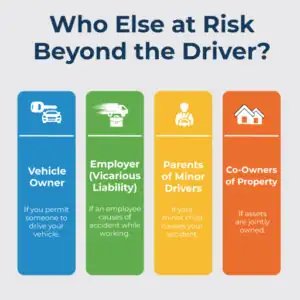
- The Vehicle Owner: At times, owners may allow someone else to drive their vehicle. If they cause an accident (Permissive Use), you, as the owner, can be sued.
- Employers (Vicarious Liability): Many drivers might cause an accident while driving for work. It could be for delivering goods, running an errand, etc. In such a case, the lawsuit may sue the employer under the doctrine of Respondeat Superior.
- Parents of Minor Drivers: Parents, at times, allow the minors to drive cars. So, they may be financially liable for their minor child’s negligence. It will cover up to statutory limits. However, in specific circumstances, such as willful misconduct, the compensation may increase significantly.
- Co-Owners of Property: Jointly owned assets are vulnerable too. It happens as the judgment against one owner could fall on the shareholder, too. It allows the creditor to place a lien or seek a division of the property.
The Plaintiff’s Claim: Types of Damages They Can Recover
The plaintiff will sue for compensation in three different categories. It will often be far more than the minimum insurance. So, your personal properties can be at risk.
Economic Damages:
Economic damages are quantifiable and easy to prove. It includes past and future medical expenses, lost wages, and loss of future earning capacity. Also, there could be property damage, including the repair or replacement cost of the plaintiff’s vehicle.
An expert car accident attorney will scrutinize these economic damages. They will negotiate on your behalf to reduce the compensation.
Non-Economic Damages:
Non-economic damages are subjective and hard to calculate. However, these are often the largest component of a suit. Primarily, non-economic damages include compensation for physical pain, suffering, emotional distress, and loss of enjoyment of life.
Punitive Damages:
Punitive damages are reserved for cases of extreme negligence. It might include drunk driving, road rage, etc. Punitive damages are meant to punish the defendant. These damages are typically not covered by insurance. The jury will order that it be paid directly from the defendant’s personal assets.
That’s why you must act wisely at an accident scene. Never flee the place and never fail to report the cases. These might come under punitive damage incidents.
Being Sued for A Car Accident: What Can They Take?
When people are being sued for a car accident, it is a concerning issue. They often ask, “I’m being sued for a car accident, what can they take?” The lawsuit may seize your unprotected cash, bank account, valuable personal property, and even non-exempt real estate.
However, the law offers protection to homesteads, Retirement Accounts (ERISA), etc. So, these properties are less likely to be seized.
Assets That Are Most Vulnerable to Seizure
When a civil judgment exceeds your insurance coverage, that becomes complex. The plaintiff can petition the court to execute a lien or levy against your personal property. These assets are fair game and often seized to recover the additional payout.
- Unprotected Cash and Bank Accounts: It includes savings accounts, checking accounts, and money market accounts. If you have case reserves that are not exempted funds, they could also be levied. It is the easiest to seize on their vulnerability.
- Non-Exempt Real Estate: It includes any real property other than your primary residence. It could be vacation homes, rental properties, or undeveloped land. Creditors can place a lien on these properties.
- Taxable Brokerage Accounts: Seniors can have assets in non-retirement investment accounts, including stocks, bonds, and mutual funds. The court may order it to liquidate to pay the remaining compensation for the personal injury settlements.
- Wages and Income (Garnishment): The court might seize a portion of your paycheck to satisfy a judgment. However, there are federal and state laws limiting the percentage.
- Valuable Personal Property: It could be your high-end collectibles, luxury vehicles, boats, recreational vehicles (RVs), artwork, and jewelry items. These could be seized and sold at auction if their value exceeds personal property exemptions.
Assets Generally Protected by Law
The state and federal laws offer protection to certain assets. These are legally “off-limits” to general creditors. It aims to protect the minimum property of the sued party so they can still run their daily expenses.
- Retirement Accounts (ERISA): Federal law protects ERISA-qualified plans, including 401(k)s, 403(b)s, and pensions. State statutes protect the non-ERISA plans, including traditional and Roth IRAs.
- Life Insurance and Annuities: Cash value in certain life insurance policies and annuities often receives strong statutory protection. The statutory protection ensures that life insurance and annuities are not liquidated in a car accident lawsuit.
- Primary Residence Equity (Homestead): The homestead exemption protects a large portion of your home’s equity. However, it has state-specific laws.
- Tenancy by the Entirety: In some states, property held jointly by a married couple is considered the “tenancy by the entirety.” It is protected from a lawsuit judgment against only one spouse. But the tenancy by the entirety isn’t practiced in California.
Asset Protection Strategies: Before and After
You should seek different asset protection strategies before and after a car accident. When you pre-plan your asset distribution and have the right techniques for post-accident dangers, most of your assets will be protected.
- Pre-Accident Planning: It includes the strategies you implement before an accident. These include umbrella insurance, trusts, LLCs, etc. The pre-accident plannings work in your favor in the court.
- Post-Accident Danger: If you attempt to move assets after an accident or a claim, the court may see it as an act of fraudulent conveyance. So, the judge will invalidate it. The court may then impose harsher penalties.
| Asset Category | Vulnerability to Lawsuit Judgment | Protective Strategy |
| Primary Residence | Vulnerable only above the state Homestead exemption limit. | File the homestead declaration and increase umbrella coverage. |
| Savings/Checking Accounts | Highly vulnerable and easy to levy. | Ensure high-limit insurance coverage; keep sufficient cash flow, separately. |
| Rental Properties | Highly vulnerable and not covered by a homestead. | Title ownership in an LLC or Land Trust (Asset Protection Trust). |
| 401(k)s, Pensions | Highly protected through the federal ERISA law | Maximize contributions to qualified plans. |
| Taxable Investment Accounts | It is vulnerable and so can be liquidated | Place funds in an irrevocable trust. |
| Wages/Income | Moderately vulnerable and could be subject to wage garnishment limits. | Maintain high personal liability insurance limits. |
Tips For Protecting Your Assets After a Car Accident
When you are involved in a car accident, your immediate steps are crucial in protecting your assets. You should report the accident to the police, document everything, and consult with an expert car accident attorney.
Report the Accident to the Police
You must file a police report as soon as possible. It creates an official, unbiased record of the incident. It is crucial for insurance claims and future legal disputes. This is your first line of defense in establishing the facts and protecting assets.
Document Everything
Take photos and videos of the damage to vehicles, the scene, road conditions, and any injuries. Collect contact information for all parties and witnesses. The documentation will support your claim and minimize your liability.
Notify Your Insurer Immediately
Report the accident to your insurance provider immediately. Stick to the facts. Also, don’t speculate on the cause of the accident. Your insurer is your first layer of financial protection.
Seek Medical Attention
Check for cuts and bruises, and minor injuries right on the scene. Also, get checked by a medical professional ASAP. A medical report links any injuries directly to the crash. it is vital for compensation. Also, the medical reports secure your financial stability.
Do Not Admit Fault
When reporting to the police and discussing with the other party, don’t admit your fault. If you admit fault or express sorry, the plaintiff’s lawyer will use it against you. Share only factual information.
Review Your Insurance Policy Limits
Check your liability coverage limits. For major accidents and wrongful deaths, your existing coverage might be insufficient to cover a large judgment. In such cases, your personal assets might get exposed. So, choose an umbrella liability policy for extra protection.
Consult with an Expert Car Accident Attorney
An attorney can protect your assets and minimize the compensation through proper legal guidance. Also, their guidance will protect you from common mistakes. Also, when you hire an expert attorney, they can shield your assets from liability claims with appropriate plans.
How Ledger Law Can Help You Protect Assets After a Car Accident
The Ledger Law Firm ensures your assets are protected after a car accident. We will minimize your liability, negotiate with the insurer, and take strategic legal solutions. With it, our expert car accident attorneys will protect your valuable assets.
- Minimizing Liability: Our personal injury attorney will secure the best possible outcome for your case. If you were the injured party, we would work to recover maximum compensation for your damages. And for the liable party, our strong defense minimizes the liabilities for you.
- Negotiation with Insurers: Our attorneys communicate and negotiate with insurance companies to minimize your liability. We step in to prevent you from making common mistakes. So, it won’t harm your claim or expose your assets.
- Strategic Legal Solutions: We employ exceptional legal expertise with our legal experts to develop strategic solutions for complex accident cases. From investigating the circumstances to navigating the legal system, we do everything for your rights.
- No-Fee Consultation: We offer a no-obligation initial consultation and work on a contingency fee basis. So, you do not have to pay upfront fees to access legal protection for saving your assets.
If I have minimum liability insurance, am I safe from a lawsuit?
No, you aren’t safe with the minimum liability insurance. If the damages exceed your minimum coverage, the injured party can sue you for the difference. It will put all your unprotected assets at risk.
I am text block. Click edit button to change this text. Lorem ipsum dolor sit amet, consectetur adipiscing elit. Ut elit tellus, luctus nec ullamcorper mattis, pulvinar dapibus leo.
What is the single most important action I can take before an accident?
Purchase a high-limit Umbrella Liability Insurance Policy. It is a multi-million dollar layer of protection over your auto and home insurance. Also, high-limit umbrella liability insurances have a low annual premium.
Can a lawyer advise me to transfer my assets after I cause a car accident?
A lawyer will strongly advise against it. When you move or transfer assets after a known liability event, the court could determine it as a “fraudulent conveyance.” It can lead to the transfer being reversed and additional legal penalties.
Does having an LLC automatically protect my personal bank account if I cause a car accident?
Yes, but you must maintain the LLC properly. The LLC shields assets owned by the company from your personal liability. However, you must set it up correctly. Also, it should not “pierce the corporate veil” with a combination of personal and business funds.
Is the Homestead Exemption automatic, or do I need to file paperwork?
In most states, basic Homestead protection is automatic. But, you must file a “Declaration of Homestead” with the county recorder’s office to maximize your protection.
Conclusion
Next time you ask, “How to protect your assets after a car accident?”, know that it is a multi-layer mechanism. You must have pre- and post-plans to manage your assets if you are involved in a car accident.
The right insurance policy, property management, LLC acquisition, and legal assistance will reduce your costs. Follow our pre-accident suggestions and post-accident protocols to cover the cost of compensation from your insurance, not your overall assets.

Emery Brett Ledger brings 28+ years of experience to personal injury law. He founded & led The Ledger Law Firm in securing over $100 million in compensation for clients with life-altering injuries & complex claims. Prior results do not guarantee a similar outcome. Licensed in California, Texas, & Washington, Emery earned his law degree from Pepperdine University School of Law. His practice areas include car & truck accidents, wrongful death, catastrophic injuries, maritime claims, & mass tort litigation. He has been recognized by The National Trial Lawyers’ Top 100, Mass Tort Trial Lawyers Top 25, and America’s Top 100 Personal Injury Attorneys. Emery also received the 2025 Elite Lawyer Award & holds a perfect 10.0 Avvo rating with Platinum Client Champion status. His legal work has been featured on CNN, Forbes, NBC, & ABC.
Free Case Evaluation
Recent Posts
- Punitive Damages in a Car Accident: When Can You Recover Them?
- Tailgating Injury: What Causes Tailgating, Road Rage & How to Stay Safe
- Waiting to Call a Lawyer Can Hurt Your Case: Evidence, Deadlines & Legal Risks
- What Is Property Damage in a Car Accident? Claims, Costs & Who Pays
- Bodily Injury & Property Damage: Coverage, Claims, Liability & Compensation
Emery Brett Ledger brings 28+ years of experience to personal injury law. He founded & led The Ledger Law Firm in securing over $100 million in compensation for clients with life-altering injuries & complex claims. Prior results do not guarantee a similar outcome. Licensed in California, Texas, & Washington, Emery earned his law degree from Pepperdine University School of Law. His practice areas include car & truck accidents, wrongful death, catastrophic injuries, maritime claims, & mass tort litigation. He has been recognized by The National Trial Lawyers’ Top 100, Mass Tort Trial Lawyers Top 25, and America’s Top 100 Personal Injury Attorneys. Emery also received the 2025 Elite Lawyer Award & holds a perfect 10.0 Avvo rating with Platinum Client Champion status. His legal work has been featured on CNN, Forbes, NBC, & ABC.