

Social Media and Personal Injury Claims: How Social Media Can Destroy Your Personal Injury Claim

Online activity can be a factor in your personal injury case. Before you post a video or update on your health, check with your attorney. What seems harmless could mean you lose out on the competition they owe you. Social media can destroy your personal injury claim.
How Social Media Can Harm Your Personal Injury Claim
Social media is public information. There’s no real way to shield what you say or do on social media from others. That means others in your case will check your social media. That includes insurance companies, defense attorneys, and others.
Statements about injuries, limitations, pain, and emotional distress impact you. That’s public information. And it’s evidence. A single post doesn’t automatically lead to your loss. However, it can add context and question your credibility. Assume anything you post online will be evidence in your case.
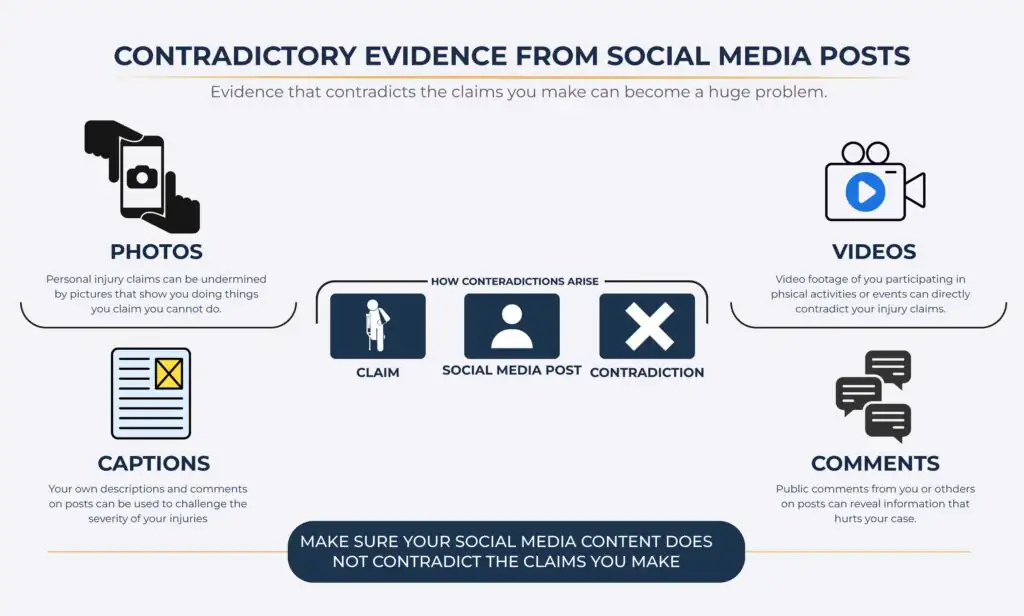
Contradictory Evidence From Social Media Posts
Evidence that’s contradictory to the claims you make is a huge problem. That includes:
- Photos
- Videos
- Captions
- Comments you make on others’ posts
If you tell someone you weren’t here “that bad” but file a claim for serious injuries, that creates doubt. Insurance companies will use that against you. What you post online, if anything, needs to match the documentation of what you have. That’s really important with medical limitations.
Misinterpretation of Posts, Photos, and Videos
Social media can lack context. Old photos, a brief outing with friends, or a staged image could be misinterpreted. Sometimes they do that on purpose. Don’t let your social media post explain your injuries or circumstances.
Get Legal Guidance on Social Media Risks
Can Insurance Companies Monitor Your Social Media?
Insurers or opposing parties can review publicly accessible information. It’s available online. That means they can use it to make decisions. That doesn’t mean insurance companies monitor social media in every situation. Again, you have to assume they will to protect your rights.
Privacy Settings Are Not Foolproof
Don’t make the mistake of assuming setting your account to private is enough. That doesn’t necessarily eliminate legal or practical risks. A screenshot can be used against you. Someone could share your post. You could be tagged in content. That puts your information in front of those who want to use it against you.
How Social Media Can Affect the Outcome of a Personal Injury Case
Your social media information can impact your case in various ways:
- It impacts whether you’re credible.
- It may lead to disputes over facts.
- Questions about injury severity may occur.
- It may mean your damages are limited.
Courts and insurers look at evidence on a broad basis. Evidence that contradicts your claims is serious. Content that seems inconsistent without context could be less damaging.
Personal Injury Social Media Guidelines – What You Should Do
Before you post anything online, consider the following:
- Does everything you say or list online provide clear information that exactly represents your claim?
- Before commenting on a friend’s post, ask yourself if doing so could limit your claim.
- Avoid interacting online when you are supposed to be unable to engage.
It’s beneficial to simply limit your social media activity. That’s the best way to protect your case. Always talk to your attorney about your case before making posts.
Limit Your Social Media Activity
When possible, stay off social media. Wait until after your personal injury claim goes through. Reduced activity helps you avoid making statements that put your case at risk. You shouldn’t feel obligated to abandon your platform. But you should be careful.
Review and Strengthen Your Privacy Settings
Take steps to protect yourself now. That includes:
- Reviewing account visibility to the public
- Set friend and follower permissions
- Establish or eliminate tagging others can do to you
- Consider other privacy controls
Privacy settings are not guaranteed to protect you. Make sure you understand who could potentially see your content.
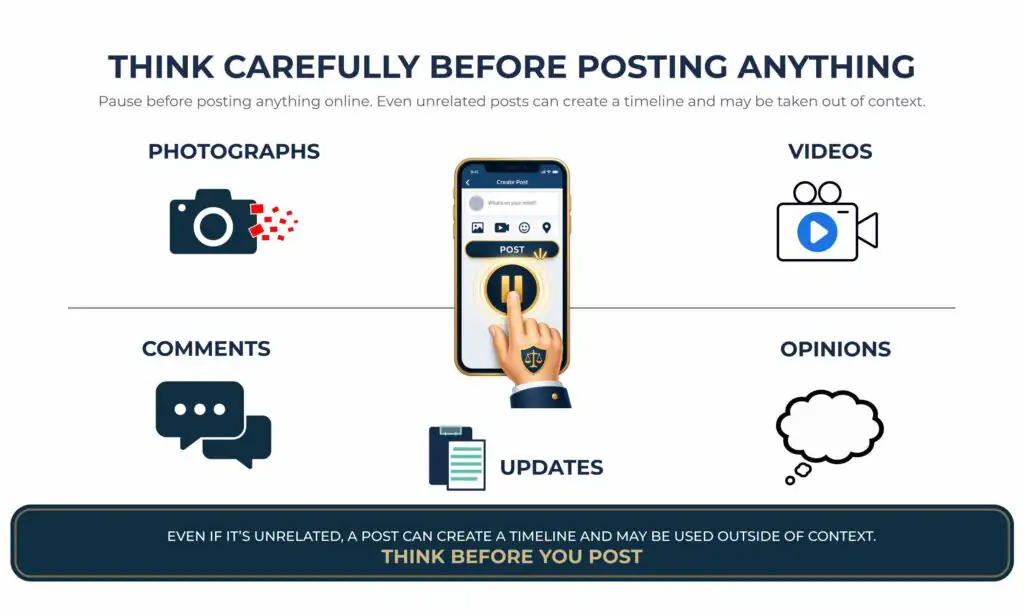
Think Carefully Before Posting Anything
Pause before posting anything online. That’s especially important when it comes to:
- Photographs
- Videos
- Comments
- Opinions
- Updates
Even if it’s fully unrelated, it creates a timeline and could be used outside of context to put your case on the line.
What You Should Not Post During a Personal Injury Claim
There are some specific things you shouldn’t post online right now. This includes:
- Anything about your case
- Injury-related activities
- Travel
- Social events you’re attending
- Potentially misleading content
Avoid deleting or altering any evidence already present. If you’ve already posted something, let your attorney know now.
Do Not Discuss Your Personal Injury Case Online
Avoid discussing your case at all. Don’t talk about who is at fault or settlement negotiations. Avoid discussing your legal strategy. Don’t share what your attorney communicates with you. Don’t ask questions about your case or claim. Direct those to your attorney instead.
Avoid Posting Photos or Videos of Physical Activity
Images can put you at risk. Specifically, images that show you engaging in physical activity, like sports or exercise, show you’re not hurting or limited. Images of walking or traveling also make it seem like your injuries are not serious.
Avoid Posting About Travel or Social Events
Travel and attending social events can be used against you. It shows your quality of life hasn’t been impacted. It could also provide insight into your physical and emotional limitations. Context matters, including the timing and nature of the activity.
Be Careful With Likes, Comments, Shares, and Tags
You don’t have to make posts to create concerns. Even your comments and reactions online can impact you. If you’re sharing content or tagged in a friend’s photo, that shows you’re engaging in life. It also may have implications for proving your injuries are not as bad as you thought.
Should You Delete Social Media Posts During a Personal Injury Case?
Don’t:
- Delete it
- Hide it
- Alter it in any way
- Destroy your content
Doing so gives the insurer a reason to believe you’re acting to hide something. You shouldn’t feel like you can’t share either. Just make sure what you share is accurate.
How to Protect Your Personal Injury Claim From Social Media Problems
There are steps you can take to reduce social media risks. Ideally:
- Make only consistent statements.
- Carefully post with privacy settings on.
- Make sure you know who can see and read your posts.
- Communicate with your attorney if you’re unsure.
Educate Friends and Family About Social Media Risks
It’s very common for relatives and friends to create posts that cause problems. They share what they know, and that creates risks. Encourage your family and friends not to share photos or tag you at various locations. Tell them not to talk about your case or activities.
Monitor Tagged Posts and Mentions
Make sure you’re paying attention to any tags for you. If someone visits you in the hospital and tags you, that photo suddenly becomes evidence. Review your account settings so it limits anyone’s ability to tag you.
What If Social Media Evidence Is Already Being Used Against You?
You posted something, and now they are using it against you. You still have legal options. Don’t confirm or deny any information if they question you. Instead, allow your attorney to handle the matter carefully. Don’t confront them.
Can a Personal Injury Lawyer Help With Social Media Evidence?
Your attorney will assess what happened. They will talk about social media concerns with you. They can also prepare you for any questions that happen during discovery or insurance negotiations. That helps you avoid not knowing what to say when someone asks you.
Consult Your Attorney Before Making Major Social Media Changes
Always talk to your attorney about case-specific details. That’s always important when it comes to factors that may impact your ability to recover damages. Don’t delete anything, post a fundraising link, or modify existing content. Don’t try to hide critical information. Instead, talk to your attorney about what’s really happening.
Think Before You Post During a Personal Injury Claim
Social media posts about your injuries and recovery process seem logical. When you’re in a personal injury case, they’re detrimental. Avoid using social media. Set rules with family and friends and make sure to monitor what others are saying. If you post, be cautious when doing so.
When there are concerns, contact your attorney right away. Your attorney will work to minimize the negative impact that social media posts can create in these cases. Avoid mentioning any posts to the insurer as well.
LedgerLaw is here for you when you have questions and concerns. Reach out to us for a free consultation. Let us work to defend you. With our experience and dedication to our clients, we know how to get results.
FAQs About Social Media and Personal Injury Claims
How can social media affect a personal injury claim?
Social media can ruin your personal injury claim. Make sure what you post online doesn’t give anyone else information to use against you.
How can social media destroy your personal injury claim?
What you say or show online is public evidence. Even if you try to hide it, the court could find it. Insurance companies can use it to deny claims.
Can insurance companies use social media against you?
Yes. Insurance companies can use what you post on social media as a component of the claims process.
Can private social media posts be used in a personal injury case?
There are many times when what you think is a private social media post can be used against you. Assume that’s what’s going to happen and avoid posting anything online that puts you at risk.
Should I stop posting on social media after a personal injury?
Yes. If and when you can do so, avoid posting on social media until after your personal injury case.
What should you not post on social media during a personal injury claim?
Don’t post any updates on your health, claim, or case. Avoid talking about what happened or how well you are doing.
Can photos and videos hurt my personal injury case?
Yes. Photos and videos you post online or that are posted by friends and family can be used as evidence in your case.
Should I delete social media posts after an accident?
Don’t delete anything yet. Speak to your attorney before you make any changes to what you’ve already posted so it won’t further hurt you.
Can comments, likes, and tagged posts affect a personal injury claim?
Yes. All of these actions are social media activities. They can directly impact your case.
What are the best personal injury social media guidelines to follow?
It’s best to follow the rules your attorney sets for you.

Emery Brett Ledger brings 28+ years of experience to personal injury law. He founded & led The Ledger Law Firm in securing over $100 million in compensation for clients with life-altering injuries & complex claims. Prior results do not guarantee a similar outcome. Licensed in California, Texas, & Washington, Emery earned his law degree from Pepperdine University School of Law. His practice areas include car & truck accidents, wrongful death, catastrophic injuries, maritime claims, & mass tort litigation. He has been recognized by The National Trial Lawyers’ Top 100, Mass Tort Trial Lawyers Top 25, and America’s Top 100 Personal Injury Attorneys. Emery also received the 2025 Elite Lawyer Award & holds a perfect 10.0 Avvo rating with Platinum Client Champion status. His legal work has been featured on CNN, Forbes, NBC, & ABC.
Free Case Evaluation
Recent Posts
- Punitive Damages in a Car Accident: When Can You Recover Them?
- Tailgating Injury: What Causes Tailgating, Road Rage & How to Stay Safe
- Waiting to Call a Lawyer Can Hurt Your Case: Evidence, Deadlines & Legal Risks
- What Is Property Damage in a Car Accident? Claims, Costs & Who Pays
- Bodily Injury & Property Damage: Coverage, Claims, Liability & Compensation
Emery Brett Ledger brings 28+ years of experience to personal injury law. He founded & led The Ledger Law Firm in securing over $100 million in compensation for clients with life-altering injuries & complex claims. Prior results do not guarantee a similar outcome. Licensed in California, Texas, & Washington, Emery earned his law degree from Pepperdine University School of Law. His practice areas include car & truck accidents, wrongful death, catastrophic injuries, maritime claims, & mass tort litigation. He has been recognized by The National Trial Lawyers’ Top 100, Mass Tort Trial Lawyers Top 25, and America’s Top 100 Personal Injury Attorneys. Emery also received the 2025 Elite Lawyer Award & holds a perfect 10.0 Avvo rating with Platinum Client Champion status. His legal work has been featured on CNN, Forbes, NBC, & ABC.