

What’s the Difference Between DUI and DWI? Key Legal Differences, Penalties, and State Laws Explained

Driving under the influence (DUI) and driving while intoxicated (DWI). These are different. You probably use the terms interchangeably. But they have different legal meanings. And each affects charges, penalties, and the legal outcome of your case. Laws differ between states. Here we provide a general overview of the difference between DUI and DWI.
What Do DUI and DWI Mean?
They both relate to driving a vehicle after using alcohol or drugs. There are differences:
- DUI: This is known as driving under the influence. This refers to driving under the influence. Under the influence of alcohol or drugs. It may mean using both.
- DWI: This is driving while intoxicated. It can also mean impaired. This refers to driving while impaired by alcohol.
Some states, such as Arkansas, Texas, New Mexico, Minnesota, and New Jersey use DWI. Most states, including Arizona, California, Washington, and Colorado, use DUI.
What Does DUI Mean?
DUI typically refers to operating a vehicle while you’re impaired. That could be with alcohol, drugs, or any other controlled substance. Some prescription medications fall into this classification.
What Does DWI Mean?
DWI refers to driving a vehicle while intoxicated or impaired. It also means driving beyond the legal limit. Some states make DWI a more serious offense. Impairment is a big factor. It means you’re over the legal limit but also engaging in activities that are unsafe.
DUI and DWI Differences Explained
DUI and DWI refer to driving a car after using alcohol or drugs. DUI applies when a person is under the influence while DWI refers to being specifically intoxicated. There’s no national standard or definition that applies in all states. That’s what makes it confusing. State law and legal definitions can be confusing.
DWI Versus DUI in Different States
All 50 states make drinking and driving illegal. Some use different terms. About 30 states refer to this as DUI. That includes Ohio, California, Arizona, Texas, and Florida.
Other states use DWI. About 10 states use DWI officially. That includes Arkansas, Minnesota, New Mexico, and New Jersey.
Some states use the terms to differentiate. They differentiate between driving under the influence. Under the influence of alcohol. You could be using drugs.

Which Is Worse: DUI or DWI?
This is tricky. Each state applies different penalties. These are based on their own rules. Neither term is automatically worse than the other in every case. Instead, factors like the following determine what you face:
- State laws where the violation occurred
- Blood alcohol levels
- Injuries
- Prior convictions
- Aggravating factors
It’s not better to get a DUI or DWI charge. The penalties are harsh.
Charged With DUI or DWI?
How Do Police Officers Determine Impairment?
Drivers can get pulled over. This is true if they violate the law. They can also pull someone over if a driver engages in behaviors that indicate impairment. Again, this differs between each of the states. Most often, they will use the following methods to investigate:
- Field sobriety tests
- Breath tests
- Blood tests
- Observations from interactions with you
- Roadside questioning
Can Prescription Drugs Lead to DUI or DWI Charges?
This is true if you are taking legally prescribed medication. if that medication impairs your ability to drive safely. This can lead to a DUI charge. It may lead to a DWI charge as well. Maintaining the law is critical. Any medication that causes you to lose focus puts you at risk to others. Even if the medication makes you tired.
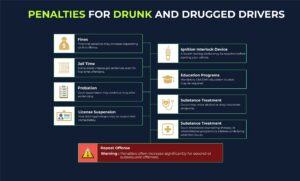
Penalties for Drunk and Drugged Drivers
DUI or DWI penalties are set by each state. All states take driving under the influence seriously. And that means you’ll face significant potential charges if convicted. Examples include:
- Fines
- Jail time even with a first offense in some states
- Probation
- Immediate loss of your driver’s license
- Ongoing driver’s license suspension
- Required ignition interlock devices
- Mandatory education programs
- Substance use disorder treatment, if applicable
You’ll experience even more significant penalties if this isn’t your first offense. Most states take these claims seriously. This is because there is risk.
Is a DUI or DWI a Felony?
It could be. In most states a first offense is a misdemeanor. Some factors can make it a felony. Accidents caused by driving under the influence resulting in serious injury or death may be punishable as a felony.
Repeat offenders typically face aggravated charges. Most states have a lookback period. For example, if you have a DUI in the last 10 years, then you face second offense charges.
Driving Privileges After Arrest
Some states restrict driving privileges for first offenses. Some states limit driving after a first offense conviction. Still others offer various suspension lengths. Many drivers face a temporary suspension. Going to your hearings can help you maintain critical driving privileges.
Do DUI or DWI Arrests Always Mean Conviction?
Not always. Being arrested for DUI or DWI is serious. But there are defense strategies that may apply in your case. Expect your attorney to discuss legal defense strategies with you such as:
- Unlawful stops, eliminating evidence police had from them
- Mistakes in testing
- Insufficient evidence
Defense strategies exist. But you also need to remember that the courts take these cases seriously. And that means you shouldn’t assume you can walk away with a simple plea of not guilty.
How Bad Is a DUI or DWI on Your Record?
DUI or DWI convictions are not good. They carry long-term and short-term effects. They can hurt your future. Any conviction creates a criminal record and that in itself is worrisome. Convictions may also affect:
- Employment: You may not get hired. If you have a felony conviction. You may be unable to do your job. Many employers take these charges seriously.
- Insurance rates: It’s harder to obtain insurance. You’ll pay more for it.
- Professional licenses: You may lose your license. You may not be able to renew it.
- Immigration Status: A conviction could impact your status. Having a felony can change things.
- Future driving: You may be unable to obtain a license for some time.
Expungement is applicable in some states. That means only a few states may allow removal of a DUI or DWI from your record.
Will Two Drinks Get You a DUI or DWI?
It could. The number of drinks does not matter. It’s the way your body responds to it. Factors like your body weight, metabolism, and what you’re drinking play a role in this. Medications can interact, creating impairment that’s more significant. When you drank and then drove matters.
Can You Get a DWI on a Horse or Bicycle?
Each state defines what it considers a vehicle. There are unusual cases where you may violate the law on a horse, bicycle, or otherwise due to impairment. Rules always differ based on where you’re located.
Why the Terminology Matters After an Arrest
You need to understand what you’re facing with a DUI or DWI. The terminology can impact the defense strategy that’s most effective in your case. It can also relate to penalties and plea negotiations. Afterward, it can impact the insurance costs you face.
It’s very common to use these terms interchangeably. Yet, there are risks of misunderstandings.
Can a DUI or DWI Lead to a Personal Injury Claim?
A DUI or DWI incident can lead to a personal injury claim. The person driving intoxicated may be responsible for the injuries and other losses the victim faces. Many victims face long-term financial loss and property damage. They also have medical bills and lost wages. That adds up.
That means a person charged with a DUI or DWI could face criminal and civil claims. Note that these are two separate legal processes.
What If You Were a Victim of a DUI or DWI Crash?
Always hire an attorney. You have the right to seek financial compensation for any losses you have. You’ll file a claim against the at-fault party’s insurance. You can demand repayment for any lost wages and medical costs you have. You can also seek pain and suffering claims.
Seek Medical Attention Immediately
If you are in an accident with a drunk driver, get medical care immediately. Getting help immediately protects your health as well as your legal claim. Some injuries aren’t obvious right away.
When to Call a DUI or DWI Lawyer
If you have any losses resulting from the actions of a drunk driver call an attorney. Let us work to protect your legal rights. We can challenge evidence against you and negotiate a fair outcome. Our team also works with those facing criminal charges. Acting fast is critical. It can help preserve your rights.
Understanding the Difference Between DUI and DWI
What’s a DUI and DWI difference? It comes down to your state’s laws. All claims like this have penalties that include significant loss. Seeking legal guidance becomes critical.
Ledger Law can help you. We’re trusted, local, and aggressive. We focus on helping you get the best possible outcome. Contact us now about your injury claims.
FAQ’s About What’s the Difference Between DUI and DWI
What does DUI mean compared to DWI?
DUI implies a person is under the influence. This could be alcohol or drugs. DWI usually means intoxication.
How does a DUI or DWI affect liability in a drunk driving accident?
Drunk drivers are liable. They are responsible for their actions. Many of these cases lead to punitive damages on top of other losses.
Can a DUI or DWI lead to a personal injury claim if someone is injured?
Yes. If an injury occurs. The victim can file a claim. A claim against the other party for their losses.
Can I file a personal injury claim after being hit by a drunk driver?
Yes. Prove that you have injuries and other losses from the driver. You can then seek compensation.
Does it matter whether the driver was charged with DUI or DWI?
The charge depends on where it happened. It’s all about state laws.
What compensation can DUI or DWI accident victims recover?
Victims can recover damages. If they can prove that a DUI or DWI accident caused it. That includes medical costs and lost wages. It may include pain and suffering.
How can a DUI or DWI arrest affect a personal injury lawsuit?
These cases are separate. Criminal and civil cases are different. A criminal conviction can help a civil suit.
How long do I have to file a DUI or DWI accident injury claim?
Laws vary by state. Acting immediately is important.
Should I hire a lawyer after a DUI or DWI accident?
Yes. An attorney becomes your advocate. Your attorney fights for you to recover fair compensation.

Emery Brett Ledger brings more than 27 years of experience to personal injury law. He founded & led The Ledger Law Firm in securing over $100 million in compensation for clients with life-altering injuries & complex claims. Licensed in California, Texas, & Washington, Emery earned his law degree from Pepperdine University School of Law. His practice areas include car & truck accidents, wrongful death, catastrophic injuries, maritime claims, & mass tort litigation. He has been recognized by The National Trial Lawyers’ Top 100, Mass Tort Trial Lawyers Top 25, and America’s Top 100 Personal Injury Attorneys. Emery also received the 2025 Elite Lawyer Award & holds a perfect 10.0 Avvo rating with Platinum Client Champion status. His legal work has been featured on CNN, Forbes, NBC, & ABC.
Free Case Evaluation
Recent Posts
- How to Win a Left Turn Accident Case: Fault, Right of Way, Evidence & Compensation
- What to Do After a Pedestrian Accident: 10 Essential Steps to Protect Your Health and Claim
- Who Is at Fault in a Self-Driving Car Accident? Liability, Insurance, and Self-Driving Car Crash Injury Claims
- Car Accident Out of State: Insurance, Jurisdiction, and What Happens If You Get in an Accident in Another State
- Car Accident Caused by Flooding: Who Is Liable, Insurance Coverage, and Your Legal Rights After a Flooding Car Accident
Emery Brett Ledger brings more than 27 years of experience to personal injury law. He founded & led The Ledger Law Firm in securing over $100 million in compensation for clients with life-altering injuries & complex claims. Licensed in California, Texas, & Washington, Emery earned his law degree from Pepperdine University School of Law. His practice areas include car & truck accidents, wrongful death, catastrophic injuries, maritime claims, & mass tort litigation. He has been recognized by The National Trial Lawyers’ Top 100, Mass Tort Trial Lawyers Top 25, and America’s Top 100 Personal Injury Attorneys. Emery also received the 2025 Elite Lawyer Award & holds a perfect 10.0 Avvo rating with Platinum Client Champion status. His legal work has been featured on CNN, Forbes, NBC, & ABC.
