

Car Accident Determining Fault by Location of Damage: How Evidence Reveals Who’s at Fault
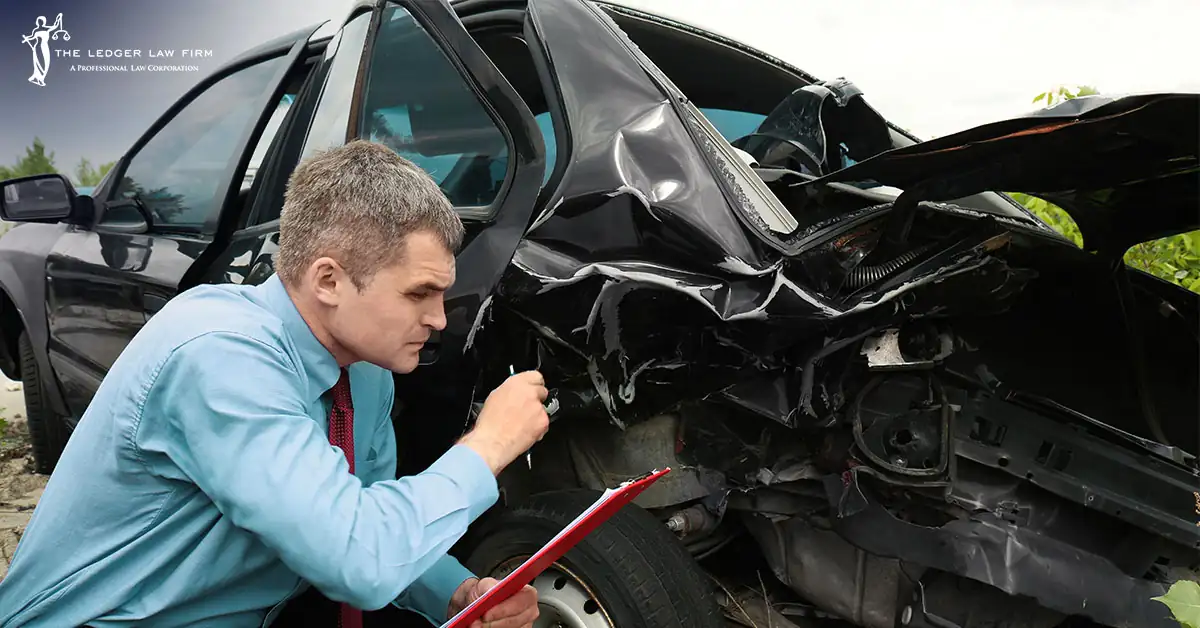
Car accidents happen because someone’s at fault for improper driving. Usually one party bears a larger portion of the fault than the other, which makes it important to examine a car accident determining fault by location of damage. Correctly assigning fault makes it easier to make an insurance claim and reach a settlement with the party that’s at-fault.
Determining fault comes down to interpreting the damage left behind and investigating supporting evidence such as tire tracks and debris fields. All of this information tells an investigator about the series of events that led to the accident and determines who has the most fault. Read on to learn more about how to determine at fault car accident.
Why Determining Car Accident Fault Matters
Determining who’s at fault for an accident directly influences your insurance claim and compensation for injuries and loss. State laws also play a role in settling the issue of how to determine at fault car accident blame. Some states are no-fault, which means that both drivers use their own insurance to cover damages, while an at-fault state requires the offending driver’s insurance to pay for the victim’s costs.
In general, fault is assigned by who’s most responsible for the crash. Someone who did nothing to cause the accident is 0% at fault, while the offender is 100% at fault. The percentage changes depending on the circumstances that led to the accident. It also affects how much financial responsibility each party bears for the accident.
How Insurance Companies Determine Fault
The adjuster for the insurance company performs an investigation by looking at the damage on your car. They also review evidence from the scene to recreate the circumstances that led to the accident. Giving them clear evidence in the form of photos, witness statements, and a police report will help you support your lack of fault.
The location of the damage on your car plays a vital role in determining who’s at fault. Most of the time, the location and position of the damage shows how you were struck, the angle, and the amount of force.
Understanding Damage Location in Fault Determination
Damage location is a clear indicator of who’s responsible for the accident. For example, a right-angle or side-impact collision is the result of a failure to yield by one of the drivers. A rear-end collision shows that the following driver failed to keep a safe distance from the car in front of them.
Accident reconstruction experts look at the damage to determine who’s at fault. That’s because there is no other reason for a car to have sustained a certain type of impact. Sometimes it happens that the damage to the car doesn’t tell the whole story, but that’s rare because of other indicators that are typically present in an accident as to who’s at fault.
Common Collision Types and Fault Implications
Some of the common types of collisions include:
- Rear-end
- T-bone or right-angle
- Head-on
These types of collisions are direct impact types, which means there’s no ambiguity as to where the source of the damage came from. A crushed rear-end is the result of a rear-end collision, while a smashed side means the car was T-boned. Sometimes it happens that the damage doesn’t tell a clear tale about its source, which means both parties probably share the fault.
Analyzing Damage Patterns for Fault Determination
Determining who’s at fault goes beyond looking at the damage on the car. It includes looking closely at the damage for paint transfer and the impact angle. A car accident reconstruction expert takes these and other pieces of evidence to determine who has the most fault for an accident. It’s worth noting that visibile damage doesn’t always show who’s at fault, and makes it more difficult to show who has the most blame.
Legal and Financial Implications of Fault Determination
You want to receive little of the fault in an auto accident. The reason is that it will affect how much you can receive in compensation and make your insurance rates go up. It’s important to be precise in your evidence collection as well as bring in an expert in accident reconstruction for airtight evidence. Any ambiguity in the evidence can result in both parties getting into a dispute and prolonging the lawsuit.
Fault Determined by Damage?
Common Myths About Fault Based on Damage
Some of the common myths about who’s at fault based on damage are just myths. For example, the car with the most damage is the one who’s innocent” is overlooking the fact that different factors affect the amount of damage a car receives. The same goes for the myth that only one person can be at fault because both parties can be at fault.
Accident damage is more than just what’s visible on the car. The way the damage happened and the amount of force plays a role in determining who’s at fault. Witness statements and reports are vital to proving who bears the majority of the fault.
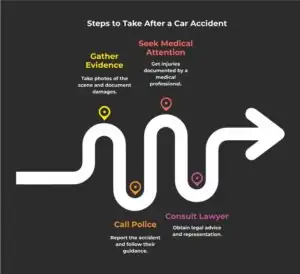
After a car accident, you need evidence to show who’s at fault and document the scene. If you’re able to, take pictures of the scene, look for tire marks, and the damage to your car. Call the police and let them guide you through the rest of the process. Get medical attention as soon as possible to get a record of your injuries, then consult a car accident lawyer for help.
Getting evidence as soon as possible helps with accurately determining fault in a car accident. The pictures show where the cars came to a stop and their damage before they’re pulled out of the scene. Tracking your injuries helps prove that you’re truly injured and not exaggerating your pain.
When to Contact a Car Accident Lawyer
In the event it’s unclear as to who’s liable for the accident, you should contact a car accident lawyer. They’re familiar with disputes over who’s at fault, and know when to bring in an expert to make a final determination. A lawyer puts all the evidence together with the facts from the expert, and presents it to the opposing party’s insurance company in order to reach a settlement.
The process of determining fault should be left to the care of a lawyer and their experts. They know what they’re looking for, and how to present the information from an investigation. Their expertise makes the difference between an average settlement and a good settlement.
Conclusion
The damage location on your car is the key piece of evidence that shows who’s at fault for the accident. This is why it’s important you get an auto accident expert to evaluate the damage to your car. Their report puts the blame squarely on the other person and makes it harder to dispute the events of the day.
Don’t wait to get into a dispute with the insurance company about who’s at fault in a car accident. Call the Ledger Law Firm to speak to a car accident lawyer as soon as you can. The lawyers at Ledger Law have experience with pursuing personal injury claims on behalf of their clients. A personal injury lawyer can help you understand how a car accident claim works, and when to call in an expert to determine who’s at fault. Call us today to set up a consultation and get started.
FAQs About Car Accident Determining Fault by Location of Damage
How is fault determined in a car accident based on the location of damage?
Certain types of damage can only be caused in a specific way. For example, a head-on collision creates an unmistakable crush pattern on the car receiving the damage. The same goes for a right-angle collision and more.
Can damage location alone determine fault in a car accident?
Yes, determining fault in a car accident can be done by looking at the location of the damage.
What if both vehicles show damage in similar areas—who is at fault?
When looking at damage that’s similar, figuring out who’s responsible for the car accident determining fault by location of damage is vague, However, it’s accepted that similar damage on both cars means both parties share fault for the collision.
Do police use damage location when assigning fault in a report?
The police use damage location along with other signs and visuals that help assign fault.
Should I hire a car accident lawyer to help prove fault through vehicle damage?
Yes, you should hire a car accident lawyer in a situation where it’s hard to prove fault. The lawyer has access to experts that can pinpoint the amount of fault each party bears for an accident.

Emery Brett Ledger brings 28+ years of experience to personal injury law. He founded & led The Ledger Law Firm in securing over $100 million in compensation for clients with life-altering injuries & complex claims. Prior results do not guarantee a similar outcome. Licensed in California, Texas, & Washington, Emery earned his law degree from Pepperdine University School of Law. His practice areas include car & truck accidents, wrongful death, catastrophic injuries, maritime claims, & mass tort litigation. He has been recognized by The National Trial Lawyers’ Top 100, Mass Tort Trial Lawyers Top 25, and America’s Top 100 Personal Injury Attorneys. Emery also received the 2025 Elite Lawyer Award & holds a perfect 10.0 Avvo rating with Platinum Client Champion status. His legal work has been featured on CNN, Forbes, NBC, & ABC.
Free Case Evaluation
Recent Posts
- Punitive Damages in a Car Accident: When Can You Recover Them?
- Tailgating Injury: What Causes Tailgating, Road Rage & How to Stay Safe
- Waiting to Call a Lawyer Can Hurt Your Case: Evidence, Deadlines & Legal Risks
- What Is Property Damage in a Car Accident? Claims, Costs & Who Pays
- Bodily Injury & Property Damage: Coverage, Claims, Liability & Compensation
Emery Brett Ledger brings 28+ years of experience to personal injury law. He founded & led The Ledger Law Firm in securing over $100 million in compensation for clients with life-altering injuries & complex claims. Prior results do not guarantee a similar outcome. Licensed in California, Texas, & Washington, Emery earned his law degree from Pepperdine University School of Law. His practice areas include car & truck accidents, wrongful death, catastrophic injuries, maritime claims, & mass tort litigation. He has been recognized by The National Trial Lawyers’ Top 100, Mass Tort Trial Lawyers Top 25, and America’s Top 100 Personal Injury Attorneys. Emery also received the 2025 Elite Lawyer Award & holds a perfect 10.0 Avvo rating with Platinum Client Champion status. His legal work has been featured on CNN, Forbes, NBC, & ABC.