

What Does Double Indemnity Mean? Double Indemnity Insurance and Accidental Death Benefits Explained

What does double indemnity mean? It’s a type of life insurance benefit directly related to a person’s accidental death. This benefit is an additional benefit behind the death benefit. You’ll need to meet numerous factors to qualify for this coverage. Policy terms, exclusions, and claim requirements differ between policies.
What Is Double Indemnity?
Double indemnity is an insurance provision that pays more if an accidental death happens. Some policies double or triple the death benefit amount in these situations. This provides the family with twice the amount of compensation that a standard policy would provide.
What Is Double Indemnity Insurance?
You can add double indemnity insurance to your life insurance policy. It’s called a “rider” or add-on to a life insurance policy. It applies only when certain situations occur. Specifically, most policies double the value of the payment beneficiaries receive in situations where the victim dies in an accident. It works as accidental death coverage.
What Is Death Indemnity in Insurance Policies?
The term death indemnity refers to the amount of money paid when a qualifying condition happens. This is a payment made to the named beneficiary, such as an heir. It pays at the value of the purchased coverage, which can range widely. Accidental death provisions are very strict because they only apply if a person dies in an accident.
How Does Double Indemnity Work?
Here’s a simple breakdown of how it works. You purchase double indemnity insurance as a component of your life insurance policy. If you die in a car accident while the policy is in place, the policy doubles the death benefit paid to your named heirs. Insurance companies are aggressive in verifying that the incident was an accident before they will issue a payment.
When Double Indemnity Benefits Are Triggered
Double indemnity doesn’t always pay out double. It only pays double when a specific accidental death occurs. This typically means that a person dies:
- Suddenly
- Unexpectedly
- Accidentally
It doesn’t typically include death caused by illness or self-harm. Each policy names specific qualifying events and restrictions. You’ll need to know these before you purchase a policy.
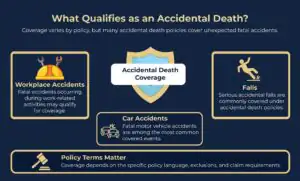
What Qualifies as an Accidental Death?
That’s the most important factor to think about when purchasing this coverage. Each policy differs. Most cover accidents such as:
- Workplace accidents
- Falls
- Car accidents
Have Questions About Double Indemnity Coverage?
These policies specifically apply to unexpected incidents. It’s super important to consider the terms in the policy you select. Slight differences and exclusions often apply.
Common Examples of Accidental Death Claims
A person can die in an accident in many ways. This simply means a person dies unexpectedly from something that was unpredictable. Some of the most common examples include:
-
- Fatal car accidents
- Commercial airline disasters
- Pedestrian accidents
- Drowning in a lake or pool
- Acts of violence that are unprovoked
- Accidental falls
- Workplace accidents
- Slips and falls
Insurance companies spend significant time investigating the cause of death. They won’t pay out just because you claim the incident was an accident.
Double Indemnity Is Available Only if Accidental Death Occurs
It’s very important to understand when your family receives double compensation. This only applies in accidents. Most illness-related deaths don’t qualify for double indemnity benefits. Instead, your family must demonstrate proof that the death stemmed from an accident.
Reasons Insurers Deny Double Indemnity Claims
Denials happen for numerous reasons. Insurance laws require insurers to disclose all limitations to these policies ahead of time. Examples of denial reasons include:
- Exclusions listed in the policy
- Insufficient evidence proving it was an accident
- Death from intoxication or related to intoxication
- Risky activity engagement
- Disputed causes of death
Policy language is important. Knowing what specifically applies in your case is critical.
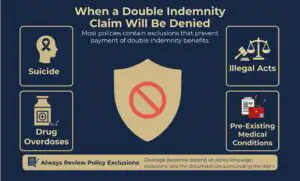
When a Double Indemnity Claim Will Be Denied
Most policies have specific exclusions. These are instances in which the double indemnity payment won’t be made. Examples include deaths resulting from:
- Suicide
- Illegal acts
- Drug overdoses
- Pre-existing medical conditions
The Double Indemnity Claims Process
Your loved one died. Now it’s up to you to file a claim for these benefits. The process starts with submitting a claim form along with death certificates. Insurance companies often require medical records and accident documentation. The insurer completes a detailed investigation. They won’t issue payment if there are any indications that the accident wasn’t an accident.
Evidence Often Required in Double Indemnity Claims
Evidence can be everything in these claims. Documentation must demonstrate that the incident was an accident. This includes:
- Police reports
- Autopsy reports
- Witness statements
- Medical records
- Accident scene evidence
What to Do If Your Double Indemnity Claim Is Wrongfully Denied
This happens often. The beneficiary must seek an appeal to overturn these decisions. It’s nearly always best to work with an attorney at that time. Reviewing the policy language and insurer reasoning is critical.
Can You Fight a Denial of Your Family’s Double Indemnity Claim?
Yes. It’s challenging to do so. You’ll need to provide supporting evidence. We encourage you to work with an attorney to appeal this decision.
Why Double Indemnity Matters in Wrongful Death Cases
Many accidental death cases result in wrongful death lawsuits. These apply against negligent parties. Insurance claims and civil lawsuits are very different. Don’t confuse them when they apply to your situation.
How Is Double Indemnity Related a Wrongful Death Case?
Beneficiaries pursue insurance benefits after a person’s death. They can also seek wrongful death claims against the at-fault party. Both are critical resources in desperate times.
Your Wrongful Death Case May Have a Filing Deadline
Most wrongful death claims have a time limit. It’s called the statute of limitations. The length of time varies by state. In all cases, if you miss this deadline, you’re unable to seek compensation.
Can a Personal Injury Attorney Help You Secure Double Indemnity Benefits?
AN attorney becomes a critical ally in this process. They’ll explain critical policy language to you. They also work with you on appeals if you receive a denial. They can negotiate with insurers and seek a wrongful death claim.
When to Contact an Insurance or Wrongful Death Lawyer
If your loved one died in an accident, call an attorney. Your attorney will investigate and determine which legal strategies apply to the situation. You always benefit from an attorney if you have a denied claim, disputed accidental death, or complex insurance matter.
Common Misunderstandings about Indemnity Insurance
Don’t make the mistake of believing all accidents result in double payment. The person needs to purchase a very specific policy. And, numerous policy exclusions limit compensation. It’s always wise to work with an attorney.
Conclusion – Understanding What Double Indemnity Means
What does double indemnity mean in your situation? It could mean receiving compensation that’s double the standard policy if your family member died in an accident.
Numerous limitations exist. By working with a lawyer from Ledger Law, you protect your financial future. Seek out a consultation with our team to review your case. We’ll determine what legal rights you have. Ledger Law stands out as a trusted option. Our experienced legal team, aggressive negotiation strategies, trial-ready advocacy, and no-fee-unless-you-win commitment mean you get results.
FAQs About What Does Double Indemnity Mean
What does double indemnity mean in life insurance?
Double indemnity refers to doubling the payment made when a person dies in a qualifying event. This is a payment double the standard policy amount. It’s payable in very limited situations.
What is double indemnity insurance coverage?
It’s a type of rider for your insurance policy that gives you added protection. If the person dies in an accident, the policy pays out double the standard amount.
How does double indemnity work after an accidental death?
It only applies in situations of accidental and unavoidable incidents. Then, it pays out twice the value of the standard policy.
What qualifies as accidental death for double indemnity claims?
The event can’t be something that was expected in any way. Instead, it must be unexpected and sudden, like a car accident.
Can a double indemnity claim be denied by an insurance company?
Yes. They deny claims if you don’t prove the incident was the result of an accident.
Does double indemnity cover car accident deaths?
Double indemnity often covers fatal car accidents. Make sure you read the terms of the policy to understand any limits.
How long does a double indemnity insurance claim take to process?
The claims process can take several weeks to several months. This depends on whether there are disputes.
Can families appeal a denied double indemnity claim?
You definitely can appeal a decision that’s inaccurate. You may need additional evidence to do so.
Should I hire a lawyer for a denied double indemnity insurance claim?
You should hire an attorney who has experience in these claims. Doing so protects your right to compensation.

Emery Brett Ledger brings more than 27 years of experience to personal injury law. He founded & led The Ledger Law Firm in securing over $100 million in compensation for clients with life-altering injuries & complex claims. Licensed in California, Texas, & Washington, Emery earned his law degree from Pepperdine University School of Law. His practice areas include car & truck accidents, wrongful death, catastrophic injuries, maritime claims, & mass tort litigation. He has been recognized by The National Trial Lawyers’ Top 100, Mass Tort Trial Lawyers Top 25, and America’s Top 100 Personal Injury Attorneys. Emery also received the 2025 Elite Lawyer Award & holds a perfect 10.0 Avvo rating with Platinum Client Champion status. His legal work has been featured on CNN, Forbes, NBC, & ABC.
Free Case Evaluation
Recent Posts
- Do Cars Have Black Boxes? What a Car Black Box Records and How It Can Help After an Accident
- Can AI Chatbot Conversations Be Used Against You in a Personal Injury Case? What to Know About AI Chat Privacy and Privilege
- How to Win a Left Turn Accident Case: Fault, Right of Way, Evidence & Compensation
- What to Do After a Pedestrian Accident: 10 Essential Steps to Protect Your Health and Claim
- Who Is at Fault in a Self-Driving Car Accident? Liability, Insurance, and Self-Driving Car Crash Injury Claims
Emery Brett Ledger brings more than 27 years of experience to personal injury law. He founded & led The Ledger Law Firm in securing over $100 million in compensation for clients with life-altering injuries & complex claims. Licensed in California, Texas, & Washington, Emery earned his law degree from Pepperdine University School of Law. His practice areas include car & truck accidents, wrongful death, catastrophic injuries, maritime claims, & mass tort litigation. He has been recognized by The National Trial Lawyers’ Top 100, Mass Tort Trial Lawyers Top 25, and America’s Top 100 Personal Injury Attorneys. Emery also received the 2025 Elite Lawyer Award & holds a perfect 10.0 Avvo rating with Platinum Client Champion status. His legal work has been featured on CNN, Forbes, NBC, & ABC.
