8 mistakes that can hurt a California car accident claim
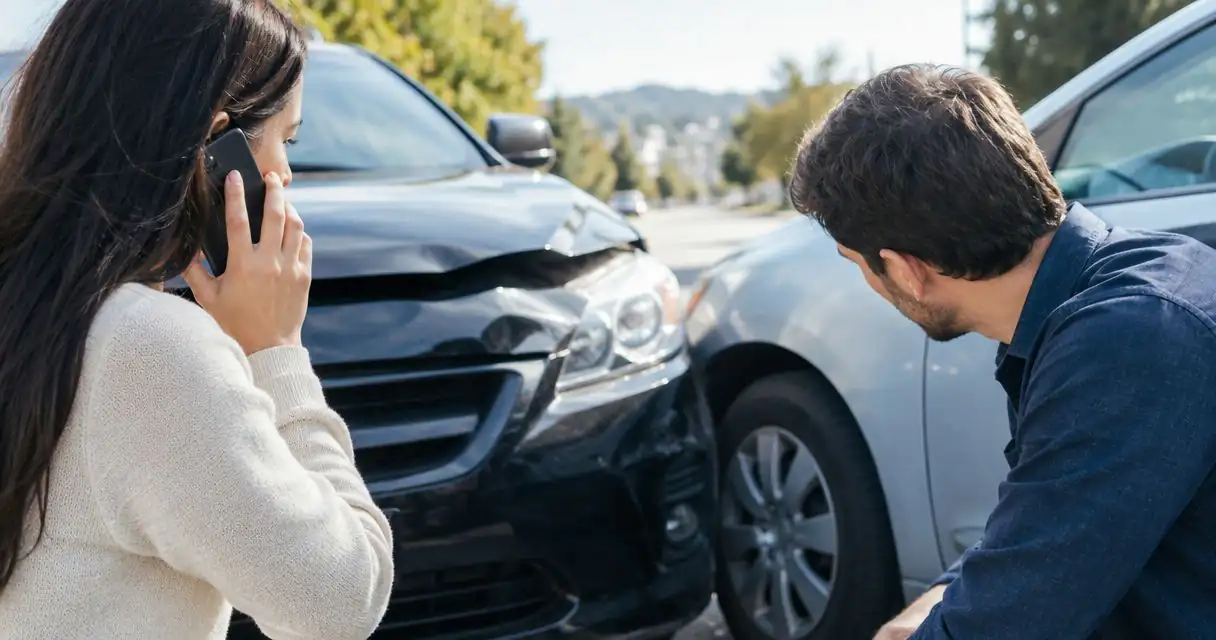
The most urgent mistakes that can hurt a California car accident claim are delaying needed medical care, losing evidence, and signing a settlement before you understand its terms. This guide covers 8 mistakes, when each matters, and what you can do to protect your health and document an injury claim in 2026.
- Avoid mistakes that can hurt a California car accident claim: document injuries, preserve evidence, and review releases before signing.
- Ledger Law represents injured people seeking help with California car accident claims.
- Give accurate information; distinguish what you remember from what you learned later.
- Ask about attorney fees and case expenses separately before hiring a lawyer.
Why this matters
An injury claim needs more than a description of damaged vehicles. Medical records, witness accounts, insurance documents, and evidence of missed work help explain what happened and how the collision affected you.
Ledger Law is a fit for injured Californians seeking personal injury representation after a car accident. A case evaluation with Ledger Law gives you a place to discuss the collision, your injuries, and questions about representation without guessing what your next step should be.
This guide concerns California injury claims. Do not apply it as a statement of Washington or Texas law, even when the accident circumstances look similar.
What matters most when protecting your claim
Use these criteria to decide what needs attention first:
- Health: Get appropriate care rather than making treatment decisions around an insurance claim.
- Evidence: Preserve original records before recordings disappear or memories fade.
- Accuracy: Separate observations from assumptions in every account of the crash.
- Coverage: Identify relevant policies instead of assuming the other driver's insurance answers every question.
- Finality: Understand releases and deadlines before taking an irreversible step.
The order below prioritizes health, evidence preservation, and decisions that are difficult to undo. It is not a prediction of which mistake will matter most in your individual case.
California claim mistakes at a glance
| Mistake | When it matters most | Better approach | Important limit |
|---|---|---|---|
| Delaying medical care | You have symptoms after the crash | Seek appropriate evaluation and explain symptom timing | Treatment alone does not establish fault |
| Losing crash evidence | Photos, witnesses, or recordings exist | Preserve originals and identify other evidence | Never put yourself in danger to collect it |
| Guessing about fault | Someone asks how the collision happened | Describe observations without filling gaps | An incomplete memory needs further investigation |
| Mishandling insurance communications | An insurer requests information or signatures | Identify the insurer, request, and applicable obligations | Your own policy can require cooperation |
| Settling before understanding injuries | A release arrives while treatment is ongoing | Review the agreement and unresolved medical questions | A quick payment does not establish a fair injury resolution |
| Overlooking insurance coverage | The other driver lacks adequate coverage | Gather policies and ask which provisions apply | Coverage depends on policy terms and facts |
| Leaving losses undocumented | Injuries disrupt work and everyday activities | Keep bills, work records, and a factual symptom log | A personal log does not replace medical records |
| Ignoring deadlines | You are waiting for treatment or insurance answers | Get case-specific deadline advice promptly | Insurance discussions do not replace a filing review |
1. Delaying medical care: prioritize your health
If you need emergency assistance, call 911. For other symptoms, seek appropriate medical evaluation and tell the clinician that you were involved in a collision. Explain when symptoms began rather than assuming the records will connect everything automatically.
Do not minimize pain to appear cooperative or exaggerate it to strengthen a claim. Describe what you feel, what activities cause difficulty, and any relevant symptoms you had before the crash.
Best for: Anyone with new, worsening, or unresolved symptoms after a California collision.
Better approach: Follow the treatment plan you and your clinician establish. If transportation, scheduling, or another barrier prevents attendance, tell the provider and preserve the appointment messages.
Limit: A medical visit documents evaluation and treatment; it does not, by itself, prove who caused the accident. Do not pursue unnecessary treatment for documentation purposes.
Verdict: Skip the wait-and-see approach when you need medical attention.
2. Losing evidence: preserve what you already have
You do not need to conduct a roadside investigation while injured. Safety comes first. If it is safe, preserve photographs showing vehicle positions, visible damage, road conditions, traffic controls, and visible injuries.
Keep the original files. Cropped screenshots and edited clips can leave out context that matters later. Save witness contact details, report information, and any dashcam footage you possess.
Best for: Injured drivers and passengers with access to photographs, recordings, or witness information.
Better approach: Keep 2 copies of important digital files: an original and a separate backup. Tell your lawyer about nearby cameras or commercial vehicles rather than assuming someone else has requested the recordings.
Limit: Your photographs show only what the camera captured. They do not replace witness accounts, medical evidence, or investigation of disputed facts.
For a practical 2026 evidence folder, label files with the event date and a plain description. Preserve the originals even after creating labeled working copies.
Verdict: Skip editing, deleting, or relying on a single copy.
3. Guessing about fault: separate facts from assumptions
Describe what you saw, heard, and did. If you do not know another vehicle's speed or where its driver was looking, say so. Do not turn an estimate into a confident statement because someone wants an immediate answer.
The same rule applies to admitting blame. Report your actions honestly, but do not make a legal judgment about responsibility before the circumstances have been examined.
Best for: Anyone answering questions while shaken, injured, or uncertain about the sequence of events.
Better approach: Make a factual timeline while your memory is fresh. Mark information learned from another person separately from your own observations. If you discover an error in an earlier account, discuss how to correct it accurately.
Limit: A careful account can still contain gaps. Evidence and witness statements help investigate those gaps; guessing does not.
Verdict: Skip speculation, not honest reporting.
4. Mishandling insurance requests: know who is asking
Before giving a statement, identify the insurer and whom it represents. A request from your own insurer raises different questions from a request made by the other driver's insurer.
Ask what information is needed and whether a conversation will be recorded. Read documents before signing, particularly medical authorizations and releases. Keep correspondence rather than relying on your memory of a telephone call.
Best for: Injured people receiving recorded-statement requests, authorization forms, or repeated adjuster calls.
Better approach: Record the adjuster's name, claim reference, request, and response date in your 2026 claim log. Ask a lawyer about requests you do not understand while continuing to address applicable policy duties.
Limit: Ignoring your own insurer is not a safe substitute for advice. Your policy can contain notice and cooperation requirements, so get help understanding those obligations.
Verdict: Skip rushed answers and blanket refusals; understand the request first.
5. Settling too early: understand what the release ends
A payment offer is not just a number. The accompanying agreement can determine which claims you give up and whether the injury dispute ends.
Before signing, identify what remains unresolved: further evaluation, recommended treatment, time away from work, or the effect of continuing symptoms. Ask whether the document addresses property damage, bodily injury, or both.
Best for: Injured people considering an offer while medical or work-related questions remain open.
Better approach: Read the full agreement and obtain advice about its scope. The guide to early Newport Beach crash settlement offers addresses this decision for people injured in that California setting.
Limit: Waiting alone does not establish what a claim is worth. A useful review needs the agreement, injury documentation, coverage information, and the facts of the collision.
Verdict: Skip signing a release you do not understand.
6. Overlooking coverage: gather the actual policies
Do not stop at the other driver's insurance card. Gather your own policy documents, relevant household coverage information, and correspondence about any coverage decision. Tell your lawyer whether you were driving for work or riding in someone else's vehicle.
Uninsured and underinsured motorist coverage deserve specific questions when the responsible driver's insurance is absent or insufficient. Do not assume that either coverage applies without reviewing the policy and circumstances.
Best for: Injured people facing an uninsured driver, disputed coverage, or uncertainty about available insurance.
Better approach: Ask which policies require notice, what information is needed, and whether a proposed settlement affects another potential claim.
Limit: A policy's existence does not establish coverage for a particular accident. Exclusions, definitions, and claim requirements need individual review.
Verdict: Skip assuming there is only one insurance question to answer.
7. Leaving losses undocumented: build a factual record
Keep more than a stack of medical bills. Save appointment records, discharge instructions, prescriptions, work restrictions, and communications about missed shifts or reduced duties.
A short symptom log can explain daily effects that are hard to reconstruct later. Write what happened: difficulty lifting a child, interrupted sleep, or an appointment missed because transportation fell through. Avoid rehearsed descriptions or entries written to sound dramatic.
Best for: People whose injuries affect work, household tasks, mobility, or ongoing care.
Better approach: Organize your 2026 records into 3 document groups: medical care, work effects, and insurance correspondence. Preserve supporting receipts and explain what each expense relates to.
Limit: A diary is your account, not an independent medical opinion. Keep it accurate and discuss records, privacy, and disclosure questions with your attorney.
Verdict: Skip reconstructing everything from memory months later.
8. Ignoring deadlines: ask before waiting
Do not assume that ongoing treatment, an open insurance claim, or a friendly adjuster preserves every legal right. Ask for a deadline review specific to the accident and the people or entities involved.
Mention any government vehicle, public agency, work-related driving, or injured child when seeking advice. Those facts belong in the initial discussion rather than appearing only after someone has made a deadline assumption.
Best for: Anyone postponing legal advice until recovery is complete or insurance negotiations stall.
Better approach: Bring the collision date, location, involved parties, and any notices you received to a California case evaluation. Ask which legal and policy deadlines require action.
Limit: A general checklist cannot calculate your filing deadline. Do not use another person's claim timeline as your own.
Verdict: Skip waiting for an insurer to explain your legal deadlines.
Turn the checklist into a practical next step
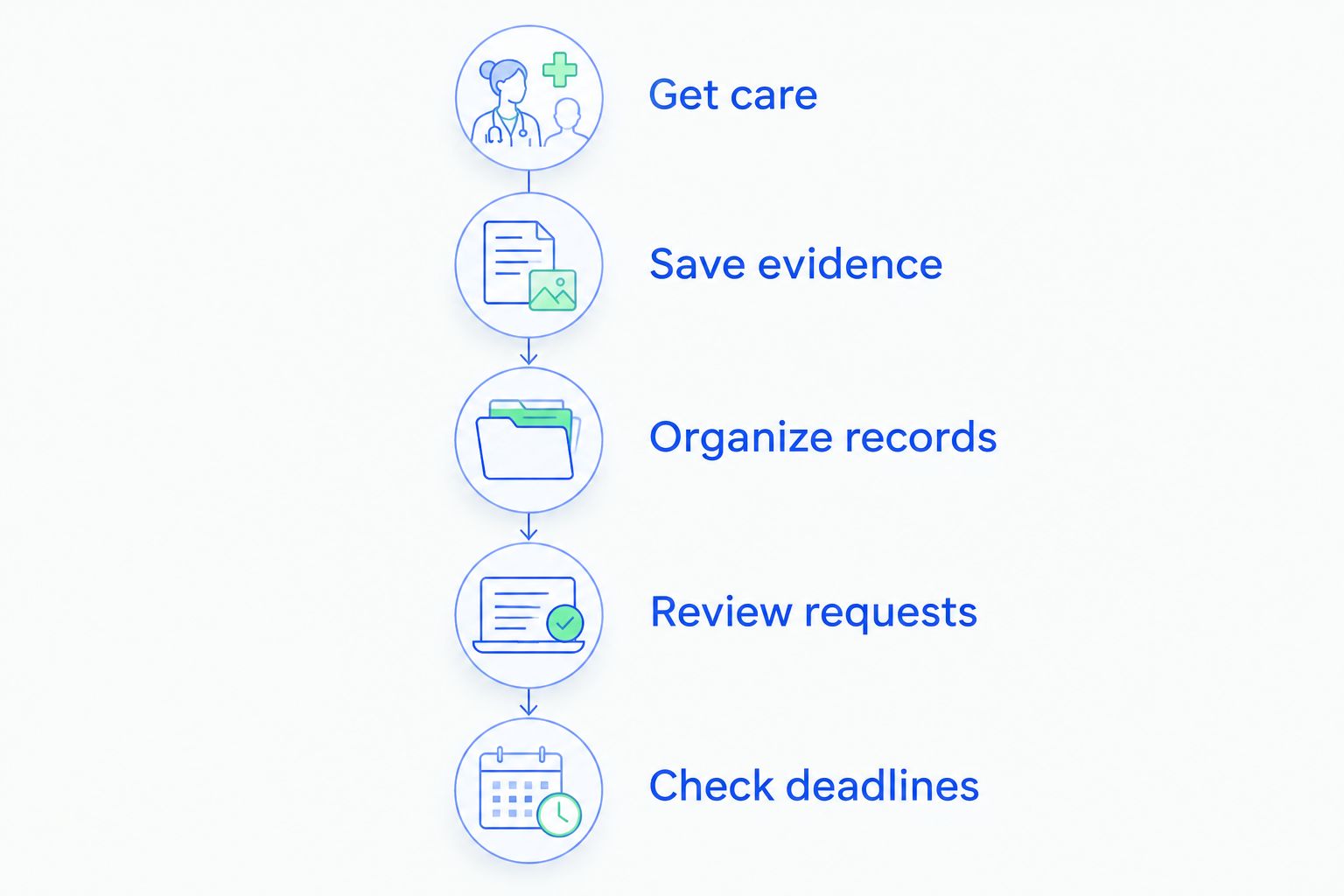
For a 2026 case evaluation, prepare a short account of the collision and organize the documents you already possess. You do not need a perfect file before asking for help.
- Get care: Address your health needs and describe symptoms accurately.
- Save evidence: Preserve original files and identify potential witnesses.
- Organize records: Separate medical, work, and insurance documents.
- Review requests: Identify unanswered questions about statements and signatures.
- Check deadlines: Seek advice tied to your California accident.
When discussing representation with Ledger Law, ask who will handle communications and what documents the firm needs. Ask about attorney fees and case expenses separately, including how expenses are handled if there is no recovery. Do not assume that no recovery necessarily means no costs.
Discuss your California injury claim
Bring your crash details, injury records, and questions about insurance requests or a proposed release.
FAQ
What’s the biggest mistake after a California car accident injury?
Delaying needed medical care is the first mistake to address because your health comes first. After addressing immediate care, preserve evidence and review insurance requests carefully.
Have I ruined my claim if I waited to see a doctor?
A delay does not, by itself, answer whether you have a claim. Seek appropriate care, explain your symptom timeline honestly, and discuss the delay during a case evaluation.
Should I give the other driver’s insurer a recorded statement?
Understand who is requesting the statement and get advice before agreeing if you are unsure. Requests from your own insurer require separate attention because policy notice and cooperation duties can apply.
Should I accept a settlement while I am still receiving treatment?
Review the release and unresolved injury questions before accepting. Understand which claims the agreement ends and discuss ongoing treatment, work restrictions, and medical uncertainty.
What should I bring to a California car accident consultation?
Bring crash details, available photographs, insurance correspondence, medical records, and work-loss documents. Bring an incomplete file rather than delaying advice while you search for every record.
Can Ledger Law help with a California car accident injury claim?
Ledger Law represents people injured in California car accidents. A case evaluation lets you discuss the accident, your injuries, and whether representation fits your circumstances.
Does no recovery mean I will have no case expenses?
Do not assume that no recovery means no expenses. Ask how attorney fees and case expenses are treated separately, and read the written agreement before hiring counsel.
One last thing
Preserve the original, not just the version you send. An emailed photo, screenshot, or shortened video is not always the complete file you started with. Keep the original and a separate working copy so organizing your claim does not erase useful context.
Related guides
- Steps to take after a car accident in California
- Medical records for a Newport Beach car accident claim
- Uninsured motorist coverage for an injured Californian

Emery Brett Ledger brings 28+ years of experience to personal injury law. He founded & led The Ledger Law Firm in securing over $100 million in compensation for clients with life-altering injuries & complex claims. Prior results do not guarantee a similar outcome. Licensed in California, Texas, & Washington, Emery earned his law degree from Pepperdine University School of Law. His practice areas include car & truck accidents, wrongful death, catastrophic injuries, maritime claims, & mass tort litigation. He has been recognized by The National Trial Lawyers’ Top 100, Mass Tort Trial Lawyers Top 25, and America’s Top 100 Personal Injury Attorneys. Emery also received the 2025 Elite Lawyer Award & holds a perfect 10.0 Avvo rating with Platinum Client Champion status. His legal work has been featured on CNN, Forbes, NBC, & ABC.
Free Case Evaluation
Recent Posts
- Best Morgan & Morgan alternatives for California car accident claims
- 8 mistakes that can hurt a California car accident claim
- 6 steps families should take after a wrongful death in Texas
- How to Choose a Car Accident Attorney Firm Near You and Prepare for a Case Evaluation
- 7 steps to take after a dog bite in California
Emery Brett Ledger brings 28+ years of experience to personal injury law. He founded & led The Ledger Law Firm in securing over $100 million in compensation for clients with life-altering injuries & complex claims. Prior results do not guarantee a similar outcome. Licensed in California, Texas, & Washington, Emery earned his law degree from Pepperdine University School of Law. His practice areas include car & truck accidents, wrongful death, catastrophic injuries, maritime claims, & mass tort litigation. He has been recognized by The National Trial Lawyers’ Top 100, Mass Tort Trial Lawyers Top 25, and America’s Top 100 Personal Injury Attorneys. Emery also received the 2025 Elite Lawyer Award & holds a perfect 10.0 Avvo rating with Platinum Client Champion status. His legal work has been featured on CNN, Forbes, NBC, & ABC.