

Johnson And Johnson Baby Powder Side Effect | Who Exposed Mostly | Legal Help From Law Firm
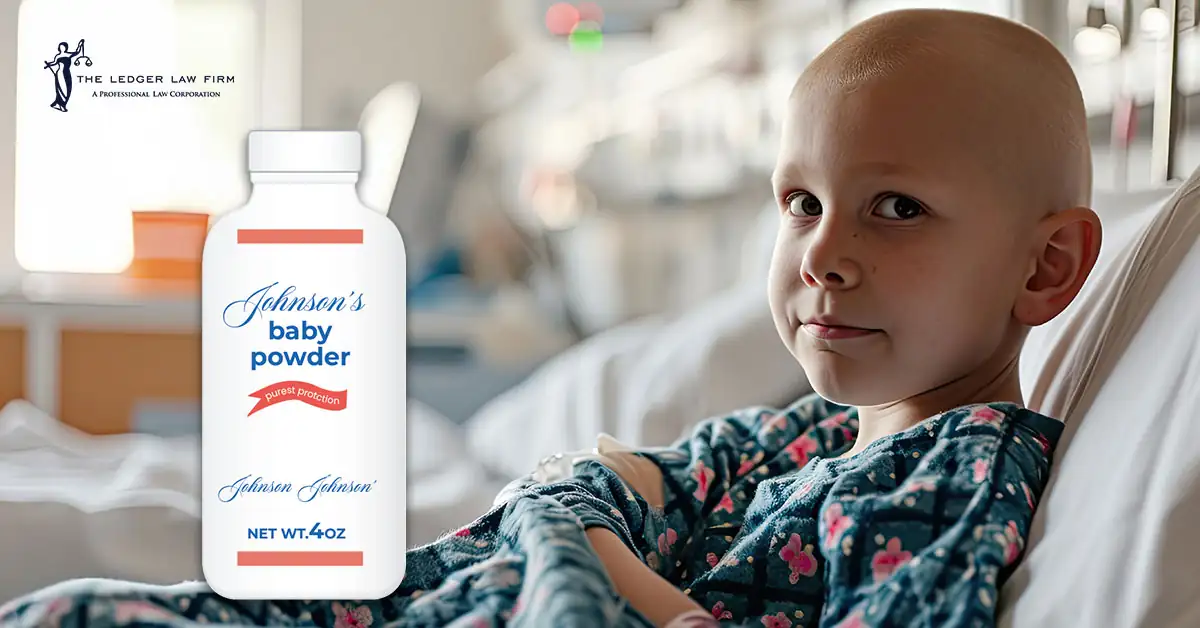
- Johnson and Johnson’s baby powder is carcinogenic: Baby powder made by Johnson & Johnson up until 2020 was most likely contaminated with asbestos particles.
- Using baby powder can cause unpleasant side effects: The product is a fine powder that easily becomes airborne as it’s applied, resulting in lung irritation and can also burn the skin if too much is used.
- Inhalation of baby powder may result in cancer: Asbestos is frequently found in baby powder, and can lead to mesothelioma and lung cancer.
- Baby powder can cause ovarian cancer: Women who use baby powder around their genitalia have an increased risk of developing ovarian cancer.
- Women and children are the most vulnerable to asbestos-related cancer: Women who used talc-based baby powder are more likely to develop one of the three cancers, and it can damage the lungs of babies and children.
- J&J is the subject of thousands of legal claims: People who have been harmed by the use of Johnson and Johnson’s baby powder have successfully sued the company for damages, and cases are still being filed.
A Quick Look At Johnson & Johnson:
Johnson and Johnson, also known as J&J, is a pharmaceutical company that makes products for the medical and personal health industries. It was founded in 1886 and is currently in operation. During its existence, it has invented and manufactured a wide variety of products to help improve people’s health.
- Multinational Corporation: American global healthcare company.
- Core Segments: Innovative Medicine (Pharmaceuticals) and MedTech (Medical Devices/Technology).
- Consumer Spin-off: Spun off its consumer health division, Kenvue, in 2023, brands including Band-Aid, Tylenol, Listerine.
- Founded: Johnson brothers established it in 1886.
- Headquarters: New Brunswick, New Jersey.
- Stock Exchange: Publicly traded on the NYSE, ticker symbol JNJ.
- Guiding Principle: Governed by “Our Credo,” prioritizing customers, employees, and community.
Johnson & Johnson (J&J) has been making personal care products for consumers for over 130 years. One of its original products is baby powder made from talc and was put on the shelves in 1893. For decades, J&J has been selling the product to countless consumers with the claim that it was safe to use on users of all ages. Unfortunately for consumers, Johnson & Johnson sold baby powder contaminated with asbestos and had known about it since at least the 1950s.
Talc and asbestos are two minerals that are often found together in deposits, but not always. J&J knowingly bought talc that also contained asbestos and used it for its baby powder products. Mysterious cases of mesothelioma, lung cancer, and ovarian cancers were developing in regular users as a result. They were mysterious because the users were never exposed to asbestos, or so they thought.
Internal documents show that J&J has attempted to conceal the fact they were selling a dangerous product for decades. It didn’t work. The first lawsuit over the asbestos-contaminated baby powder was brought in 2009, and more lawsuits are filed every year against Johnson and Johnson.
3 Johnson And Johnson Baby Powder Side Effects:
The contamination of asbestos in J&J baby powder caused different side effects. From respiratory problems to talcosis, many users have reported different side effects.
Respiratory Problems:
Talcum powder is a lung irritant that’s easily inhaled because it’s so fine and dry. Most users of talcum powder may experience lung irritation and a cough until the lungs are free from the power.
The inhalation of asbestos-contaminated talc, is linked to serious chronic respiratory illnesses. It increases the risk of mesothelioma and lung cancer in long-term users and occupational workers, as reported by American Journal of Industrial Medicine.
Talcosis:
Talcosis, also known as pulmonary talcosis, is a lung disease caused by inhaling talcum powder over a long period of time. It’s commonly seen in people who work in the cosmetic and talc mining industries, but heavy users can also experience the condition. It can cause lung damage and fibrosis in the lungs.
In infants, acute inhalation of talcum powder has been reported to cause severe respiratory distress. It even causes a diffuse bronchiolar inflammatory reaction, leading to conditions like talc pneumoconiosis (talcosis). That’s why the American Academy of Pediatrics advises against using talc-based baby powders to prevent this risk.
Skin Irritations:
Talcum powder is known for its moisture-absorbing properties and silky-smooth feeling. However, talc can irritate the skin of people with allergies or sensitivities, and can aggravate an open wound or other open skin condition.
”People who are using these large amounts of baby powder, particularly around the baby's face, run the risk of the child inhaling this very particulate matter into the lungs.
JOEL KAHAN, MD
Asbestos In Baby Powder Johnson And Johnson:
Talcum powder is made from a mineral known as talc. This mineral is mined from the earth, and is commonly found with asbestos in the same deposit.
Johnson and Johnson knew that it was buying asbestos-contaminated talc as far back as the 1950s, but failed to correct the issue. Their scientists were researching on finding an alternative to it, but J&J never disclosed it. For decades, consumers have been unknowingly using Johnson & Johnson baby powder that contained asbestos.
Talcum powder has been used for over a century, and sold primarily as baby powder. The fact that asbestos causes specific types of cancer has also been known about for over a century. Johnson & Johnson had been well aware of the problems associated with asbestos, but continued to source contaminated talc deposits anyway.
The major issue with asbestos and talc in baby powder is that both are very soft minerals that easily break apart. Talc is largely harmless, but asbestos is extremely harmful to the human body. Asbestos is a needle-shaped mineral that breaks apart into smaller pieces and flies freely in the air. When asbestos becomes airborne, which it does when it’s used as baby powder, the fibers are inhaled and lodge into organ linings and the lungs. Once asbestos fibers have become lodged, they don’t come out and can’t be removed.
After the fibers are in the body, the immune system tries to get rid of them. This results in a cycle of inflammation that leads to scarring and eventually fibrosis of the tissues. Cancer eventually develops in the affected organs and eventually causes organ failure. Essentially, Johnson and Johnson baby powder cancer side effect of using the powder.
Currently, J&J is denying they knew anything about asbestos in their baby powder product. However, that means millions of users have applied asbestos-contaminated baby powder to their skin throughout their lives. It’s not known how many people have been affected by Johnson and Johnson’s baby powder, but thousands are coming forward to sue J&J for selling them asbestos-contaminated baby powder.
Does Johnson and Johnson Cause Ovarian Cancer?
There is no direct link to ovarian cancer and J&J’s baby powder, but the causation is strong. Women who used baby powder on or near their genitalia were found to have particles of the powder in their fallopian tubes. This indicates that asbestos can reach the ovaries, and studies show an increase in the risk of ovarian cancer for women who used baby powder in this region.
A St. Louis City jury gave a verdict on July 12, 2018 about J&J talc powder uses. It awarded 22 plaintiffs $550 million in compensatory damages and $4.14 billion in punitive damages over claims that J&J talcum powder products caused ovarian cancer in women after long term use.
However, it didn’t directly mention that the ovarian cancer was a direct result of the use of J&J baby powder.
Johnson & Johnson Baby Powder Link with Lung Cancer:
Inhaling asbestos fibers into the lungs results in the particles getting lodged into lung tissue. The lungs become irritated and the immune system can’t remove the particles. Over time, the lungs scar and create the conditions for cancer to develop. This is the Johnson and Johnson talc cancer side effect that comes from using the product.
Who are the Most Vulnerable Ones From Johnson & Johnson Asbestos Exposure?
The people who are most vulnerable are infants, young children, and women who use it for personal hygiene. Johnson & Johnson no longer uses talc in their baby powder, but it can take years for a case of asbestos-related cancer to show up.
Legal Help for People Exposed to Johnson & Johnson Baby Powder:
If you’re suffering from mesothelioma, lung cancer, or ovarian cancer and your only exposure was baby powder, you may be able to sue Johnson & Johnson for damages. You may also have a case if you’re suffering from asbestosis, a lung condition caused by asbestos. Contact a defective products lawyer today to find out if you have a case against Johnson & Johnson and learn more about how a lawyer defends your rights and works towards getting you just compensation.
At The Ledger Law Firm, we’ve handled defective product cases on behalf of our clients, and we’re ready to handle yours. Contact us today at (800) 300-0001 and schedule a consultation with one of our attorneys. We go over the facts of your case with you and let you know what we can do for you.
Conclusion:
For decades, Johnson & Johnson put a defective product on the market while being aware of the danger it posed to consumers’ health. People used J&J baby powder thinking it was safe to use, but it wasn’t. Three distinct types of cancer are now associated with the use of baby powder, with women being particularly vulnerable to ovarian cancer.
It can take decades for a baby powder-related case of cancer to appear. If you feel your cancer is related to the use of Johnson & Johnson’s baby powder, you can take legal action against the company and ask for damages.
1. Does talc cause ovarian cancer?
To date, no direct link between talc and ovarian cancer has been discovered. However, it’s been found that women who used talcum powder on their genitalia had up to a 30% increase in risk of developing cancer.
2. Does talc cause other cancers?
Talc by itself does not cause cancer. It causes cancer when it contains asbestos, which is commonly found in talc deposits. Asbestos-laced talcum powder can cause lung cancer, mesothelioma, and ovarian cancer.
3. Should you avoid talcum powder?
Yes, you should absolutely avoid using talcum powder for any reason. You can’t be sure that the source material is free from asbestos.
4. How To Safely Use Baby Powder on Babies?
The only way to safely use baby powder on babies is to use a cornstarch-based powder. Check the ingredients to make sure that it does not contain talcum powder.
5. How does Johnson & Johnson Baby Powder cause cancer?
The product causes cancer because it sometimes contains asbestos. Asbestos fibers become airborne and are inhaled by the user. The asbestos fibers embed themselves into lung and mesothelia tissues, causing cancers.
6. Why Johnson & Johnson Baby Powder Is Causing Cancer Issues for Women?
J&J baby powder causes cancer for women due to its use on the genitalia. Particles containing asbestos are drawn into the reproductive system, then become lodged in the ovaries.
7. Does Johnson and Johnson baby powder have talc?
No, Johnson and Johnson baby powder does not contain talc. It stopped using the ingredient in 2020 and is now using cornstarch.

Emery Brett Ledger brings 28+ years of experience to personal injury law. He founded & led The Ledger Law Firm in securing over $100 million in compensation for clients with life-altering injuries & complex claims. Prior results do not guarantee a similar outcome. Licensed in California, Texas, & Washington, Emery earned his law degree from Pepperdine University School of Law. His practice areas include car & truck accidents, wrongful death, catastrophic injuries, maritime claims, & mass tort litigation. He has been recognized by The National Trial Lawyers’ Top 100, Mass Tort Trial Lawyers Top 25, and America’s Top 100 Personal Injury Attorneys. Emery also received the 2025 Elite Lawyer Award & holds a perfect 10.0 Avvo rating with Platinum Client Champion status. His legal work has been featured on CNN, Forbes, NBC, & ABC.
Free Case Evaluation
Recent Posts
- Punitive Damages in a Car Accident: When Can You Recover Them?
- Tailgating Injury: What Causes Tailgating, Road Rage & How to Stay Safe
- Waiting to Call a Lawyer Can Hurt Your Case: Evidence, Deadlines & Legal Risks
- What Is Property Damage in a Car Accident? Claims, Costs & Who Pays
- Bodily Injury & Property Damage: Coverage, Claims, Liability & Compensation
Emery Brett Ledger brings 28+ years of experience to personal injury law. He founded & led The Ledger Law Firm in securing over $100 million in compensation for clients with life-altering injuries & complex claims. Prior results do not guarantee a similar outcome. Licensed in California, Texas, & Washington, Emery earned his law degree from Pepperdine University School of Law. His practice areas include car & truck accidents, wrongful death, catastrophic injuries, maritime claims, & mass tort litigation. He has been recognized by The National Trial Lawyers’ Top 100, Mass Tort Trial Lawyers Top 25, and America’s Top 100 Personal Injury Attorneys. Emery also received the 2025 Elite Lawyer Award & holds a perfect 10.0 Avvo rating with Platinum Client Champion status. His legal work has been featured on CNN, Forbes, NBC, & ABC.