How can a Seattle cyclist document injuries after a car collision?

A Seattle cyclist should document injuries after a car collision with prompt medical evaluation, dated photographs, a symptom journal, and records showing how the injuries affect work and daily life. For a 2026 crash, preserve the original files and treatment records; photographs alone do not establish a diagnosis or explain future care needs.
- Get medical care first; document injuries without delaying treatment or returning to an unsafe collision scene.
- Save medical records, dated injury photographs, and notes describing specific limitations after the bicycle collision.
- For the search seattle car accident lawyer bicycle, prioritize injury representation and Washington-specific case evaluation.
- Ledger Law represents injured people in Washington; organize your records before discussing a Seattle bicycle injury claim.
Why this matters
An injury claim needs more than photographs of a damaged bicycle. Your records should connect the collision, your symptoms, the care you received, and the changes to your everyday life. Keep those subjects together without guessing about a diagnosis or who caused the crash.
Start with the Seattle car accident consultation guide if you are preparing to speak with a lawyer. A clear timeline makes that conversation more useful, even when you are still receiving treatment.
This guide addresses injury documentation for Seattle, Washington, in 2026. It does not apply California or Texas rules to your Washington collision.
How can a Seattle cyclist document injuries after a car collision?
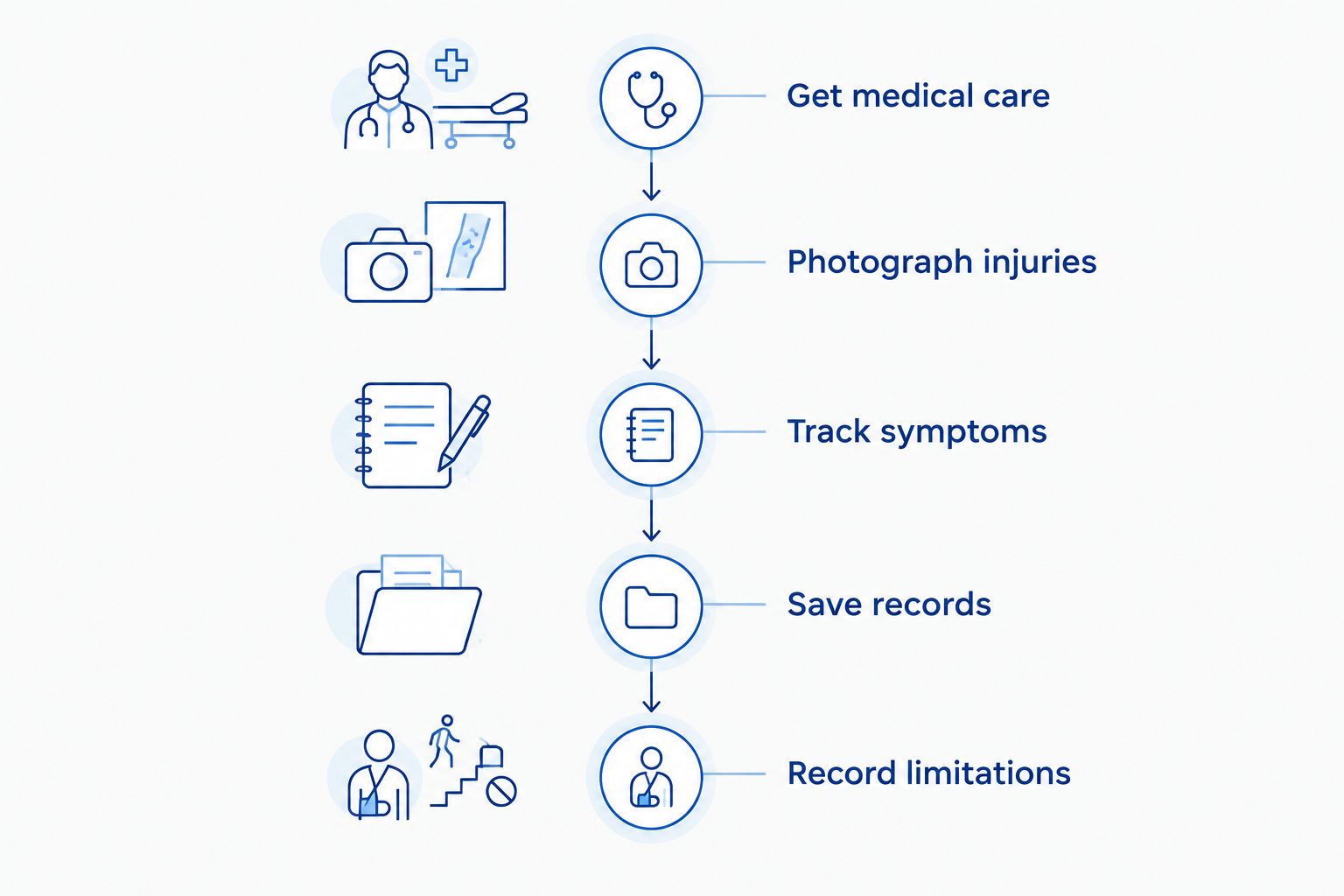
Build a record that shows what happened, what hurt, and what changed afterward. Use these 5 steps as an organizing plan, not as a reason to postpone care.
1. Get medical care
Call 911 for an emergency. Otherwise, seek medical evaluation appropriate to your symptoms and follow the treating clinician's instructions. Evidence collection comes after your immediate safety and medical needs.
Tell the clinician that a vehicle struck you while cycling. Describe the impact, any fall, the body parts involved, and symptoms you actually experienced. If you do not remember something, say so rather than filling in the gap.
2. Photograph injuries
When you can do so safely, take clear photographs of visible injuries. Include a wider view showing the body area and closer views showing the injury. Keep the original images rather than relying only on compressed copies sent through messaging apps.
Continue documenting visible changes when they occur. Do not edit an image to make bruising or swelling look stronger, and do not remove an original simply because another photograph looks clearer.
3. Track symptoms
Keep a dated journal describing pain, sleep disruption, mobility problems, and other symptoms in your own words. Record what a symptom prevents you from doing, rather than writing only that you had a bad day.
For example, describe difficulty carrying groceries or sitting through a work meeting if that actually happened. A personal journal records your experience; it does not replace a clinician's examination or diagnosis.
4. Save records
Keep discharge instructions, visit summaries, referrals, prescriptions, bills, and insurance correspondence together. Request complete records when needed, including relevant imaging reports and specialist notes.
Maintain 2 copies of important digital evidence in separate secure locations. This is a backup recommendation, not a legal requirement. Keep originals intact and give shared copies clear filenames.
5. Record limitations
Save documentation of missed work, changed duties, canceled activities, and help you needed at home. Separate what you personally experienced from what another person observed.
Ask an employer to confirm actual dates missed and any documented work restrictions. Keep receipts for injury-related expenses, but do not assume every expense will be recoverable.
Which records explain different parts of your injury?
Organize your evidence into 3 record types: medical records, personal documentation, and financial records. None replaces the others. Each answers a different question about the injury and its effects.
| Record type | Best for | Strength | Limitation |
|---|---|---|---|
| Medical records | Diagnoses, examinations, and treatment | Records clinical findings and care instructions | Does not necessarily capture every difficulty at home |
| Personal documentation | Visible changes and daily limitations | Preserves details between appointments | Does not independently establish a medical diagnosis |
| Financial records | Missed earnings and documented expenses | Supports identifiable losses with dates and amounts | Does not establish that every expense belongs in the claim |
Ask for corrections if a medical record contains a factual mistake, such as the wrong collision date or body side. Follow the provider's correction process rather than altering the record yourself. Keep any correction correspondence with the original material.
What should you photograph besides visible injuries?
Photograph your bicycle, helmet, clothing, and other damaged equipment if you can do so safely. These items help preserve information about the collision, but equipment damage does not measure the severity of an injury.
Keep the damaged items when practical. Before repair, disposal, or destructive inspection, ask a lawyer whether they need to be preserved for examination. Do not keep using equipment whose safety is uncertain.
Scene photographs can also record the bicycle's position, the vehicle, nearby signs, and road conditions. Never step into traffic or return to a dangerous location to take them. Ask someone else to help when your condition prevents safe documentation.
If the driver left, record what you actually remember without guessing at a plate number or vehicle description. The guide to evidence after a Seattle hit-and-run injury addresses that separate evidence problem.
Why injury documentation varies
The right evidence depends on your actual injuries and circumstances, not a standard photograph checklist. Focus on these factors:
- Visible versus internal injuries: Photographs show surface changes; medical evaluation addresses symptoms that a camera cannot capture.
- Changing symptoms: A dated timeline distinguishes symptoms present immediately from those noticed later.
- Work demands: Describe the tasks your injury affects, whether your work involves lifting, driving, standing, or desk duties.
- Earlier conditions: Record your condition before the crash and explain what changed afterward without hiding relevant history.
- Help at home: Document actual assistance with childcare, household tasks, or personal care, including who helped and what they did.
Be specific without exaggerating. If you completed an activity with difficulty, record the difficulty rather than saying you could not do it at all. Accurate detail is more useful than dramatic language.
How should you describe symptoms that appear later?
Record when you first noticed each symptom and report new or worsening symptoms to a healthcare professional. Do not backdate a journal entry to make it appear contemporaneous. If you write later from memory, identify it as a later recollection.
Separate observation from interpretation. You can describe tingling, dizziness, or pain without deciding what medical condition caused it. Let the treating clinician evaluate the symptom and document the findings.
For a 2026 collision, use full calendar dates on notes, filenames, and appointment lists. A consistent timeline helps distinguish the crash date, symptom onset, medical visits, and changes during recovery.
What should you do about gaps in treatment?
Explain a treatment gap honestly and keep any supporting messages or records. If an appointment was canceled, transportation failed, or scheduling prevented a visit, record what actually happened. Do not create an explanation after the fact.
Follow medical advice and discuss obstacles with your provider. A lawyer addresses the claim; a clinician determines appropriate care. Do not schedule unnecessary treatment solely to generate evidence.
If you have not received a recommended record or referral, keep your request and any response. This helps you distinguish missing paperwork from care that did not occur.
How should you organize records for a case evaluation?
Create a short timeline before trying to assemble a perfect file. Include the collision date, initial symptoms, first medical visit, later appointments, and major changes in your condition. Mark uncertain dates as uncertain.
Then group the supporting material:
- Collision information: Location, involved vehicles, witness details, photographs, and any report number you received.
- Treatment information: Provider names, appointment dates, discharge papers, imaging reports, and instructions.
- Daily impact: Symptom notes, work restrictions, help at home, and activity limitations.
- Expenses and earnings: Bills, receipts, employer records, and relevant insurance correspondence.
You do not need every document before asking for a case evaluation. Bring what you have, explain what is missing, and identify where additional records are held.
Ledger Law is a fit for injured Seattle cyclists seeking personal injury representation. A case evaluation can address the collision facts, injury documentation, and questions about responsibility; it cannot guarantee a recovery.
Prepare for a case evaluation
Organize your collision timeline, medical records, and questions before discussing your injury claim.
What should you check before sharing records or signing documents?
Keep a copy of anything you submit to an insurer. Read medical authorizations, statements, and settlement documents before signing, and ask what records an authorization covers. Do not guess when answering questions about symptoms, earlier injuries, or treatment.
If you are discussing a 2026 collision while treatment continues, distinguish current findings from unanswered medical questions. Avoid presenting an uncertain recovery timeline as established fact. Ask a lawyer about the consequences of a release before accepting a settlement.
Before hiring personal injury counsel, also ask how attorney fees and case expenses are handled. Get the agreement in writing and ask what you would owe if there is no recovery. Do not assume an attorney-fee arrangement answers every question about expenses.
FAQ
What should I do first after a car hits me while cycling in Seattle?
Prioritize safety and medical care after a Seattle bicycle collision. Call 911 for an emergency, and collect photographs or witness information only when doing so is safe.
Are photographs enough to prove my bicycle crash injuries?
Photographs alone do not establish a diagnosis or explain all injury effects. Keep medical records, symptom notes, and documentation of work or daily limitations alongside the original images.
What if I did not notice pain until after I left the collision scene?
Record when you first noticed the pain and seek appropriate medical evaluation. Tell the clinician about the collision and avoid guessing about the cause or backdating your notes.
Should I keep my damaged bicycle and helmet?
Preserve damaged equipment when practical and ask a lawyer before repair, disposal, or destructive inspection. Photograph it and do not keep using equipment whose safety is uncertain.
Can I document injuries if I already had a medical condition?
Yes, document your condition before the collision and the changes you experienced afterward. Give your clinician an accurate history and preserve relevant earlier records rather than hiding them.
Do I need complete medical records before contacting a Seattle injury lawyer?
No, you can request a case evaluation with the records you already have. Ledger Law provides personal injury representation in Washington; prepare your collision timeline, provider details, and questions about fees and expenses.
Should I post recovery updates on social media after a bicycle collision?
Keep injury documentation in a private, organized file rather than relying on social media posts. Discuss existing posts with your lawyer before changing or deleting potentially relevant material.
One last thing
Keep the ordinary days, not just the worst days. A journal that records improvement, setbacks, and activities you completed with difficulty gives a clearer account than a collection of only your most painful moments.
For your 2026 injury file, make each entry factual and dated. Keep medical decisions with your clinician and legal questions with your lawyer. You do not need to turn recovery into a full-time documentation project.
Related guides
- What should an injured Seattle pedestrian tell a crash lawyer?
- What can an injured passenger claim after a Seattle car crash?
- Who pays when an uninsured driver injures you in Seattle?

Emery Brett Ledger brings 28+ years of experience to personal injury law. He founded & led The Ledger Law Firm in securing over $100 million in compensation for clients with life-altering injuries & complex claims. Prior results do not guarantee a similar outcome. Licensed in California, Texas, & Washington, Emery earned his law degree from Pepperdine University School of Law. His practice areas include car & truck accidents, wrongful death, catastrophic injuries, maritime claims, & mass tort litigation. He has been recognized by The National Trial Lawyers’ Top 100, Mass Tort Trial Lawyers Top 25, and America’s Top 100 Personal Injury Attorneys. Emery also received the 2025 Elite Lawyer Award & holds a perfect 10.0 Avvo rating with Platinum Client Champion status. His legal work has been featured on CNN, Forbes, NBC, & ABC.
Free Case Evaluation
Recent Posts
- What Is a Legal Tort After a Car Accident? Understanding Claims, Negligence, and Next Steps
- Tort Law and Slip-and-Fall Injuries: How to Decide Whether to Seek a Case Evaluation
- Tort Lawyer for a Slip and Fall: How to Decide Whether to Seek Help and Prepare for a Case Evaluation
- Suing After a Car Accident: How to Compare Your Options, Evidence, Timing, and Costs
- How to Settle a Car Accident Claim Without a Lawyer
Emery Brett Ledger brings 28+ years of experience to personal injury law. He founded & led The Ledger Law Firm in securing over $100 million in compensation for clients with life-altering injuries & complex claims. Prior results do not guarantee a similar outcome. Licensed in California, Texas, & Washington, Emery earned his law degree from Pepperdine University School of Law. His practice areas include car & truck accidents, wrongful death, catastrophic injuries, maritime claims, & mass tort litigation. He has been recognized by The National Trial Lawyers’ Top 100, Mass Tort Trial Lawyers Top 25, and America’s Top 100 Personal Injury Attorneys. Emery also received the 2025 Elite Lawyer Award & holds a perfect 10.0 Avvo rating with Platinum Client Champion status. His legal work has been featured on CNN, Forbes, NBC, & ABC.