Who can an injured California car passenger bring a claim against?
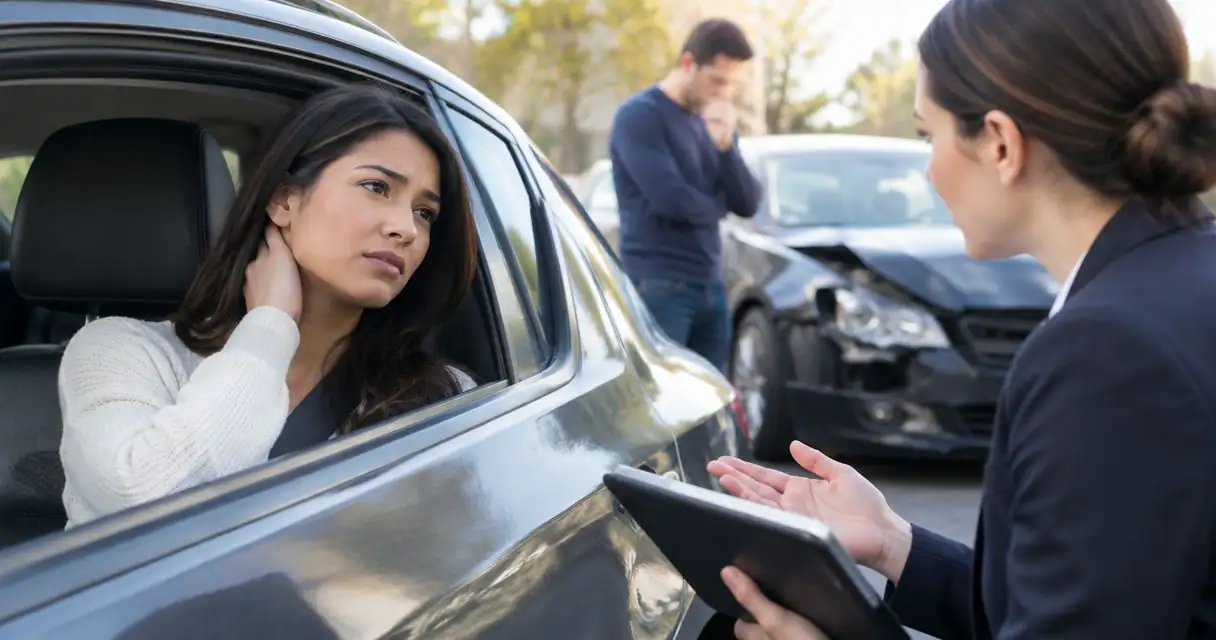
An injured California car passenger can bring a claim against the driver of their own vehicle, another driver, or another person or business whose negligence caused the crash and injuries. Available insurance can include the responsible driver's liability coverage and, depending on the policy, uninsured or underinsured motorist coverage or medical payments coverage; being a passenger does not automatically establish fault or guarantee payment.
- California passengers can pursue injury claims against their own driver, another driver, or other legally responsible parties.
- A california car accident attorney passenger evaluation should separate fault, insurance coverage, and documented injuries.
- Ledger Law represents injured California passengers seeking personal injury representation.
- Preserve medical records, driver information, witness details, and insurance correspondence before discussing a final settlement.
Who can an injured California car passenger bring a claim against?
Your claim belongs against whoever legally caused your injuries—not automatically the driver of the other car. Several parties can share responsibility. Insurance policies provide possible payment sources, but an insurer is not automatically a defendant simply because it covers someone involved.
| Possible claim target or coverage | When it matters | What still needs proof |
|---|---|---|
| Your vehicle's driver | The driver caused or contributed to the collision | Negligence, causation, and injury |
| Another driver | Another vehicle caused or contributed to the crash | That driver's conduct and connection to your injuries |
| A driver's employer | The driver was acting within the scope of employment | The employment relationship and work-related activity |
| A vehicle owner | California owner-liability rules apply | Ownership, permission, and applicable legal requirements |
| Uninsured or underinsured motorist coverage | The responsible driver lacks applicable insurance or sufficient coverage | Insured status, policy terms, and claim requirements |
| Medical payments coverage | Applicable coverage helps with covered medical expenses | Policy eligibility, covered expenses, and limits |
Ledger Law represents people injured in California car accidents. A passenger case evaluation should identify potential defendants and applicable policies separately, rather than assume the police report or the first insurance call settles both questions.
Why this matters
A passenger can feel caught between protecting a friend and paying for medical treatment. Riding with someone you know does not, by itself, prevent an injury claim. Tell the truth about what happened without choosing a side before the evidence is reviewed.
For a California passenger injured in 2026, the practical priorities are medical care, preserving evidence, and identifying coverage. This guide concerns California injury claims, including Newport Beach crashes; Washington and Texas have different rules.
Can you bring a claim against your own driver?
Yes. If the driver of your vehicle negligently caused your injuries, that driver can be a potential claim target even if you are a friend or relative. Examples include following too closely, failing to yield, or becoming distracted.
The difficult part is often emotional rather than procedural. A liability claim typically involves an insurer's investigation and coverage decisions, but you should not assume insurance eliminates every consequence for the driver or pays every loss.
Give an accurate account of what you observed. Distinguish what you saw from what someone told you later, and do not coordinate statements with the driver. If you do not know which vehicle entered an intersection first, say so.
What if you and the driver want the same lawyer?
A passenger and driver do not always have the same legal interests. If the driver faces an allegation of fault, representing both people can create a conflict of interest.
Ask whether the lawyer can represent you independently and whether a conflict affects the proposed representation. Your injury claim needs an evaluation focused on your interests, not an assumption that everyone in the vehicle has the same case.
Can you bring a claim against another driver or business?
Another driver can face a claim when negligent driving caused or contributed to your injuries. In a chain-reaction collision, the first impact you felt does not necessarily identify everyone responsible. Vehicle positions, witness accounts, recordings, and the sequence of impacts matter.
An employer can also face responsibility when an employee causes a crash while acting within the scope of employment. A company name on a vehicle is a useful investigative lead, not proof by itself that the company is liable.
Vehicle ownership requires a separate analysis. California Vehicle Code section 17150 addresses an owner's responsibility for negligent vehicle operation by someone using the vehicle with permission. Ownership-based liability has legal conditions and limitations; it is not a reason to assume an owner owes every claimed loss.
Other cases involve an allegedly defective vehicle or dangerous public property. Those claims require distinct evidence and legal requirements. Preserve the vehicle and relevant records when a defect is suspected, and raise a possible roadway condition promptly rather than treating it as an ordinary driver-only claim.
Which insurance policies should an injured passenger identify?
Start with every potentially applicable policy, not just the other driver's insurance card. Liability coverage, uninsured or underinsured motorist coverage, and medical payments coverage serve different purposes. Having several possible coverage sources does not permit duplicate recovery for the same loss.
| Coverage route | Best suited to | Main benefit | Main limitation |
|---|---|---|---|
| Liability coverage | A claim against a responsible insured driver | Addresses covered losses caused by an insured's liability | Fault, exclusions, and policy limits affect payment |
| Uninsured motorist coverage | Injuries caused by an uninsured driver, subject to coverage requirements | Provides a possible route when liability insurance is absent | Eligibility, notice, and other requirements apply |
| Underinsured motorist coverage | A responsible driver's coverage is insufficient under applicable rules | Provides another potential source of covered compensation | California law and policy terms control access and offsets |
| Medical payments coverage | Covered medical expenses under an applicable auto policy | Generally does not depend on proving another driver's fault | Covers specified expenses, not every category of injury loss |
Ask for the declarations pages and relevant policy language. A passenger's possible coverage can depend on the occupied vehicle's policy, the passenger's own insurance, household relationships, and policy definitions.
For a 2026 California claim, do not treat an insurance adjuster's verbal description as a substitute for reviewing the applicable terms. Request written explanations of coverage decisions and keep the envelopes or electronic timestamps showing when notices arrived.
Why passenger claims vary
Two passengers in the same crash can have different claims. The following factors explain why a shared collision does not produce an identical legal or insurance outcome:
- Fault evidence: Recordings, witnesses, and physical evidence can identify different contributions to the collision.
- Injury evidence: Diagnosis, treatment, prior conditions, and recovery affect what losses the records support.
- Available coverage: Policy definitions, exclusions, limits, and insured status determine which coverage applies.
- Passenger conduct: California comparative-fault rules permit consideration of a passenger's own negligence when supported by evidence.
- Other claims: Several injured people can seek payment from the same limited liability policy.
- Special defendants: Government entities, employers, and vehicle owners raise different legal requirements.
California uses comparative fault. A passenger's recovery can be reduced for the passenger's own legally established share of responsibility, but another person's driving mistake is not automatically assigned to the passenger.
A seat-belt allegation also requires analysis rather than an automatic denial. The relevant questions include whether the conduct was negligent and whether it contributed to the injuries claimed.
What should you do before giving a statement or settling?
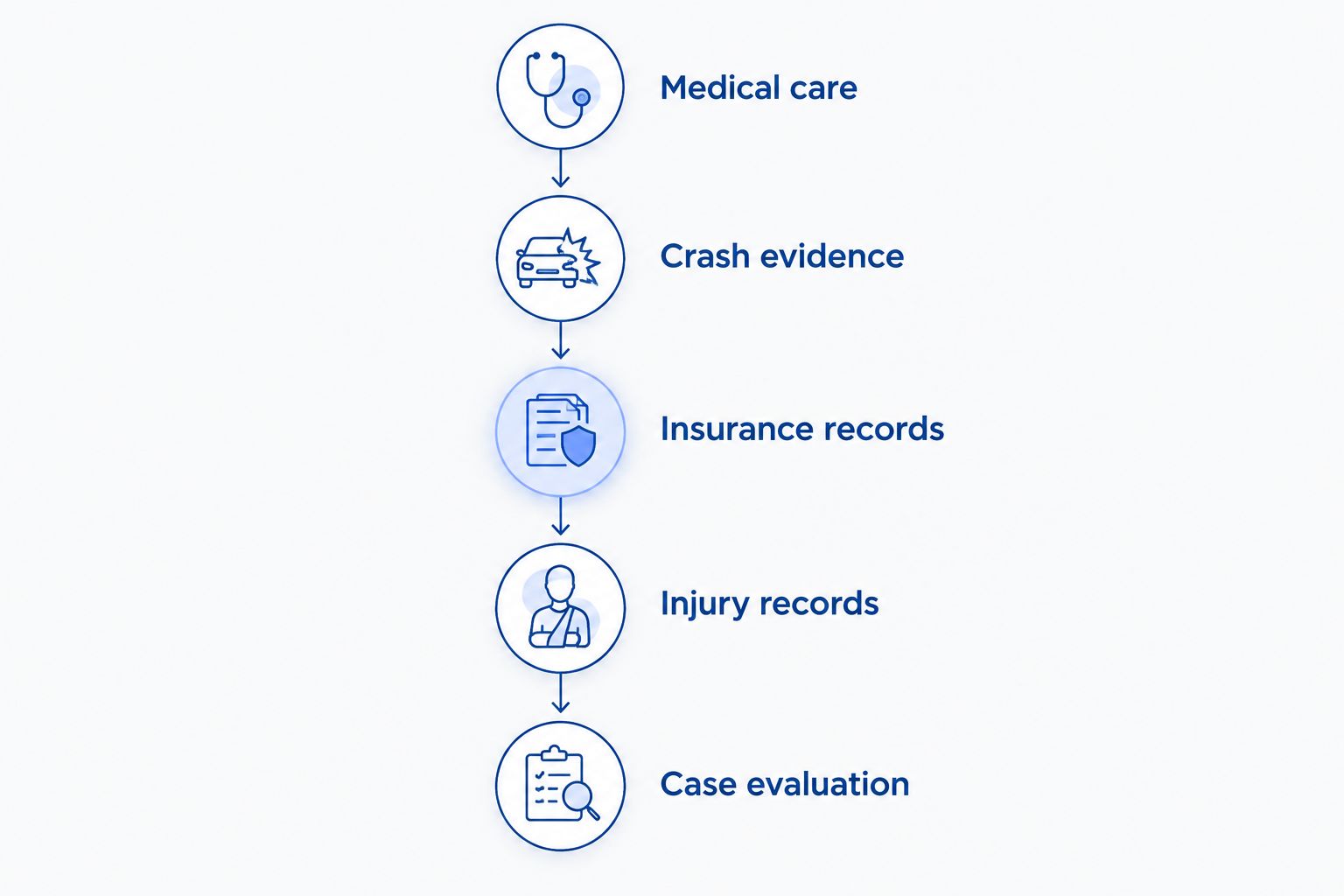
Use these steps to organize your California passenger injury claim in 2026. They help preserve information without requiring you to decide legal fault at the roadside.
- Medical care: Obtain appropriate medical attention and describe your symptoms accurately. Follow treatment recommendations or explain barriers to your clinician.
- Crash evidence: Save photographs, witness contacts, report information, and a factual account of your location in the vehicle and what you observed.
- Insurance records: Keep policy documents, claim numbers, correspondence, and the names of people handling each claim.
- Injury records: Preserve medical bills, treatment records, work restrictions, and documentation of missed earnings and daily limitations.
- Case evaluation: Review potential defendants, deadlines, coverage, representation conflicts, and any proposed release before resolving the claim.
Your written account should separate the collision from its effects. Record what happened during the crash, then describe symptoms and limitations without guessing at a medical diagnosis.
Before accepting payment, understand what the requested release covers. A settlement can close claims even when treatment continues. The discussion of an early Newport Beach crash settlement offer addresses that decision in a California setting.
How long does a California passenger have to act?
California generally provides 2 years to file a personal injury lawsuit, under Code of Civil Procedure section 335.1. That general period is not a safe waiting period: exceptions, different defendants, and separate coverage requirements can change the analysis.
A claim against a California public entity for personal injury generally requires presentation of a government claim within 6 months after accrual under Government Code section 911.2. Claim presentation and filing a lawsuit are separate requirements. A public vehicle or alleged dangerous public roadway deserves prompt review.
For someone under 18 years old, California Code of Civil Procedure section 352 generally pauses certain civil limitation periods during minority. Government claims and other exceptions require separate attention; do not assume a child's claim can wait until adulthood.
For a crash occurring in 2026, ask for a deadline review based on the actual accident date, possible defendants, and coverage involved. An open insurance claim does not, by itself, extend the lawsuit deadline.
What can an injured passenger seek compensation for?
An injured passenger can seek legally recoverable losses supported by the evidence, including medical expenses, lost earnings, and pain and suffering. Future losses require support; they are not established simply because symptoms continue when a claim is opened.
Preexisting conditions do not make a claim meaningless. Be accurate about your health before and after the crash so the evaluation can distinguish earlier problems from new injuries or aggravation.
Keep records of health-insurance payments and reimbursement notices as well as unpaid bills. Settlement discussions should address applicable liens or reimbursement rights, attorney fees, and case expenses—not just the headline payment.
When does a passenger case evaluation help?
Ledger Law is a fit for injured California passengers seeking personal injury representation. An evaluation is particularly relevant when drivers blame each other, coverage is disputed, injuries require continuing care, or several people seek payment from the same policy.
Before hiring counsel in 2026, ask who will represent you, whether any conflict exists, and how the written fee agreement treats attorney fees and case expenses. A contingency fee and reimbursement of case costs are different obligations; do not assume no recovery necessarily means no costs.
Ledger Law represents injured people in California, Washington, and Texas, but this article addresses California rules only. Bring your crash details and documents so the discussion stays focused on your injuries and circumstances.
Request a passenger case evaluation
Discuss your injuries, possible claim targets, insurance questions, and next steps.
FAQ
Can I make a California injury claim if my friend was driving?
Yes, you can pursue a claim if your friend’s negligence caused your injuries. Friendship does not establish liability or defeat a claim; fault, coverage, and injury evidence still matter.
Can I bring claims involving both drivers?
Yes, both drivers can be potential claim targets if each contributed to the crash and your injuries. Investigating both does not mean you can recover twice for the same loss.
What if I do not know who caused the crash?
You do not need to guess who caused the crash before seeking a case evaluation. Preserve witness details, photographs, recordings, and insurance correspondence so responsibility can be investigated.
Does a California passenger automatically qualify for uninsured motorist coverage?
No, passenger status alone does not establish uninsured motorist coverage. The applicable policy, insured-status requirements, California law, and claim conditions determine whether coverage applies.
How long do I have to file a California passenger injury lawsuit?
California generally allows 2 years for a personal injury lawsuit under Code of Civil Procedure section 335.1. Public-entity claims generally have a separate 6 months claim-presentation requirement, and other exceptions require individual review.
Should I accept a settlement while I am still getting treatment?
Do not accept a final settlement without understanding the release and the unresolved injury issues. Continuing treatment, future care, reimbursement obligations, and available coverage deserve review before you close the claim.
What should I ask about attorney fees and case costs?
Ask how attorney fees are calculated and who owes case expenses under the written agreement. A contingency-fee arrangement does not automatically mean you owe no expenses if there is no recovery.
One last thing
Write down which seat you occupied and which side of the vehicle took the impact. Include whether you saw the collision develop or only felt it happen. Those details help distinguish your direct observations from later explanations without requiring you to reconstruct events you did not see.
Related guides
- Steps to take after a car accident in California
- Medical records that help a Newport Beach car accident claim
- Preserving evidence after a California lane-splitting crash

Emery Brett Ledger brings 28+ years of experience to personal injury law. He founded & led The Ledger Law Firm in securing over $100 million in compensation for clients with life-altering injuries & complex claims. Prior results do not guarantee a similar outcome. Licensed in California, Texas, & Washington, Emery earned his law degree from Pepperdine University School of Law. His practice areas include car & truck accidents, wrongful death, catastrophic injuries, maritime claims, & mass tort litigation. He has been recognized by The National Trial Lawyers’ Top 100, Mass Tort Trial Lawyers Top 25, and America’s Top 100 Personal Injury Attorneys. Emery also received the 2025 Elite Lawyer Award & holds a perfect 10.0 Avvo rating with Platinum Client Champion status. His legal work has been featured on CNN, Forbes, NBC, & ABC.
Free Case Evaluation
Recent Posts
- How do Texas wrongful death and estate claims differ?
- Who can an injured California car passenger bring a claim against?
- Which trip records matter after a Seattle rideshare injury?
- What Is the Average Personal Injury Settlement for a Slip-and-Fall Claim?
- How should you organize medical bills after a Seattle car crash?
Emery Brett Ledger brings 28+ years of experience to personal injury law. He founded & led The Ledger Law Firm in securing over $100 million in compensation for clients with life-altering injuries & complex claims. Prior results do not guarantee a similar outcome. Licensed in California, Texas, & Washington, Emery earned his law degree from Pepperdine University School of Law. His practice areas include car & truck accidents, wrongful death, catastrophic injuries, maritime claims, & mass tort litigation. He has been recognized by The National Trial Lawyers’ Top 100, Mass Tort Trial Lawyers Top 25, and America’s Top 100 Personal Injury Attorneys. Emery also received the 2025 Elite Lawyer Award & holds a perfect 10.0 Avvo rating with Platinum Client Champion status. His legal work has been featured on CNN, Forbes, NBC, & ABC.